

Correspondence Analysis on Occupational Accidents of Forestry Workforce in Croatia
doi: https://doi.org/10.5552/crojfe.2026.4401
volume: issue, issue:
pp: 12
- Author(s):
-
- Landekić Matija
- Tomašić Željko
- Pandur Zdravko
- Bačić Marin
- Matošević Matej
- Šporčić Mario
- Article category:
- Original scientific paper
- Keywords:
- forestry, workforce, occupational safety, safety indicators, comparative statistics, Croatia
Abstract
HTML
During professional work, the forestry workforce is exposed to hazardous activities and numerous risks, which may result in everyday occupational accidents or illnesses. Networking and innovative thinking with the aim of developing new legislative solutions and certification systems, e.g. chainsaw qualification standard, represents an important link in supporting accident prevention in the national, European or even global forestry industry. The starting point for the preceding ideas is systematic recording, analysis and interpretation of basic indicators of the level of occupational safety in forestry. This study is focused on analysing the different occupational safety indicators for the period 2015 to 2024, with the aim of a comprehensive analysis of occupational accidents in the forestry sector of the Republic of Croatia at the national and regional level.
Data is gathered from occupational safety service databases of the Croatian Forests (CF) Ltd., which manages 2.024 million hectares of forests in the Republic of Croatia. Descriptive and inferential statistical methods were used in filtering, processing and analysing data. The inferential methods for data analyses included correlation analysis, Chi-squared test, and the Kruskal-Wallis H test to analyse the relationships between sampled variables.
In the ten-year period analysed, a total of 2,390 occupational accidents were recorded, of which 9 were fatal accidents. In the same period, 157 cases of occupational illness were recorded, of which 67.5% were caused by exposure to vibrations. The annual weighted average of the total number of accidents is 239 according to Croatian Forests Ltd. database (where the company cuts and processes less than 50% of the annual felling volume), while the same indicator for Croatia according to the Eurostat report is 264. The highest average number of accidents is recorded in the process of forest harvesting (58.1%). The riskiest work-related activity is felling and wood processing where on average 48.5% of the total number of accidents occur annually. The annual statistics are 0.37 fatalities per mil. m3, one occupational accident per 10,000 m3 of felled and processed wood (1.00/10,000 m3) and 30 accidents per 1000 employees. So, safety at work in Croatian Forests Ltd. can be assessed as partially satisfactory. Accident analysis from the perspective of the time curve (month, day, hour) shows the highest proportion of accidents occurring in the third annual business quarter, on a weekly basis on Tuesdays, and on a daily basis from 9 to 11 am. The key findings regarding analysis of data at the regional level indicated that medium-size Forest Administrations (FAs) as organizational components of the company CF Ltd. had the highest risk of accidents at work (41.60 accidents per 1000 employees). The indicators of the quantity of felled and processed wood per one accident (m3/accident) revealed an unsatisfactory result achieved by small-size FAs (19,943 m3/accident), and a more satisfactory result achieved by large-size FAs (28,335 m3/accident).
The range of numerical values and the weighted average value of occupational safety indicators for the sampled period did not show a decreasing trend, which indicates a similar or lower level of occupational safety in the forestry sector of the Republic of Croatia. The results obtained provide scientists and practitioners with an understanding of the level of occupational safety in Croatian forestry and form the basis for developing proposals for new measures in line with technological progress, as well as new educational programs for the development of work skills and competencies.
Correspondence Analysis on Occupational Accidents of Forestry Workforce in Croatia
Matija Landekić, Zdenko Tomašić, Zdravko Pandur, Marin Bačić, Matej Matošević, Mario Šporčić
https://doi.org/10.5552/crojfe.2026.4401
Abstract
During professional work, the forestry workforce is exposed to hazardous activities and numerous risks, which may result in everyday occupational accidents or illnesses. Networking and innovative thinking with the aim of developing new legislative solutions and certification systems, e.g. chainsaw qualification standard, represents an important link in supporting accident prevention in the national, European or even global forestry industry. The starting point for the preceding ideas is systematic recording, analysis and interpretation of basic indicators of the level of occupational safety in forestry. This study is focused on analysing the different occupational safety indicators for the period 2015 to 2024, with the aim of a comprehensive analysis of occupational accidents in the forestry sector of the Republic of Croatia at the national and regional level.
Data is gathered from occupational safety service databases of the Croatian Forests (CF) Ltd., which manages 2.024 million hectares of forests in the Republic of Croatia. Descriptive and inferential statistical methods were used in filtering, processing and analysing data. The inferential methods for data analyses included correlation analysis, Chi-squared test, and the Kruskal-Wallis H test to analyse the relationships between sampled variables.
In the ten-year period analysed, a total of 2,390 occupational accidents were recorded, of which 9 were fatal accidents. In the same period, 157 cases of occupational illness were recorded, of which 67.5% were caused by exposure to vibrations. The annual weighted average of the total number of accidents is 239 according to Croatian Forests Ltd. database (where the company cuts and processes less than 50% of the annual felling volume), while the same indicator for Croatia according to the Eurostat report is 264. The highest average number of accidents is recorded in the process of forest harvesting (58.1%). The riskiest work-related activity is felling and wood processing where on average 48.5% of the total number of accidents occur annually. The annual statistics are 0.37 fatalities per mil. m3, one occupational accident per 10,000 m3 of felled and processed wood (1.00/10,000 m3) and 30 accidents per 1000 employees. So, safety at work in Croatian Forests Ltd. can be assessed as partially satisfactory. Accident analysis from the perspective of the time curve (month, day, hour) shows the highest proportion of accidents occurring in the third annual business quarter, on a weekly basis on Tuesdays, and on a daily basis from 9 to 11 am. The key findings regarding analysis of data at the regional level indicated that medium-size Forest Administrations (FAs) as organizational components of the company CF Ltd. had the highest risk of accidents at work (41.60 accidents per 1000 employees). The indicators of the quantity of felled and processed wood per one accident (m3/accident) revealed an unsatisfactory result achieved by small-size FAs (19,943 m3/accident), and a more satisfactory result achieved by large-size FAs (28,335 m3/accident).
The range of numerical values and the weighted average value of occupational safety indicators for the sampled period did not show a decreasing trend, which indicates a similar or lower level of occupational safety in the forestry sector of the Republic of Croatia. The results obtained provide scientists and practitioners with an understanding of the level of occupational safety in Croatian forestry and form the basis for developing proposals for new measures in line with technological progress, as well as new educational programs for the development of work skills and competencies.
Keywords: forestry, workforce, occupational safety, safety indicators, comparative statistics, Croatia
1. Introduction
In the mid-20th century, increased scientific interest in occupational injuries and occupational diseases of workers led to the development of an organized form of occupational safety and the creation of various theories and hypotheses (Hepburn 1953, Heinrich 1959) about occupational accidents, i.e. root causes and interventions measures. Today, viewed through the prism of labour law, regulations and directives are the most important sources of European Union (EU) law, as they have a binding character and are consistently addressed to the member states. The EU legislator has established a system of fundamental principles of health and safety management that member states must transpose into national law. The most important, and at the time revolutionary, legal act is the European Framework Directive (1989/391/EEC), which establishes general principles for health and safety management, such as employer’s responsibility, workers' rights and duties, the use of risk assessments for continuous improvement of company processes, and advocacy for health and safety in the workplace. The individual directives on health and safety at work, the so-called »daughter directives«, set out the principles and instruments of the Framework Directive with regard to specific occupational hazards, individual tasks, various workplaces with increased risk, and consider how these factors affect particularly vulnerable groups of workers, such as minors, pregnant and breastfeeding women (Učur et al. 2022).
Despite the well-established EU legislative framework and the intensive technological progress of the last three decades – including the development of new working tools, modern forest machinery, and innovative personal protective equipment – forestry work processes remain among the most hazardous, both in the EU and globally, especially when compared to other industries (Potočnik et al. 2009, Jankovsky et al. 2019, FAO 2020, Grzywiński et al. 2020, Allman et al. 2023). Although there is no systematic data, estimates suggest that the number of injuries in professional forestry work worldwide exceeds 170,000 per year, and the number of fatalities exceeds 1000 (Garland 2018). The results of case studies by numerous authors (ILO 1991, Wang et al. 2003, Gejdoš et al. 2019, Musić et al. 2019, Grzywinski et al. 2020, Landekić et al. 2021, Rob at all. 2022) have established that the riskiest tasks in forest harvesting are chainsaw operations during felling and wood processing. This is clearly confirmed by records of safety indicators, where 50–80% of all recognized injuries in forest production are related to felling and wood processing activities (Potočnik et al. 2009, Musić et al. 2019, Landekić et al. 2021). Additionally, the three most common causes of fatal injuries during felling and wood processing are the result of being struck by a tree or branch, slipping and tripping, and cuts caused by a chainsaw in use (Robb and Cocking 2014). Currently available data for forestry and logging indicate that the fatality rate in the EU 27 is 15.64 per 100,000 workers (Eurostat 2022). For example, the chainsaw as the most hazardous working tool in the forestry sector has been documented as the cause of most work-related death cases in Indonesia (Yovi and Yamada 2019), in the Slovak Republic (Allman et al. 2023), in Slovenia at non-professional work especially but also in professional work (Klun and Medved 2007). On the other hand, the lowest frequency of work-related death cases was recorded in professional forest work in Sweden and Finland (Klun and Medved 2007), where the fully mechanized process of felling and wood processing dominates.
Regarding this case study, according to the most recent data, forests and forest land cover 2.759 million hectares or 49.3% of the total terrestrial area of the Republic of Croatia (RC). Of the total forest area, 76% is owned by the RC and is managed by the company Croatian Forests Ltd. (CF LTD), while the remaining 24% are owned by private forest owners (Forest Management Plan 2016–2025). The forestry sector of the RC and its related production processes are not exempt from negative trends in the form of a significant annual number of acknowledged occupational accidents and occupational diseases. The results for the occupational accidents of the forestry workforce in Croatia, whose relevant indicators can only be obtained from CF LTD, point out 1.58 accidents /10,000 m3 (Martinić et al. 2011). More recently (2014–2020), an improvement has been observed with 0.88 accidents/10,000 m3 (Landekić et al. 2021). A new negative trend that has been more pronounced in the forestry sector of the Republic of Croatia over the last 10 years is a great shortage of forestry workforce, especially regarding the so-called 3D (dirty, dangerous and demeaning) or »black collar« jobs like loggers, tractor operators, choke setters, etc. Younger, the so-called Z generation, therefore often consider the work in forestry to be humiliating and look on forestry workers as a specific subculture that is quite marginalized in society (Šporčić at al. 2024).
According to the FAO (2020) report, it is already increasingly difficult to attract new young human capital to the forestry sector, which is known for its physically demanding work, modest salaries, and recorded negative indicators of occupational safety. In today's forest management, in addition to ecological and economic goals, due to labour shortages, increasing importance is being placed on social goals, especially in the aspect of health protection and a higher level of safety in forest operations. Systematic recording, analysis and interpretation of occupational accidents and occupational diseases are basic indicators of the state of safety at work and health protection of workers in any industry. On the basis of the aforementioned, the objective of the paper is to carry out a comprehensive analysis of occupational accidents in the forestry sector of the Republic of Croatia at the national and regional level for the period 2015 to 2024. The results of the paper will be the basis for an objective assessment of the state of safety in Croatian forestry sector and provide credible indicators for cross-national comparison with the aim to improve the educational and safety competencies of forestry workforce capital.
2. Material and Methods
Regarding the creation of database, the main sources of input were the formal documents of CF Ltd., specifically the Annual Reports of the Occupational Safety Service for the period 2015–2024 and the Annual Business Reports for the same period (Anon. 2025). Recording, analysis and comparison of occupational safety indicators were carried out at the level of the company CF Ltd. and regionally by applying an in-depth approach in accordance with the organizational structure of the company, which includes 17 Forest Administrations (FAs). The in-depth approach used to compare occupational safety indicators between FAs enabled greater potential to explain the latest injury patterns of forestry workforce in Croatia. According to the two criteria, sampled organizational units of the company CF Ltd. were classified into three strata of equal size: small (S), medium (M) or large (L) sized FAs. The first criterion used for grouping FAs was the number of employees: S group <350; 350≤ M group ≤550; L group >550. The second criterion used for grouping FAs was the annual volume of felled timber (m3): S group< 120,000 m3; 120,000 m3≤ M group ≤200,000 m3; L group >200,000 m3.
The standardized occupational safety indicators used in the analysis refer to total number of accidents, total number of fatal accidents, number of accidents for felled and processed wood, number of accidents per 10,000 m3 of felled and processed wood, number of accidents per 1000 employees, annual number of occupational diseases, quantity of felled and processed wood per one accident (m3/accident), etc. For the selected continuous variables listed above, ordinal variables were obtained using the classification method. The total number of accidents in the CF Ltd. is divided into three groups (group 1: 0–9 accidents; group 2: 10–19 accidents; group 3: ≥20 accidents). The number of accidents for felled and processed wood is divided into three groups (group 1: 0–4 accidents; group 2: 5–9 accidents; group 3: ≥10 accidents). The number of accidents per 1000 employees is also divided into three groups (group 1: ≤24.99; group 2: from 25.00 to 49.99; and group 3: ≥50.00 accidents per 1000 employees). Fourth variable, the quantity of felled and processed wood per one accident (m3/accident) is also divided into three groups (group 1: ≤14,999 m3; group 2: from 15,000 to 29,999 m3; and group 3: ≥30,000 m3 per accident).
Within the applied scientific research, the following basic research methods are used according to Žugaj et al. (2006). The classification method is used in the creation of the database, where the selected interval variables are transformed into ordinal variables in order to enable the application of statistical methods with the aim of a more detailed scientific explanation and interpretation of the obtained results. The method of compilation and description are used in the introduction of the paper to describe the legislative framework and the state of occupational safety in the forest industry in general. The comparison method is used to observe common features or differences between occupational safety indicators. As part of the results, the aforementioned method is also used to describe 10-year occurrence regarding risk indicators at the company level and their interrelations at the FA level. The analysis method is used to find the connections and causes of the analysed variables, and the synthesis method is used in the process of combining and connecting the same indicators with the aim of explaining and interpreting the results.
2.1 Statistical Analysis of Data
Analytical, comparative and descriptive techniques were used in the processing and analysis of research results. Primary processed data was entered and systematized in the software package Microsoft Excel®, and further data analysis was performed using statistical software: Statistica® (TIBCO Software Inc., version 14, Palo Alto, CA, USA) and SPSS® (IBM-SPSS Inc., version 28, Armonk, NY, USA). Descriptive statistical analysis is applied in the primary data processing, which includes a set of methods used to calculate, display and describe the basic characteristics of statistical series. In the research, it is applied to group and arrange statistical data, and in the process of numerical and graphical presentation of research results.
With the aim of a clearer understanding of the average rate of change, the base index is used on a permanent basis according to Landekić et al. (2021) to compare trends in selected occupational safety indicators over the ten-year observation period at the level of the company CF Ltd. 2015 is taken as the base year, and the resulting numerical value is not expressed as a percentage but as a ratio. For each continuous variable, an appropriate test of normality distribution is made (Shapiro-Wilk's test) as a prerequisite for further statistical analysis. Correlation analysis is conducted to determine the relationship between selected occupational safety indicators and the share of FA performance in the annual felling volume (FA%) of the company CF Ltd. The nonparametric Chi-Square test of independence is used at FA level to determine whether there is an association between ordinal variables, which are obtained from occupational safety indicators using the classification method. For analysis of variance, the nonparametric Kruskal-Wallis test is used to test the differences between large (L), medium (M) and small (S) sized FA based on selected occupational safety indicators.
3. Results
In the analysed ten-year period, a total of 2390 occupational accidents are recorded at CF Ltd., of which 9 are fatal accidents. The weighted average of the total number of accidents at CF Ltd. on an annual basis is 239 (where the company cuts and processes less than 50% of the annual felling volume). According to the Eurostat report, the average annual number of accidents recorded during felling and wood processing activities in Croatia is 264 (Table 1). According to the Eurostat report, the weighted average of fatal accidents is 3, whereas CF Ltd. occupational safety records indicate an average of 1 fatal accident per year (Table 1). Due to work-related accidents, the weighted average of the number of working days lost at CF Ltd. is 8323 per year. The number of accidents per 1000 employees indicator has an average value of 30.01 in the sampled period, the accidents per 10,000 m3 indicator is 1.00, and the fatal accidents per mill. m3 indicator is 0.37 (Table 1). In the sampled period, the range of accidents in felling and wood processing activities ranges from 97 to 129 per year, which places this work-related activity in the highest risk category where on average 48.48% of the total number of accidents occur annually. Adding to the activities of felling and wood processing an additional 15 to 35 accidents per year that occur during the operations of wood skidding and/or forwarding from the stump to the forest road, it follows that the highest average number of accidents is recorded in the process of forest harvesting (58.07%). In addition to registered occupational accidents in the CF Ltd., 157 cases of occupational illness were recorded in the same period (Table 1), of which 67.52% are caused by vibrations, 1.27% by noise, 5.10% are related to overexertion syndrome, and 26.11% are caused by biological hazards (Table 1).
Table 1 Overview of general safety indicators in forestry industry of the Republic of Croatia
|
Year |
Number of accidents in CF Ltd. |
Number of accidents in Croatia (Eurostat*) |
Number of fatal accidents in CF Ltd. |
Number of fatal accidents in Croatia (Eurostat*) |
Accidents per 1000 employees in CF Ltd. |
Felled and processed wood by employees in CF Ltd. |
Accidents per 10,000 m3 in CF Ltd. |
Fatal accidents per mill. m3 inCF Ltd. |
Number of Occupational Illnesses in CF Ltd. |
|
2024 |
256 (117)1 |
– |
0 |
– |
31.70 |
1 949 814 |
1.31 |
0.00 |
23 |
|
2023 |
240 (103)1 |
– |
1 |
– |
30.10 |
2 125 218 |
1.13 |
0.47 |
17 |
|
2022 |
244 (115)1 |
264 |
2 |
4 |
29.47 |
2 353 635 |
1.04 |
0.85 |
16 |
|
2021 |
237 (110)1 |
273 |
1 |
4 |
29.28 |
2 371 033 |
1.00 |
0.42 |
23 |
|
2020 |
226 (124)1 |
225 |
2 |
4 |
27.81 |
2 425 344 |
0.93 |
0.82 |
4 |
|
2019 |
232 (115)1 |
230 |
0 |
0 |
28.46 |
2 574 823 |
0.90 |
0.00 |
23 |
|
2018 |
255 (122)1 |
277 |
1 |
5 |
31.26 |
2 729 139 |
0.93 |
0.37 |
11 |
|
2017 |
210 (97)1 |
284 |
0 |
3 |
27.49 |
2 460 432 |
0.85 |
0.00 |
18 |
|
2016 |
253 (129)1 |
292 |
1 |
5 |
33.93 |
2 497 290 |
1.01 |
0.40 |
13 |
|
2015 |
237 (126)1 |
266 |
1 |
2 |
30.61 |
2 771 110 |
0.86 |
0.36 |
9 |
|
1 data related only to accidents recorded during felling and wood processing activities *source: Eurostat 2025 |
|||||||||
Analysis of data through the index on a permanent basis (Table 1, Fig. 1), i.e. compared to 2015, shows a lower total annual number of accidents registered in 2017 and in the COVID-19 period of 2019 and 2020. The total number of accidents in felling and wood processing activities recorded a decreasing trend ranging from 3.00 to 23.00% fewer accidents in the sampled period (Table 1, Fig. 1). The annual number of accidents registered in operations of wood skidding and/or forwarding, compared to the base year 2015, shows only lower values in the COVID-19 period of 2019 and 2020 (Fig. 1). The largest increase in the number of accidents registered in the sampled period is recorded in silvicultural activities (Fig. 1).
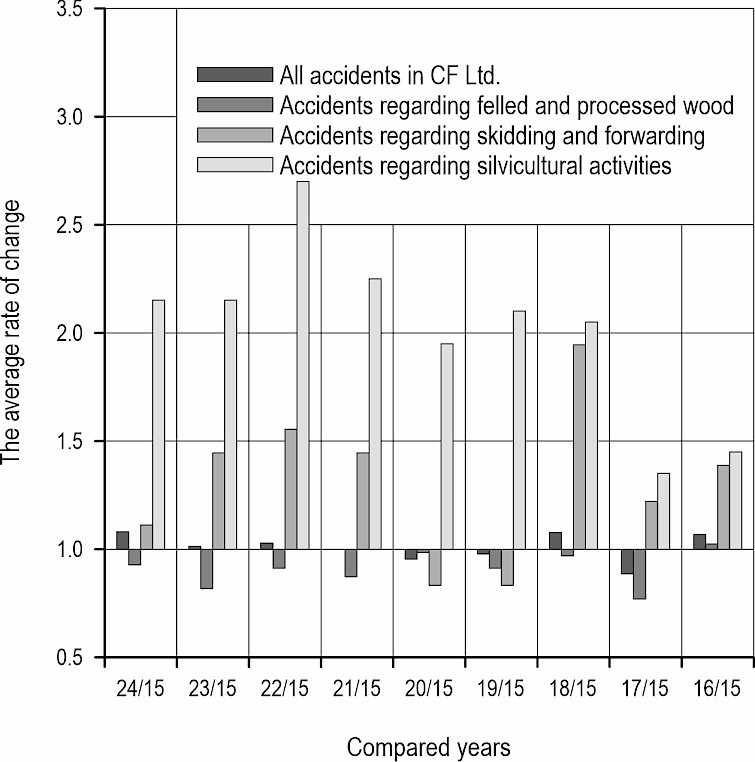
Fig. 1 Trend of occupational accidents on a permanent basis
The analysis of the total number of occupational illnesses on a permanent basis (Table 1, Fig. 2) shows a significant trend of growth of the numerical indicator in all sampled years except 2020, where only 4 cases were recorded. The number of cases of occupational illnesses caused by vibration shows lower values in the COVID-19 period of 2020 and 2021, and from 2022 takes on an upward trend again (Fig. 2) compared to the base year 2015, when a total of 8 illnesses caused by vibration were recorded among production forest workers. One case of occupational illness caused by noise was registered only in the base year 2015 and one case in 2024 (Fig. 2). Out of the total of 157 occupational illnesses registered in the ten-year period, biological hazards account for 26.11%. In the analysed period, 4 cases of Lyme disease (Latin: Lyme borreliosis), 2 cases of Tick-borne Encephalitis (Latin: Encephalitis europae centr.) and 35 cases of Haemorrhagic fever with renal syndrome (Latin: Febris haemorrhagica) were registered.
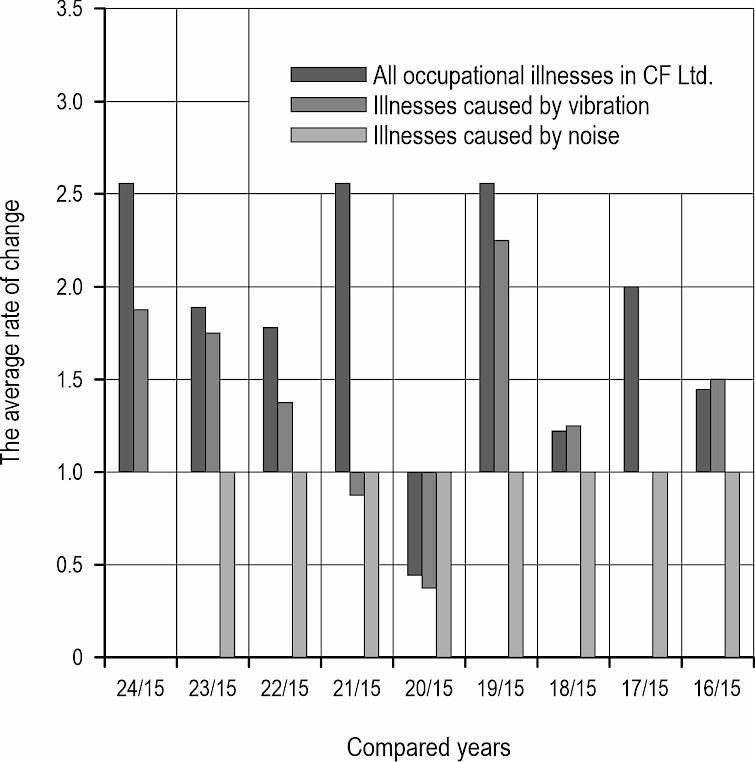
Fig. 2 Trend of occupational illnesses on a permanent basis
The distribution of accidents by month, day of the week, and time of occurrence during an 8-hour working day is shown in Fig. 3. The highest number of accidents at work is recorded during the summer months, i.e. in the third annual business quarter (34.31%). The lowest proportion of accidents is recorded in the fourth annual business quarter (17.78%). Within the analysed period, September and October are the months in which the highest share of accidents at work is recorded within the business year contrary to December when the lowest share of accidents is recorded (Fig. 3). Within the weekly time curve (Fig. 3), the highest number of accidents occur in the first half of the week (63.94% from Monday to Wednesday), while Tuesday is the day with the highest share of accidents (22.11%). Analysis of accidents by hour of occurrence during the working day (Fig. 3) shows that 73.66% of accidents at work occur in the first half of the working day (until 12 pm). The most critical time period with the highest proportion of accidents is from 9 to 11 am (39.41%), followed by the period from 11 am to 1 pm with a proportion of 24.98% of accidents (Fig. 3).
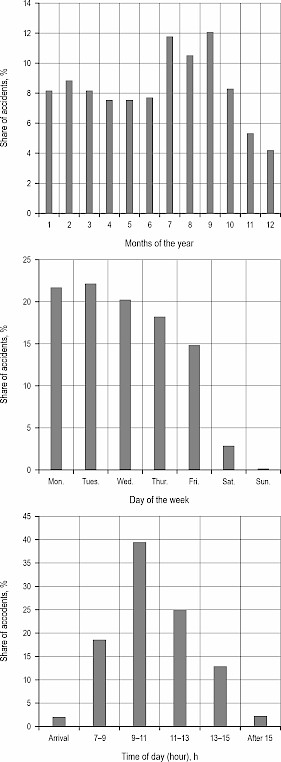
Fig. 3 Time curve (month, day, hour) accident analysis
In the analysed ten-year period, 85.29% were minor accidents, 14.33% were severe accidents, and 0.38% were fatal accidents. In terms of the type of injury, more than 50% of registered accidents were wounds and superficial injuries, and the smallest relative share was related to poisoning and infection (Fig. 4). The second largest proportion of accidents (20.50%) was related to dislocations, sprains and strains (Fig. 4).
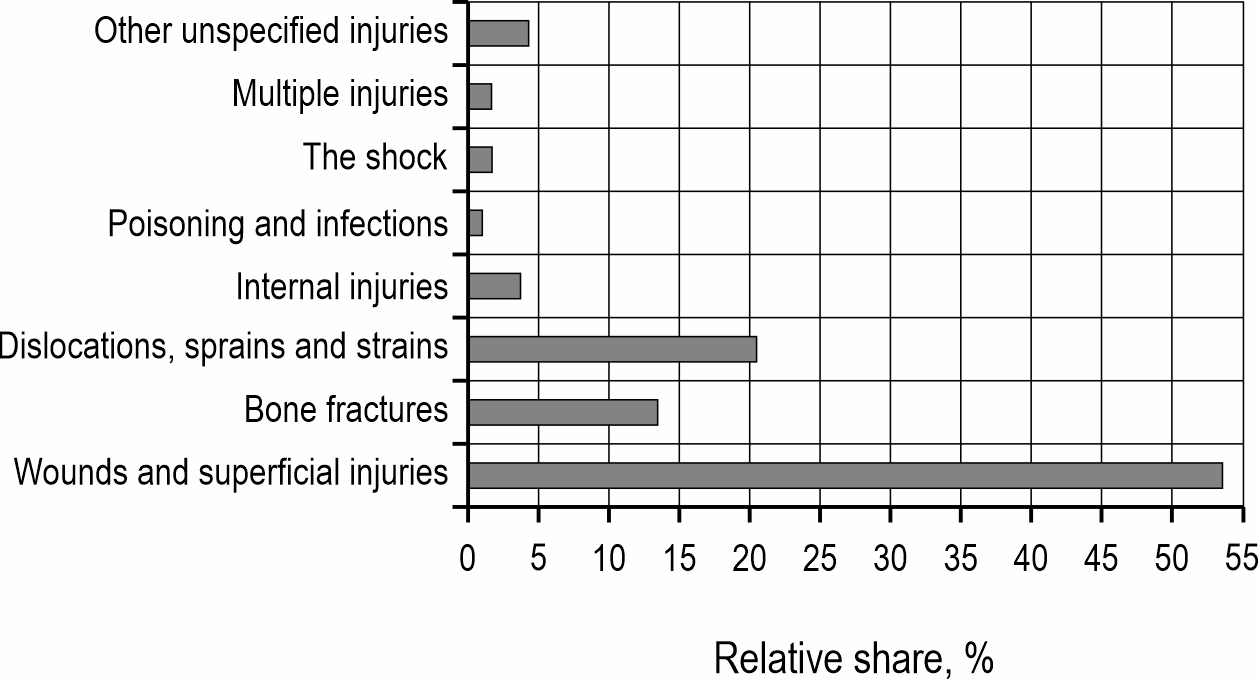
Fig. 4 Distribution of accidents by type
3.1 Analysis of Occupational Accidents at Forest Administration Level
Since the Shapiro-Wilk test did not proved that all used variables follow normal distribution (p-value <0.05), Spearman's rank correlation coefficient was used to determine the relationship between the percentage share of sampled forest administrations (FA%) in the realization of the total annual felling volume of the CF Ltd. with own internal capacities and selected occupational safety indicators (Table 2). The correlation coefficient shows a positive moderate to strong correlation between the percentage share of sampled forest administrations (FA%) in the realization of the total annual felling volume and three safety indicators (total accidents, felling accidents and m3 per accident), while for the indicator accidents per 1000 employees it indicates a weak correlation (Table 2).
Table 2 Results of Spearman's correlation
|
Variable |
Number N |
Correlation coefficient |
p-value |
|
FA% in the annual felling volume vs. total accidents |
170 |
0.713 |
0.00* |
|
FA% in the annual felling volume vs. accidents at felling |
170 |
0.687 |
0.00* |
|
FA% in the annual felling volume vs. accidents per 1000 employees |
170 |
0.309 |
0.00* |
|
FA% in the annual felling volume vs. felled m3 per accident |
170 |
0.554 |
0.00* |
|
* Correlation is significant at the 0.01 level |
|||
The nonparametric Chi-Square test of independence is used to determine the association between the three FA classes and ordinal variables obtained from occupational safety indicators using the classification method. Since the p-value is lower than the chosen significance level (p=0.01), association is found between FA classes and three groups regarding the total annual number of accidents in the CF Ltd. (X2=46.344, p=0.00). The results of Kruskal-Wallis H test indicate a statistically significant difference between the total annual number of accidents and three FA classes (Table 3). By using the Mann-Whitney U post-hoc test, it is determined that the total annual number of accidents in small-size FAs (Md=7.00, N=70) is significantly different from the annual number of accidents in medium-size FAs (Md=18.00, N=46) (U=434.00; z=–6.645; p=0.00) and the annual number of accidents in large-size FAs (Md=18.00, N=50) (U=503.50; z=–6.644; p=0.00). For the second indicator, association is found between FA classes and three groups regarding the number of accidents for felled and processed wood (X2=38.574, p=0.00). The results of the H test presented in Table 3 indicate a statistically significant difference between the number of accidents for felled and processed wood and three FA classes. The results of post-hoc U test also indicate that the number of accidents for felled and processed wood in small-size FAs (Md=3.5, N=70) is significantly different from the number of accidents for felled and processed wood in medium-size FAs (Md=8.00, N=46) (U=602.00; z=–5.709; p=0.00) and the number of accidents for felled and processed wood in large-size FAs (Md=9.00, N=50) (U=643.00; z=–5.912; p=0.00).
Table 3 Results of Kruskal-Wallis H test between three FA classes and occupational safety indicators
|
Variable |
X2 |
df |
p-value |
|
Total accidents |
63.238 |
2 |
0.01* |
|
Accidents at felling |
48.121 |
2 |
0.01* |
|
Accidents per 1000 employees |
26.442 |
2 |
0.01* |
|
Felled m3 per accident |
11.976 |
2 |
0.01* |
|
* The difference is significant at 0.01 |
|||
During the analysis of the third safety indicator (Fig. 5), association is found between FA classes and three groups regarding the number of accidents per 1000 employees (X2=39.095, p=0.00). The results of Kruskal-Wallis H test indicate a statistically significant difference between the number of accidents per 1000 employees and three FA classes (Table 3, Fig. 5). The results of post-hoc U test indicate that the number of accidents per 1000 employees in medium-size FAs (Md=42.76, N=46) is significantly different from the number of accidents per 1000 employees in small-size FAs (Md=23.23, N=70) (U=813.00; z=–4.498; p=0.00) and the number of accidents per 1000 employees in large-size FAs (Md=27.85, N=50) (U=533.00; z=–4.525; p=0.00). The fourth indicator related to the volume of felled wood per accident (m3/accident) also indicates a statistically significant difference between the defined FA classes (Table 3, Fig. 6). The results of post-hoc U test indicate that the amount of felled wood per one accident in small-size FAs (Md=18,022.40, N=70) is significantly different only from the amount of felled wood per one accident in large-size FAs (Md=25,492.50, N=50) (U=1116.00; z=–3.377; p=0.00).
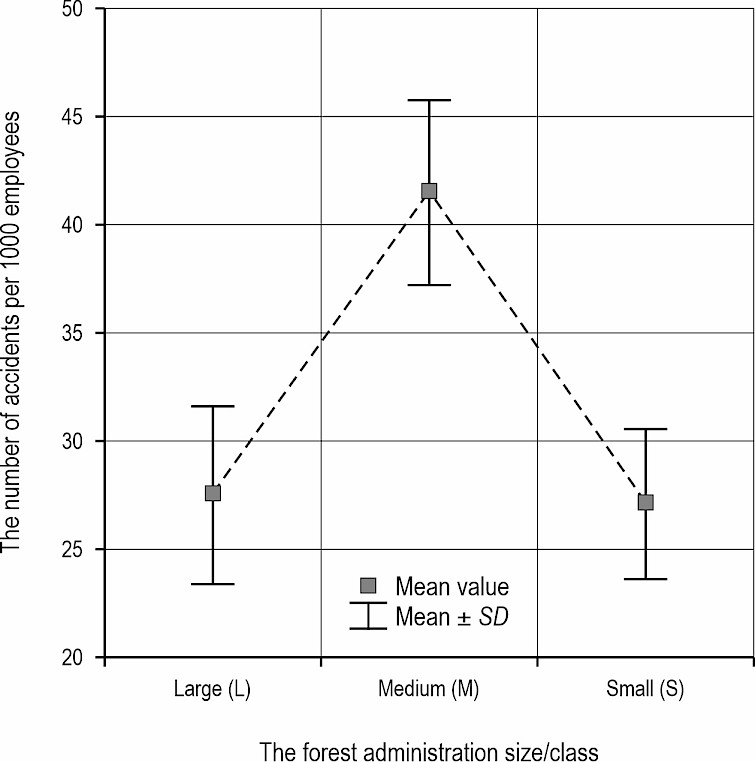
Fig. 5 Mean value of accidents per 1000 employees vs. FA size
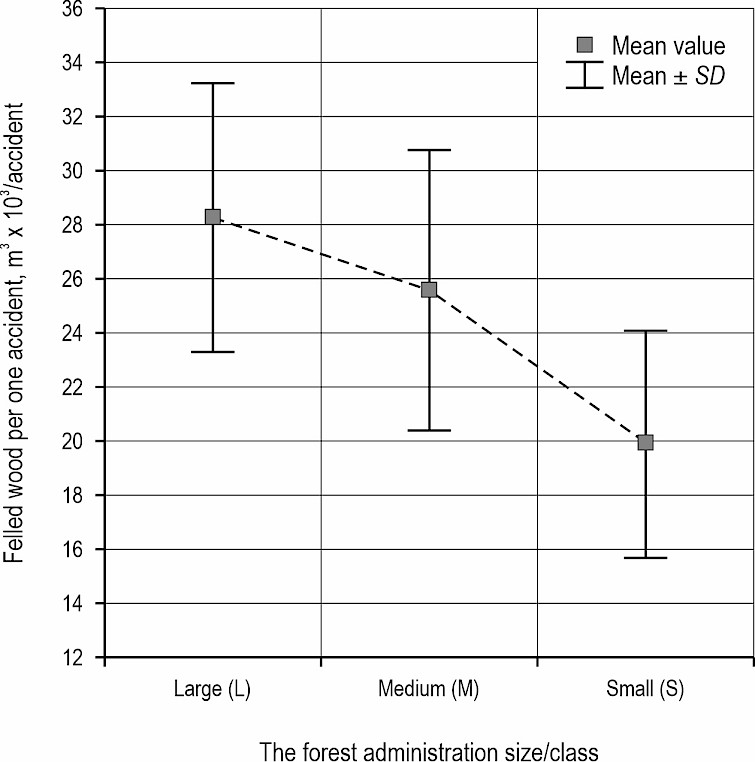
Fig. 6 Mean value of felled wood in m3 per accident vs. FA size
4. Discussion and Conclusions
A comparison of occupational safety indicators from the official website of the Eurostat platform (Eurostat 2025) for the Republic of Croatia and the Occupational safety service of the company CF Ltd. (where the company cuts and processes less than 50% of the annual felling volume with its own forestry workforce) confirms the assertion of Kronholm et al. (2023) that the actual number of accidents in all EU countries is much higher because the statistics only include the notifications of work accidents that employers have made to the Social Insurance Agency. A significant discrepancy in the Eurostat database is particularly visible during the COVID-19 period of 2019 and 2020 (Table 1), when a lower number of accidents were recorded at the national level by Eurostat compared to the official indicators of the company CF Ltd. According to official Eurostat data, private forestry contractors in Croatia, who cut and process more than 50% of the annual felling volume at CF Ltd. plus felling volume in private forests, have a weighted average of only 27 accidents at work per year. The stated number of officially registered accidents among private forestry contractors in Croatia most likely refers only to severe occupational accidents occurring during forestry operations, while the total number of accidents is significantly higher, as also emphasized by Pinzke and Lundqvist (2016) for a similar situation in Swedish forestry.
At the level of the company CF Ltd., the results of previous research show a trend of decreasing accidents at work from 1.58/10,000 m3 (Martinić et al. 2011) to 0.88/10,000 m3 (Landekić et al. 2021). Within the sampled ten-year period, an increase in the rate of occupational accidents to 1.00 per 10,000 m³ is again observed in the company CF Ltd. For comparison, the value of the same indicator in Slovenia in 2003 was 2.20/10,000 m3 (Poje 2003), in the Federation of Bosnia and Herzegovina for the period from 2006 to 2015 it was 2.87/10,000 m3 (Musić et al. 2019), and in the Slovak Republic for the period from 2007 to 2021 it was 1.28 severe accidents per 1 million m3 (Allman et al. 2023). According to the Eurostat report, the weighted average of fatal accidents per year is 3, and according to the records of the occupational safety service at CF Ltd., it is 1 fatal accident on average per year. In the sampled ten-year period, the obtained indicator emphasizes that 0.37 fatal accident occurred per 1 million m3 of harvested timber in CF Ltd. For comparison, the value of the same indicator in the Slovak Republic for the period from 2007 to 2021 was 0.75/1 mill. m3 of harvested timber (Allman et al. 2023), and in Slovenia in 2023 it was 4.8 fatal accidents/1 mill. m3 (Poje and Pajek 2024). According to Klun and Medved (2007), the fewest fatal accidents occurred (0.03/million m3) in professional forestry work in Sweden (2000–2004) and Finland (1995–1999), where advanced technologies and mechanized felling and processing dominate over motor-manual timber harvesting systems. The number of accidents per 1000 employees indicator in CF Ltd. (2015–2024) has an average value of 30.01. The same indicator in the Federation of Bosnia and Herzegovina (2006–2015) had a value of 51 accidents per 1000 employees (Musić et al. 2019), and in the EU 27 for year 2022 it was 21.24 of accidents per 1000 employees (Eurostat 2025). The trend of accidents and occupational illnesses on a permanent basis (Table 1, Figs. 1 and 2) does not show an improvement in the state of occupational safety and health at CF Ltd., especially considering that the share of the annual felling volume performed by internal forestry workforce decreased by 29.64% in 2024 compared to 2015.
The analysis of the results at the level of FAs showed a statistically significant positive correlation between the percentage share of sampled forest administrations (FA%) in the realization of the total annual felling volume and 4 selected occupational safety indicators. It can be concluded that the greater realization of felling volume by individual FAs in the total annual felling volume of the CF Ltd. means a higher total number of accidents and a higher number of accidents in logging operations. The results related to the indicator of the number of injuries per 1000 employees show the highest mean values in medium-size FAs. Compared to the results of the research by Landekić et al. (2021), in the sampled ten-year period the mean value of the indicator (accidents/10,000 employees) in medium-size FAs is higher, and in large-size FAs it is lower (Fig. 5). It can be concluded that current occupational safety measures are the least effective in medium-size FAs. The results related to the indicator of the quantity of felled and processed wood per one accident (m3/accident) showed that FAs with the highest annual felling volume and the highest number of employees (large-size group) have almost the same indicator value compared to medium-size FAs and significantly higher indicator value compared to small-size FAs (Fig. 6).
In today's market conditions, it is becoming increasingly challenging for employers to ensure constant progress, access to the latest technologies and protective equipment, quality training, and meeting the needs of all forestry workforce. Monitoring and comparing occupational safety indicators at work within the national forestry sector is a useful tool for formulating an opinion on how satisfactory the safety in forestry work is on the one hand, and how to improve the sector's safety levels on the other. Based on the results obtained and examples of good practice available in the literature, it is necessary to implement the following measures to improve the safety level in the Croatian forestry sector. First, in the case of medium-size FAs, it is necessary to conduct a more detailed analysis of occupational safety indicators at work with the minimum goal of achieving the level of safety that is currently provided in large-size FAs. Second, for the riskiest harvesting operations, it is necessary to introduce a »modular« national training system for professional and non-professional users (e.g. chainsaws) in line with EU processes of standardization of training for forestry work. Third, it is necessary to introduce periodic checks of work competencies, i.e. refreshing knowledge and skills (e.g. every 5 years) through the implementation of training for the production forestry workforce for making them familiar with the latest work practices and achievements in the field of occupational safety. Fourth, efforts should be made to establish a better reporting process on occupational accidents at the national level, and then within the Eurostat platform. Fifth, in line with EU green policies, in order to learn about sustainable practices through the protection and management of forest resources, it is necessary to introduce educational modules that focus on environmentally friendly practices (e.g. ISO14001, FSC and Natura 2000 requirements), i.e. the importance of preserving ecosystems and reducing negative impacts in accordance with the green transition. Sixth, it is necessary to include new technological solutions as a support mechanism for forest workers to improve safety during forest operations, e.g. UWB sensor system designed to detect individuals within danger zones (Hönigsberger et al. 2025) and/or assistive-protective solutions of industry 4.0 (Landekić et al. 2025).
In today's global economy with the increased mobility of the forestry workforce, the exchange of knowledge and learned lessons about safety at work between different national sectors can, at the very least, positively improve the safety culture in the Croatian forestry industry. The inclusion of international standards for training and certification of forest work can significantly improve the quality and occupational safety of work in the Croatian forestry. The proposed measures are the first step in improving the safety, productivity and environmental responsibility of the Croatian forestry sector.
5. References
Allman, M., Dudáková, Z., Jankovský, M., 2023: Long-term temporal analysis of fatal and severe occupational accidents in Central European forests of the Slovak Republic. Journal of Safety Research 87: 488–495. https://doi.org/10.1016/j.jsr.2023.09.002
Anon., 2025: Report of the Occupational Safety Service in Croatian Forests Ltd. for the Period 2015–2024; Croatian Forests Ltd.: Zagreb, Croatia. Available online: https://www.hrsume.hr/index.php/hr/godisnja-poslovna-izvjesca) (Accessed: 12 April 2025)
European Framework Directive (1989/391/EEC): Council Directive 89/391/EEC of 12 June 1989 on the introduction of measures to encourage improvements in the safety and health of workers at work Available at: http://data.europa.eu/eli/dir/1989/391/oj) (Accessed: 1 April 2025)
Eurostat, 2022: Fatal Accidents at work by NACE Rev. 2 activity. Available online: https://ec.europa.eu/eurostat/databrowser/view/hsw_n2_02/default/table?lang=en) (Accessed: 2 April 2025)
Eurostat, 2025: Non-fatal and fatal accidents at work by NACE Rev. 2 activity – Forestry and logging. Available online: https://ec.europa.eu/eurostat/databrowser/view/hsw_n2_01/default /table?lang=en.) (Accessed: 12 April 2025)
Food and Agriculture Organization of the United Nations (FAO), 2020: Occupational safety and health in forest harvesting and silviculture – A compendium for practitioners and instructors. Forestry Working Paper No. 14. Rome, FAO, 16–40. https://doi.org/10.4060/ca8773en
Forest Management Plan, 2016–2025: Forest Management Area of the Republic of Croatia. Valid from 2016 to 2025. Available online: https://poljoprivreda.gov.hr/UserDocsImages/dokumenti /sume/sumarstvo/sumskogospodarska_osnova2016-025/SUMSKOGOSPODARSKA_OSNOVA_2016.pdf) (Accessed: 2 April 2025)
Garland, J.J., 2018: Accident reporting and analysis in forestry: guidance on increasing the safety of forest work. In: Proceedings of the Forest Engineering Conference, Rotorua, New Zealand, vol. 17.
Gejdoš, M., Vlčkova, M., Allmanova, Z., Blažova, Ž., 2019: Trends in Workplace Injuries in Slovak Forest Enterprises. Int. J. Environ. Res. Public Health 16(1): 141. https://doi.org/10.3390/ijerph16010141
Grzywinski, W., Skonieczna, J., Jelonek, Z., Tomczak, A., 2020: The Influence of the Privatization Process on Accident Rates in the Forestry Sector in Poland. Int. J. Environ. Res. Public Health 17(9): 3055. https://doi.org/10.3390/ijerph17093055
Heinrich, H.W., 1959: Industrial accident prevention: a scientific approach. McGraw-Hill, New York.
Hepburn, H.A., 1953: Some theoretical aspects of industrial accident causation – the accident sequence. Occupational safety and health 3(3): 113–118.
Hönigsberger, F., Winkler, J., Knapp, S., Sarkleti, V., Gollob, C., Stampfer, K., 2025: Using UWB Sensors to Monitor the Danger Zone of Motor–Manual Timber Harvesting Operations. Croat. j. for. eng. 46(2): 233–244. https://doi.org/10.5552/crojfe.2025.4039
International Labour Organization (ILO): Occupational Safety and Health in Forestry. Report II, Forestry andWood Industries Committee, Second Session; ILO: Geneva, Switzerland, 1991.
Jankovský, M., Allman, M., Allmanová, Z., 2019: What are the occupational risks in forestry? Results of a long-term study in Slovakia. International Journal of Environmental Research and Public Health 16(24): 4931. https://doi.org/10.3390/ijerph16244931
Klun, J., Medved, M, 2007: Fatal accidents in forestry in some European countries. Croat. j. for. eng. 28(1): 55–62.
Kronholm, T., Olsson, R., Thyrel, M., Häggström, C., 2023: Characterization of Swedish forestry contractors’ practices regarding occupational safety and health management. Forests 15(3): 545. https://doi.org/10.3390/f15030545
Landekić, M., Martinić, I., Mioč, D., Bakarić, M., Šporčić, M., 2021: Injury Patterns among Forestry Workers in Croatia. Forests 12(10): 1356. https://doi.org/10.3390/f12101356
Landekić, M., Majetić, D., Bakarić, M., Matošević, M., 2025: Application of Assistive-Protective Technology in Forestry. Nova meh. šumar. 46(1): 63–72. https://doi.org/10.5552/nms.2025.7
Martinić, I., Landekić, M., Šporčić, M., Lovrić, M., 2011: Šumarstvo na pragu Europske unije – koliko smo spremni na području sigurnosti pri šumskom radu. Croat. j. for. eng. 32(1): 431–441.
Musić, J., Halilović, V., Lojo, A., Šporčić, M., Ðonlagić, A., 2019: Analysis of Safety at Work in Forestry of the Federation B&H–Case Study. Nova Meh. Šumar. 40(1): 31–41. https://doi.org/10.5552/nms.2024.4
Pinzke, S., Lundqvist, P., 2016: Arbetsolycksfall i jordoch skogsbruk 2013. Swedish University of Agricultural Sciences, Alnarp, Sweden, 1–104 p.
Poje, A., 2003: Nezgode pri delu v gozdarskih izvajalskih podjetjih Slovenije v letu 2002. Gozdarski vestnik 61(9): 360–371.
Poje, A., Pajek, L., 2024: Stumps as a Mirror of the Tree Felling Process. ForSaf2024 Scientific Conference. Book of Abstracts: 1st International Conference on Chainsaw Safety in Forest Harvesting – Chainsaw Safety: How Can We Improve the Safety Culture in Forest Harvesting? 2 December 2024, Zagreb, Croatia. Available online: https://www.sumfak.unizg.hr/site/assets/files/4686/book_of_abstracts_forsaf2024_ conference_ 2-12-2024.pdf) (Accessed: 12 April 2025)
Potočnik, I., Pentek, T., Poje, A., 2009: Severity Analysis of Accidents in Forest Operations. Croat. j. for. eng. 30(2): 171–184.
Robb, W., Cocking, J., 2014: Review of European chainsaw fatalities, accidents and trends. Arboricultural Journal: The International Journal of Urban Forestry 36(2): 103–126. https://doi.org/10.1080/03071375.2014.913944
Robb, W., Zemánek, T., Kaakkurivaara, N., 2022: An Analysis of Chainsaw Operator Safety Between Asian and European Countries. Croat. j. for. eng. 43(2): 373–389. https://doi.org/10.5552/crojfe.2022.1539
Šporčić, M., Landekić, M., Šušnjar, M., Pandur, Z., Bačić, M., Mijoč, M., 2024: Shortage of Labour Force in Forestry of Bosnia and Herzegovina – Forestry Experts' Opinions on Recruiting and Retaining Forestry Workers. Croat. j. for. eng. 45(1): 183–197. https://doi.org/10.5552/crojfe.2024.2345
Učur, M.Đ., Krišto, I., Kovač, C., 2022: General guiding principles in EU occupational safety and health legislation. SIGURNOST 64(4): 359–378. https://doi.org/10.31306/s.64.4.3
Wang, J., Bell, J.L., Grushecky, S.T., 2003: Logging injuries for a 10-year period in Jilin Province of the People’s Republic of China. Journal of Safety Research 34(3): 273–279. https://doi.org/10.1016/S0022-4375(03)00024-0
Žugaj, M., Dumičić, K., Dušak, V., 2006: Temelji znanstvenoistraživačkog rada: metodologija i metodika. 2. dopunjeno i izmijenjeno izdanje. Varaždin: Sveučilište u Zagrebu, Fakultet organizacije i informatike, 418 p.
© 2026 by the authors. Submitted for possible open access publication under the
terms and conditions of the Creative Commons Attribution (CC BY) license (http://creativecommons.org/licenses/by/4.0/).
Authors’ addresses:
Assoc. prof. Matija Landekić, PhD
e-mail: mlandekic@sumfak.unizg.hr
Assoc. prof. Zdravko Pandur, PhD
e-mail: zpandur@sumfak.unizg.hr
Marin Bačić, PhD
e-mail: mbacic1@sumfak.unizg.hr
Matej Matošević, MSc
e-mail: mmatosevic@sumfak.unizg.hr
Prof. Mario Šporčić, PhD *
e-mail: msporcic@sumfak.unizg.hr
University of Zagreb
Faculty of Forestry and Wood Technology
Svetošimunska cesta 23
10000 Zagreb
CROATIA
Zdenko Tomašić, MSc
e-mail: Zdenko.Tomasic@hrsume.hr
Hrvatske šume Ltd.
Headquarters, Forestry Sector, Occupational Safety Service
Ulica kneza Branimira 1
10000 Zagreb
CROATIA
* Corresponding author
Received: June 03, 2025
Accepted: August 26, 2025
Original scientific paper