

Factors Influencing Private Forest Owners’ Readiness to Engage in Business Cooperation: Case Study of Slovenia
doi: https://doi.org/10.5552/crojfe.2026.4533
volume: issue, issue:
pp: 16
- Author(s):
-
- Uhan Zala
- Krajnc Nike
- Pezdevšek Malovrh Špela
- Article category:
- Original scientific paper
- Keywords:
- private forests, forest service providers, organisational forms, wood mobilisation, survey, logistic regression model
Abstract
HTML
In countries where private forest ownership prevails, wood mobilisation largely depends on the interest and commitment of private forest owners (PFOs) to manage their forests. In Slovenia, where 77% of forests are privately owned but insufficiently managed, this issue is particularly important. Governments not only in Slovenia, but also in other EU countries, have responded to this challenge of wood mobilisation by proposing various policy instruments, addressing the importance of PFO business cooperation both among themselves and with forest service providers. This study aims to find out: 1) whether there is a potential for business cooperation among PFOs; 2) which of the existing business organisational forms are appropriate for PFOs and 3) how property characteristics, forest management activity, forest management objectives and PFOs’ socio-demographic and economic characteristics influence PFOs readiness to engage into business cooperation. Based on the results, policy recommendations were developed to increase the share of PFO cooperating in business organisational forms in Slovenia. An online survey conducted in March and April 2022 among randomly selected Slovenian households owning forests provided data for two logistic regression models. The results show that PFOs are in general ready to engage in business cooperation; however, according to them, none of the currently existing forms of business cooperation is considered as very appropriate. The model »cooperation with other PFOs in business organisational forms« suggests that PFOs readiness to engage is influenced by forest management objectives related to carbon sequestration, wood and biomass production for personal use and for the market, as well as preserving forests as an investment for the future, PFO age and level of education. The model »cooperation with forest service providers« shows that PFOs readiness to engage is influenced by forest management objectives related to biodiversity conservation and wood and biomass production for personal use and for the market, as well as by PFO level of education. To motivate PFOs to engage into business cooperation, forest policy decision makers must take a holistic transformation of forest policy. To achieve the desired forest policy outcomes, the transformation should incorporate innovative and supportive policy instruments.
Factors Influencing Private Forest Owners’ Readiness to Engage in Business Cooperation: Case Study of Slovenia
Zala Uhan, Nike Krajnc, Špela Pezdevšek Malovrh
https://doi.org/10.5552/crojfe.2026.4533
Abstract
In countries where private forest ownership prevails, wood mobilisation largely depends on the interest and commitment of private forest owners (PFOs) to manage their forests. In Slovenia, where 77% of forests are privately owned but insufficiently managed, this issue is particularly important. Governments not only in Slovenia, but also in other EU countries, have responded to this challenge of wood mobilisation by proposing various policy instruments, addressing the importance of PFO business cooperation both among themselves and with forest service providers. This study aims to find out: 1) whether there is a potential for business cooperation among PFOs; 2) which of the existing business organisational forms are appropriate for PFOs and 3) how property characteristics, forest management activity, forest management objectives and PFOs’ socio-demographic and economic characteristics influence PFOs readiness to engage into business cooperation. Based on the results, policy recommendations were developed to increase the share of PFO cooperating in business organisational forms in Slovenia. An online survey conducted in March and April 2022 among randomly selected Slovenian households owning forests provided data for two logistic regression models. The results show that PFOs are in general ready to engage in business cooperation; however, according to them, none of the currently existing forms of business cooperation is considered as very appropriate. The model »cooperation with other PFOs in business organisational forms« suggests that PFOs readiness to engage is influenced by forest management objectives related to carbon sequestration, wood and biomass production for personal use and for the market, as well as preserving forests as an investment for the future, PFO age and level of education. The model »cooperation with forest service providers« shows that PFOs readiness to engage is influenced by forest management objectives related to biodiversity conservation and wood and biomass production for personal use and for the market, as well as by PFO level of education. To motivate PFOs to engage into business cooperation, forest policy decision makers must take a holistic transformation of forest policy. To achieve the desired forest policy outcomes, the transformation should incorporate innovative and supportive policy instruments.
Keywords: private forests, forest service providers, organisational forms, wood mobilisation, survey, logistic regression model
1. Introduction
The growing preference of society and consumers for sustainable and renewable materials has led to an increased demand for wood, making forests a crucial resource in the transition towards a sustainable bioeconomy aimed at building carbon-neutral societies. This shift increases the need for sustainable forest management and wood mobilisation (Winkel 2017, FAO 2024).
In countries where private forest ownership prevails, supplying timber and other forest-based ecosystem services critically depends on the interest and capacities of private forest owners (hereafter PFOs) to manage their forests and their connections to forest service providers and markets (Lawrence 2018). In Europe, 46.5% of forests are privately owned (UNECE/FAO 2020). Understanding how and why PFOs manage their forests is fundamental for implementation of different policy objectives, including those related to wood mobilisation. Previous studies point that a variety of factors constraining the potential wood mobilisation, including socio-demographic and economic characteristics, influence PFOs forest management goals and the way how they conceptualise forest management (Feliciano et al. 2017, Westin et al. 2023). Considering that 77% of Slovenia’s forests are privately owned (Slovenia Forest Service 2025) and are characterised as a typical European private ownership landscape (UNECE/FAO 2020), Slovenia provides an interesting and valuable case to study the challenges related to wood mobilisation from private forests.
As in many European countries, private forest management in Slovenia is far from optimal in terms of wood mobilisation due to the diverse ownership and property structure (Pecurul-Botines et al. 2023). This diversity is reflected in a large number of owners and co-owners (424,086 forest owners) and small-scale forest property (on average 3.20 ha) that is further fragmented (on average 3 plots) (Operational Programme for the Implementation of the National Forest Programme in the 2022–2026 2022, hereafter OP NFP 2022–2026). The management of private forests is further hindered by ongoing processes and changes in society, such as demographic, economic and social changes (urbanisation of lifestyles, disengagement from agriculture, economic restructuring) that have altered the interests, values and demands of PFOs from their forests (Feliciano et al. 2017). This is reflected in the low level of implementation of silivicultural works (in 2024 only 29% of planned silvicultural work was carried out), the continuously lower annual timber harvest (in 2024 only 55% of potential timber was harvested in private forests according to forest management plans), and the inefficient use of public funds for investments in forests (Slovenia Forest Service 2025). Private forests are often managed primarily for timber production for the personal needs of owners (Ščap et al. 2021), but PFOs typically have multiple objectives (Pezdevšek Malovrh et al. 2015, Stare et al. 2025b).
The governments, not only in Slovenia, but also in other European countries, have responded to concerns related to private forest management and insufficient exploitation of its potential as it hinders wood mobilisation. They proposed a variety of different policy instruments to overcome these issues (UNECE/FAO 2020). One of the key policy instruments is PFOs business cooperation, both among themselves and with forest service providers (hereafter business cooperation) (Makrickiene et al. 2025). Therefore, a set of policy instruments was designed and implemented to promote PFOs business cooperation. For example, regulatory policy instruments mandate compulsory joint management in Hungary and Romania (Weiss et al. 2012) or support voluntary cooperation in different organisational forms (Loreggian et al. 2023, Uhan et al. 2025). Economic instruments mainly support business cooperation through financial support for establishment of PFOs’ organisational forms and their activities (Weiss et al. 2012, Pezdevšek Malovrh and Avdibegović 2021). Informational instruments focus on providing information to raise awareness about PFO business cooperation, provide advice and support to encourage and increase the PFOs’ engagement in different organisational forms (Põllumäe et al. 2014, Hrib et al. 2024).
Therefore, PFOs business cooperation has become an increasingly important topic in forest policy studies over the last decades (Pezdevšek Malovrh et al. 2024). Previous studies have focused on PFOs business cooperation, primarily aiming to understand the characteristics of their members (Nilsson et al. 2020, Pezdevšek Malovrh et al. 2022a, Lähdesmäki et al. 2023, Häyrinen et al. 2025a), the reasons why different organisational forms were established (Černač and Pezdevšek Malovrh 2020, Lähdesmäki et al. 2023, Hrib et al. 2024), the motives of PFOs and their benefits for engaging (Rauch and Gronalt 2005, Seeland et al. 2011, Hansmann et al. 2016, Sonnhoff et al. 2021, Iveta and Pezdevšek Malovrh 2021), the effects of PFO business cooperation on forest management (Seeland et al. 2011, Hansmann et al. 2016, Wadenspanner et al. 2025), and the role of stakeholders (Šálka et al. 2016, Aurenhammer et al. 2018). Another set of studies focused on understanding why PFOs cooperate in different organisational forms and which factors influence their readiness to cooperate (Pezdevšek Malovrh 2010, Pezdevšek Malovrh et al. 2022a, Häyrinen et al. 2025). Previous studies highlight that middle-aged to senior male forest owners with larger forest properties, who already manage their forest and sell timber on the market, are members of different business organisational forms (Pezdevšek Malovrh 2010, Šálka et al. 2016, Pezdevšek Malovrh and Laktić 2017, Nilsson et al. 2020, Pezdevšek Malovrh et al. 2022b).The above-mentioned studies provide important insights into the state of the art of PFOs business cooperation.
In Slovenia, few studies related to PFO business cooperation have been conducted, but they were mostly done on smaller samples (studying one regional or local unit) (e.g., Iveta and Pezdevšek Malovrh 2021, Javornik 2022) or only addressed one organisational form of PFO business cooperation (e.g., Pezdevšek Malovrh and Laktić 2017, Černač and Pezdevšek Malovrh 2020, Uhan et al. 2023). Thus, it is impossible to predict general readiness of PFO for business cooperation, both among themselves and with forest service providers, as well as factors influencing their decisions.
Therefore, this study aims to find out:
- whether there is a potential for business cooperation among PFOs
- which of the existing business organisational forms are appropriate for PFOs
- how property characteristics, forest management activity, forest management objectives and PFOs’ socio-demographic and economic characteristics influence PFOs readiness to engage into business cooperation.
Based on the results, policy recommendations were developed to increase the share of PFO cooperating in business organisational forms in Slovenia.
The results of this study provide an input for forest policy decision-makers to see which PFOs are more ready to engage into different organisational forms, which forms are suitable in their opinion, and to get information on the development of policy instruments that will effectively support PFO business cooperation which will result in wood mobilisation.
2. Private Forest Owner Business Cooperation in Slovenia
The PFO business cooperation has a long tradition in Slovenia, as PFOs were members of agricultural and forest cooperatives during the socialist period (Jeromel and Winkler 2005). After Slovenia’s independence in 1991, the government failed to adequately develop a legal framework to support forest cooperatives. Its role was largely passive, without providing cooperatives with a solid basis for competing in a market-oriented economy (Avsec 2005). As a result, the number of members in the cooperatives has decreased (Pezdevšek Malovrh 2010).
Since 1991, different organisational forms of PFO business cooperation have been established. PFOs organise themselves through cooperatives, machinery rings, PFO-owned companies and producer groups under the Common Agricultural Policy (hereafter CAP) (Pezdevšek Malovrh et al. 2023a).
PFOs business cooperation in the form of machinery rings began in 1994. The members are mostly natural persons (including PFOs) who are holders of agricultural households. Members offer available capacity of own machinery or workforce to other members and get payment at a previously agreed price in the Catalogue of Cost of Agriculture and Forestry Machinery that covers the cost of the machinery. Machinery rings are responsible for informing members and providing services (Pezdevšek Malovrh et al. 2022a). However, they are mainly active in agriculture; only three of them are particularly active in forestry and seven are partly active in forestry. Therefore, only 18.3% of members are providing forest management services within the machinery ring (Pezdevšek Malovrh et al. 2022a). One of the machinery rings in Slovenia expanded their activities by establishing a company to offer forest services to other PFOs who are not their members (Pezdevšek Malovrh et al. 2022a).
PFOs’ associations were established in 2001, following the practice of other European countries, with the aim to promote joint marketing of timber, improve forest management activities through joint implementation of work in forest, organise different events and educate its members (Pezdevšek Malovrh et al. 2017). Currently, 24 local associations are active (Forest Owners Association of Slovenia 2025), although these associations are interest associations and do not engage in business-related activities (Uhan 2022). One of these PFOs associations expanded their activities at a business level by establishing a cooperative (Pezdevšek Malovrh and Laktić 2017).
Only one producer group under the CAP was established in Slovenia to strengthen the market position of its members through joint marketing of timber (Pezdevšek Malovrh et al. 2023a).
Additionally, PFOs can cooperate with forest service providers. They can be hired for timber harvesting and skidding services, silvicultural and protection work, and timber and wood chip transportation. Furthermore, PFOs have the option to sell timber either on the forest road or directly on the stump. PFOs can also hire these service providers for all-inclusive services, such as forest lease or forest management. In terms of business cooperation with forest service providers, short-term arrangements (e.g., hiring for harvesting and skidding) are the most common (Ščap et al. 2021), whereas long-term cooperation (e.g. forest lease or forest management) is very rare (Uhan et al. 2023).
As in other European countries, PFO business cooperation is also recognised in Slovenia’s forest-related policy as an instrument to increase the efficiency of forest management and support wood mobilisation. Currently, business cooperation is supported by the Resolution of National Forest Programme (2007) and its operational programme (OP NFP 2022–2026 2022), Forest Act (2007), Agricultural Act (2008) and Slovenian CAP 2023–2027 (2021). The Resolution of National Forest Programme (2007) recognises PFOs organisation in chapter »Management of private forests«, where guidelines promote PFO capital cooperation with the aim to increase the efficiency of forest management and improve the quality of life in rural areas. In the current OP NFP 2022–2026 (2022), producer groups under the CAP are recognized as suitable to address the problem of underutilisation of private forests potentials.
In 2007, the Slovenian government established in its Forest Act the conditions for cooperation of PFOs in two different organisational forms – PFOs’ associations and machinery rings. This cooperation should increase the efficiency of forest management and marketing of forest products and improve the efficient use of forest machinery, equipment, workforce and other production capacities. In addition, Agricultural Act (2008) also recognises the establishment of machinery rings. The Rules on financing and co-financing of investments in forests (2008) provide legal base for financial incentives for the initial activities of PFOs’ associations and machinery rings.
Regardless of the supportiveness of national forest-related policies, business cooperation in Slovenia is not achieving the desired results, as such cooperation is still very rare (OP NFP 2022–2026 2022). Currently, the most popular form of PFO cooperation is through PFOs’ associations (interest form of cooperation), but according to Uhan (2022), less than 0.5% of PFOs are members. In addition, some PFOs cooperate in cooperatives and machinery rings. Although, PFOs cooperate in machinery rings, they only rarely perform forest related works and therefore do not largely support wood mobilisation from private forests (Pezdevšek Malovrh et al. 2022a).
3. Materials and Methods
3.1 Data Collection
To collect the data, a survey questionnaire was developed based on project goals and a review of the relevant literature within the project »Efficient management of private forests to support wood mobilisation–CRP V4-2013« (see Pezdevšek Malovrh et al. 2021). In March and April 2022, an online survey was conducted among stratified randomly selected households that own forests throughout Slovenia (n=1515). To ensure a representative sample, quotas based on region, type of settlement, and age structure were made. Due to confidentiality concerns, non-respondents were not followed further, so that differences with respondents were not estimated.
The questionnaire consisted of 24 questions, which were divided into six sections. For the purpose of this study, questions from the first, second, fifth, and sixth section were analysed. In the first section, data related to forest property and forest management practices were collected. The questions addressed forest property size and harvesting activity in the last five years. The second section focused on forest management objectives, and the questions addressed PFOs' forest management objectives. The fifth section addressed PFO business cooperation. In more detail, the focus was on PFO readiness for business cooperation and the appropriateness of organisational forms. The sixth section focused on PFO socio-demographic and economic characteristics, specifically gender, birth year, employment status, education level, region of residence, and type of settlement. The remaining sections, which were not included in the analysis, focused on PFO responses to climate change and large-scale natural disturbances (third section) and on current legislation and its influence on forest management (fourth section).
3.2 Theory Behind the Econometric Modelling Method
In this study, the econometric modelling assumes that PFOs’ decisions to engage in business cooperation are driven by utility maximisation, a concept supported by prior studies on PFOs behaviour (Shivan and Mehmood 2010, 2012). To consider the complexities and uncertainties in decision-making process of PFOs related to business cooperation, such as unobserved alternatives, individual characteristics, and measurement errors (Manski 1977, Lynch et al. 2002), a random utility model was used to determine the factors that influence PFOs readiness to engage in business cooperation.
Given the information from previous studies on factors influencing PFOs readiness to engage in interest or business cooperation as well as forest management activities, the utility function can be expressed as follows:

Where:
Ui is the potentially received utility by PFOs’ from being ready to engage business cooperation
xi is a vector of forest property characteristics (PROP), performance of forest management activities (MANACT), forest management objectives (MANOBJ) and owners’ socio-demographic and economic characteristics (SOCDEM)
ε is the random error term.
In this study, two separate logistic regression models were developed - one for PFOs’ readiness to cooperate with other PFOs in business organisational forms (BCOOP_PFO) and the other for their readiness to cooperate with forest service providers (BCOOP_SERVICE). The dependent variables BCOOP_PFO and BCOOP_SERVICE were converted to a binary scale (1 – if the PFO is ready to engage in business cooperation and 0 – if not) and therefore the logistic regression was applicable to estimate the model parameters using the Forward stepwise algorithm. Logistic regression is based on the cumulative logistic probability function and estimates the probability of an action given a set of categorical characteristics (Pindyck and Rubinfeld 1981). In binary logistic regression, the probabilities of each outcome are specified as follows:

Where:
P is the probability that PFO is ready to engage in business cooperation
x denotes the values of independent variables and denotes the model coefficients.
Maximum likelihood estimation was used to estimate values for model parameters from 1 to P. Testing for statistical significance of the regression coefficients in the model was carried out using the Wald’s test at a significance level of 0.05 (Hosmer and Lemeshow 2004).
The specific binary logit models used in the study are presented as follows:


Before running the analysis, the data were assessed for multicollinearity, using variance inflation factor (VIFs), where multicollinearity was not found. For statistical analysis, IBM SPSS Statistics, version 25, was used (IBM 2021).
3.3 Variable Definitions and Predicted Influence on Private Forest Owners Readiness to Engage in Business Cooperation
Using variable categorization of Beach et al. (2005), the independent variables were divided into four categories:
- forest property characteristics
- performance of forest management activities
- forest management objectives
- socio-demographic and economic characteristics.
A total of 11 variables were included separately in both models. The definitions and coding system of all variables are presented in Table 1.
Table 1 Definition and coding of variables used in the model
|
Variable |
Definition |
Coding system |
Expected correlation for both models |
|
BCOOP_PFO |
PFO business cooperation with other PFOs |
1 – Ready to cooperate 0 – Not ready to cooperate |
/ (as it is dependent variable) |
|
BCOOP_SERVICE |
PFOs business cooperation with forest service providers |
||
|
Forest property characteristics (PROP) |
|||
|
Forest property size |
Continuous variable |
(+) |
|
|
Performance of forest management activity (MANACT) |
|||
|
Harvesting activity in last 5 years |
2 – Active, has harvested >20 m3/ha 1 – Moderately active, has harvested <20 m3/ha 0 – Not active, harvesting not performed |
(+) |
|
|
Forest management objectives (MANOBJ)1 |
|||
|
Forest is important as a place of rest or recreation |
Continuous variable |
(–) |
|
|
Forest is important for carbon sequestration |
Continuous variable |
(+) |
|
|
Forest is important for biodiversity conservation |
Continuous variable |
(+) |
|
|
Forest is important for wood and biomass production for personal use |
Continuous variable |
(–) |
|
|
Forest is important for wood and biomass production for the market |
Continuous variable |
(+) |
|
|
Forest is important as investment for future |
Continuous variable |
(–) |
|
|
Socio-demographic and economic characteristics of PFOs (SOCDEM) |
|||
|
PFOs’ age |
Continuous variable |
(–) |
|
|
PFOs’ education level |
1 –High school education or less 2 – Higher education or more |
(+) |
|
|
PFOs’ employment status |
1 – Employed 0 – Non-employed |
(–) |
|
1 Forest management objectives variables were measured on five-point Likert scale (1 – Not important at all, 3 – Neutral, 5 – Very important) and were perceived in this analysis as continuous variables assuming there is equal spacing between categories.
The first category of variables »Forest property characteristics« included the variable related to PFOs’ forest property size in hectares. Based on previous studies addressing PFOs’ readiness to perform forest management activities in general or within PFOs organisations (e.g. Pezdevšek Malovrh et al. 2022a, Tiebel et al. 2023, Pezdevšek Malovrh et al. 2024, Stockmann et al. 2024), it was expected that forest property size variable would be a positive predictor of PFOs’ readiness to engage in business cooperation, as PFOs who own larger forest properties were found to be more active in forest management in general and within PFOs organisations.
The second category of variables »Performance of forest management activity« included the variable related to PFOs’ harvesting activity in last 5 years. Based on the findings of Fernandes and Simões (2024), it was expected that this variable would be a positive predictor, as they report that more active PFOs in terms of harvesting are more willing to join organisational forms.
The third category »Forest management objectives« included the variables related to the PFOs’ forest management objectives. Despite the fact that there were no previous studies on influence of forest management objectives on PFOs’ readiness to engage in business cooperation, these variables were included in the model as forest management objectives influence PFOs’ decisions related to forest management (Fernandes and Simões 2024, Stockmann et al. 2024). It was expected that forest management objective related to recreation would be a negative predictor, as Lidestav and Westin (2023) found that PFOs that value recreation, health, and cultural values applied less production-oriented activities and therefore may show less interest in business cooperation. In terms of importance of carbon sequestration and biodiversity conservation as forest management objective, it was expected that both would be positive predictors, as Laakkonen et al. (2019) found that PFOs tend to engage in business cooperation to adapt to climate change and preserve biodiversity in scope of voluntary nature conservation measures. Furthermore, it was expected that forest management objective related to wood and biomass production for personal use would be a negative predictor. Previous studies suggest that PFOs join organisational forms, because of joint marketing of timber, joint performance of forest work, more effective use of forest machinery and cooperation with forest service providers, which does not correlate with their personal consumption (Kronholm et al. 2021, Sonnhoff et al. 2021). In contrast, forest management objective related to wood and biomass production for the market was expected to be a positive predictor, as PFOs who sell timber on the market tend to be more open to change and want to make a financial gain from their forests, which was identified as a benefit for business cooperation (Hansmann et al. 2016, Wadenspanner et al. 2025). Forest management objective related to preserving forests as investment for the future was expected to be a negative predictor, as PFOs who are preserving forest for the future generation are generally more indifferent to the various benefits that come from being a forest owner (Feliciano et al. 2017).
The fourth category »Socio-demographic and economic characteristics« of PFOs included the variables related to PFOs age, education and employment status. Based on previous studies addressing PFOs’ readiness to engage into business cooperation, PFOs’ age was expected to be a negative predictor, as older PFOs were less involved in different business organisational forms (Pezdevšek Malovrh et al. 2022a, Brahic et al. 2025). Furthermore, based on previous studies, PFOs’ education was expected to be a positive predictor, as PFOs with higher levels of education have been found to be members of organisational forms (Pezdevšek Malovrh and Laktić 2017, Pezdevšek Malovrh et al. 2022a, Brahic et al. 2025). Finally, PFOs’ employment status was expected to be a negative predictor, as previous literature shows that PFOs with better economic status tend to be less active in forest management, which may indicate lower affiliation towards a business cooperation (Westin et al. 2023, Tiebel et al. 2024).
4. Results
4.1 Basic Characteristics of Private Forest Owners
The results show that out of 1515 respondents, 54.6% were males. The average age of respondents was 54 years, with PFOs between 60 and 70 years old being the most represented group (27.6%). More than half (55.7%) of respondents live in villages with less than 3000 inhabitants. 54.7% of respondents are self-employed, employed or insured as farmers. The majority of respondents have completed high school (50.1%) or have Bachelor’s education or higher (45.4%). On average, respondents own 7.47 hectares of forest, while the mode is only 1 hectare. 65.4% of respondents own forest property smaller than 5 hectares (Table 2).
Table 2 Socio-demographic characteristics of surveyed private forest owners
|
Variables |
% |
|
|
Gender |
Male |
54.6 |
|
Female |
45.4 |
|
|
Age, years Average (54.37 +/– 13.92) |
<30 years |
6.5 |
|
30–40 years |
10.1 |
|
|
40–50 years |
20.6 |
|
|
50–60 years |
25.2 |
|
|
60–70 years |
27.6 |
|
|
>70 years |
10.0 |
|
|
Place of residence |
<3000 inhabitants |
55.7 |
|
3000-10,000 inhabitants |
23.2 |
|
|
>10,000 inhabitants |
21.1 |
|
|
Employment |
Self-employed, employed or insured as a farmer |
54.7 |
|
Not employed (including retirees) |
45.3 |
|
|
Education |
Elementary school or less |
4.5 |
|
High school |
50.1 |
|
|
Bachelor’s education or more |
45.4 |
|
|
Size of forest property, ha Average (7.47±22.49) Mode (1) |
<4.99 ha |
65.4 |
|
5–9.99 ha |
16.6 |
|
|
10–29.99 ha |
13.4 |
|
|
>30 ha |
4.6 |
4.2 Private Forest Owners readiness for Business Cooperation
PFOs are in general ready to engage in business cooperation. PFOs have shown that they are ready to engage with other PFOs in different business organisational forms (mean value 3.38, mode 4), with 51.6% of PFOs being ready and 30.1% indecisive. PFOs are also ready for business cooperation with forest service providers (mean value 3.47, mode 4), with 56.9% of respondents being ready to cooperate and 26.8% indecisive (Fig. 1).
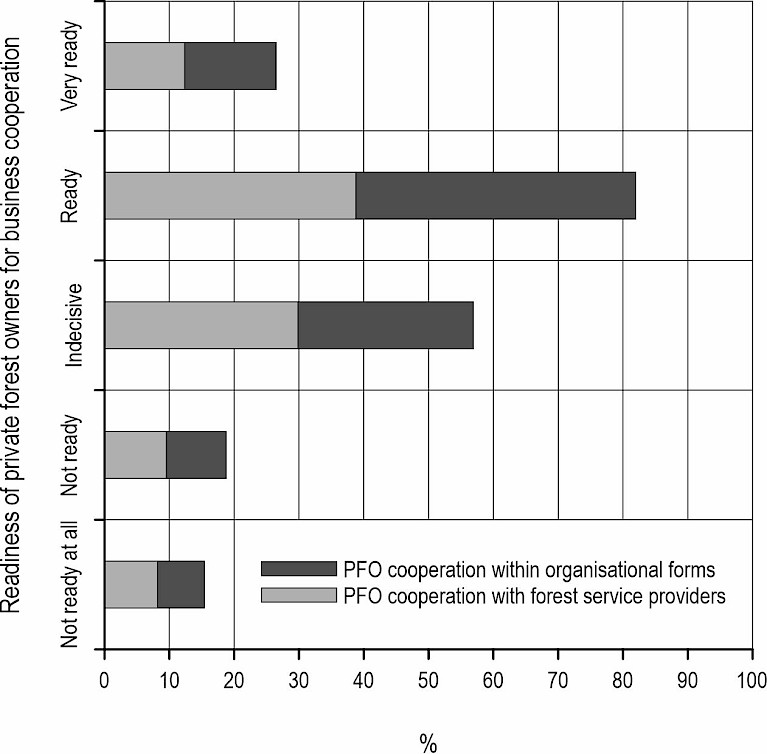
Fig. 1 Readiness of private forest owners for business cooperation
PFOs have different motives and expectations when it comes to business cooperation, therefore different organisational forms of PFO business cooperation were supported by the government and established in Slovenia (see Private Forest Owners Business Cooperation in Slovenia). None of the currently existing organisational forms of business cooperation between PFOs is considered by PFOs as very appropriate. Producer groups under the CAP were rated as the most appropriate and machinery rings were considered as least appropriate (Fig. 2).
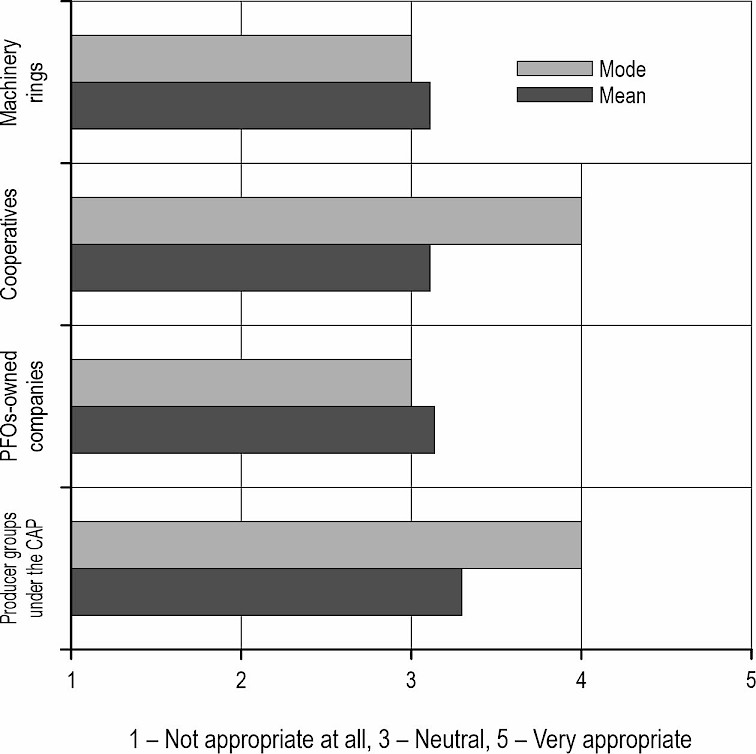
Fig. 2 Appropriateness of different existing organisational forms of business cooperation between PFO
When it comes to performing forest management activities, PFOs have different needs, which are reflected in their cooperation with forest service providers. The results show that none of the existing organisational forms of PFO business cooperation with forest service providers is considered as very appropriate. Short-term business cooperation with service providers, such as performing timber harvesting and skidding services, was considered as the most appropriate, while long-term business cooperation with forest service providers, such as forest leases or forest management, were considered the least appropriate (Fig. 3).
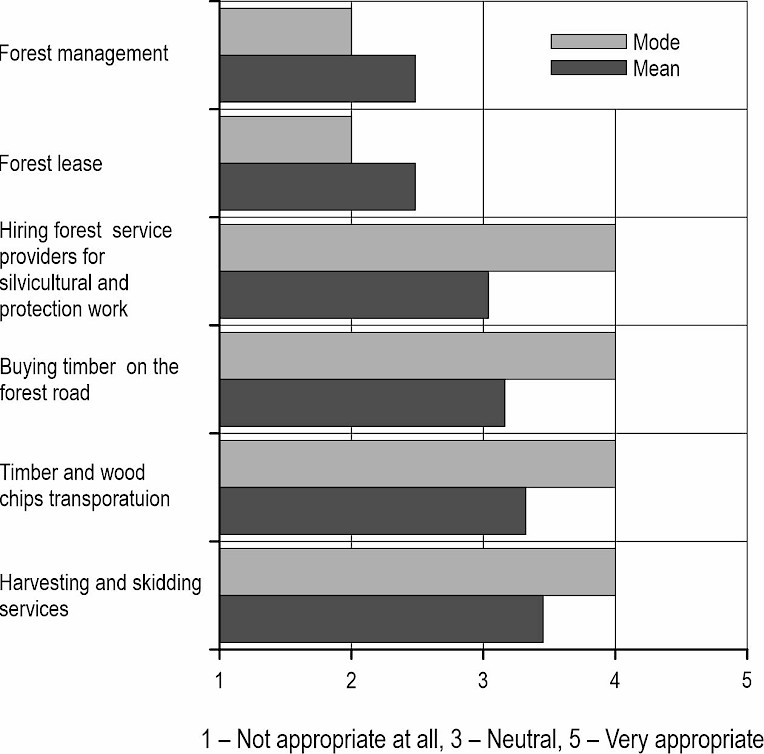
Fig. 3 Appropriateness of different existing organisational forms of PFO business cooperation with forest service providers
4.3 Results of Logistic Regression Models
The estimates of the binary logistic regression model for the PFOs’ readiness to cooperate with other PFOs in business organisational forms (BCOOP_PFO) are shown in Table 3. The results show that PFOs’ readiness is influenced by forest management objectives related to carbon sequestration, wood and biomass production for personal use and for the market, as well as preserving forests as investment for the future. PFOs who consider forests as important for carbon sequestration are more ready to cooperate with other PFOs in business organisational forms. In addition, the more important PFOs find wood and biomass production for personal use, less ready they are to engage with other PFOs in business organisational forms. On the contrary, the more important PFOs find wood and biomass production for the market, more ready they are to engage with other PFOs in business organisational forms. When it comes to forest management objective related to preservation of forests as an investment for the future, PFOs who consider it as more important are more ready to engage with PFOs in business organisational forms. In terms of socio-demographic and economic characteristics of PFOs, younger and more educated PFOs are more ready to cooperate with PFOs in business organisational forms.
Table 3 Variables in the equation for PFOs' business cooperation within organisational forms
|
Variable |
B |
S.E. |
Wald |
df |
Sig. |
Exp, B |
|
Forest management objectives (MANOBJ) |
||||||
|
Forest is important for carbon sequestration |
0.398 |
0.110 |
13.145 |
1 |
<0.001 |
1.489 |
|
Forest is important for wood and biomass production for personal use |
–0.177 |
0.057 |
9.751 |
1 |
0.002 |
0.838 |
|
Forest is important for wood and biomass production for the market |
0.118 |
0.056 |
4.395 |
1 |
0.036 |
1.125 |
|
Forest is important as investment for future |
0.180 |
0.058 |
9.640 |
1 |
0.002 |
1.197 |
|
Socio-demographic and economic characteristics of PFOs (SOCDEM) |
||||||
|
PFOs’ age |
–0.11 |
0.005 |
5.312 |
1 |
0.021 |
0.989 |
|
PFOs’ education level |
0.298 |
0.132 |
5.102 |
1 |
0.024 |
1.347 |
|
CONSTANT |
–1.420 |
0.616 |
5.308 |
1 |
0.021 |
0.242 |
The second model focused on PFOs’ readiness to cooperate with forest service providers (BCOOP_SERVICE) (Table 4). The results show that PFOs’ readiness for cooperation with forest service providers is influenced by forest management objective related to biodiversity conservation, suggesting that the more important they find this forest management objective, more ready they are for business cooperation with forest service providers. Similar to the first model (BCOOP_PFO), PFOs’ readiness to cooperate with forest service providers is also influenced by the forest management objectives related and use of timber. PFOs who find wood and biomass production for personal use more important are less ready for business cooperation with forest service providers, and the more important PFOs find wood and biomass production for the market, more ready they are for business cooperation with forest service providers. As for the other factors, only one category of socio-demographic and economic characteristics was found to be statistically significant. The results showed that better educated PFOs are more ready for business cooperation with forest service providers.
Table 4 Variables in the equation for business cooperation with forest service providers
|
Variable |
B |
S.E. |
Wald |
df |
Sig. |
Exp, B |
|
Forest management objectives (MANOBJ) |
||||||
|
Forest is important for biodiversity conservation |
0.345 |
0.098 |
12.264 |
1 |
<0.001 |
1.412 |
|
Forest is important for wood and biomass production for personal use |
–0.139 |
0.057 |
6.064 |
1 |
0.014 |
0.870 |
|
Forest is important for wood and biomass production for the market |
0.164 |
0.052 |
9.764 |
1 |
0.002 |
1.178 |
|
Socio-demographic and economic characteristics of PFOs (SOCDEM) |
||||||
|
PFOs’ education level |
0.391 |
0.132 |
8.785 |
1 |
0.003 |
1.479 |
|
CONSTANT |
–1.251 |
0.491 |
6.500 |
1 |
0.11 |
0.286 |
5. Discussion
Readiness for business cooperation is high among PFOs, but existing forms are not fully appropriate
The results of this study show that PFOs in Slovenia are in generally ready to engage in business cooperation, as 51.6% are ready and 30.1% indecisive for business cooperation with other PFOs and 56.9% are ready and 26.8% indecisive for cooperation with forest service providers. Despite their readiness and multiple attempts to encourage PFO business cooperation in Slovenia, such cooperation is still very rare (OP NFP 2022–2026 2022).
One reason for that is the lack of clear institutional support. The competences when it comes to providing information or giving advice about business cooperation remain unclear and insufficient (Aurenhammer et al. 2018). The Chamber of Forestry and Agriculture of Slovenia, which is responsible for promoting business related activities, also including PFOs business cooperation, lacks human resources and therefore cannot provide substantial services. The Slovenia Forest Service is the public forestry service that has frequent contacts with PFOs but is restricted to give extension related to any business activities by Forest Act (2007). Moreover, according to Ring (2022), the employees of Slovenia Forest Service do not feel competent to give extension related to PFO business cooperation because of lack of knowledge. Forest Owners Association of Slovenia is a voluntary organisation representing PFOs interests mainly in policy process, and it lacks competences and financial resources for professionalisation. Therefore, it is not able to provide information or advice on business cooperation to PFOs (Plevnik in Pezdevšek Malovrh 2021).
Financial support by the government is also limited and only available for certain organisational forms. According to the Rules on Financing and Co-financing Investments in Forests (2008), machinery rings and PFOs associations (interest organisational form) can receive up to 50% co-financing for operational costs for up to five years after their establishment. This includes costs for setting up (e.g. documentation, registration, branding, equipment), running operations (e.g. rent, materials, staff), and promotional activities (e.g. fairs, marketing materials). Producer groups under the CAP are also eligible for support, but the rules are even more restrictive. These groups can receive funding for administrative costs, training, and marketing, provided they meet specific criteria such as having a minimum number of members with forest area of a certain size and being officially recognized (Slovenian CAP 2023–2027, 2021). All these restrictive criteria make it very hard for small-scale PFOs, who are the prevailing group in Slovenia, to get this funding. However, as only certain organisational forms and activities are eligible for financial support, the lack of funding is widely seen as a major barrier to PFOs’ business cooperation (Aurenhammer et al. 2018, Hrib et al. 2024).
The results of this study also suggest that none of the existing organisational forms are very suitable for PFOs. Producer groups under the CAP were rated as the most appropriate, but they mainly serve for PFOs who own larger forest properties and actively manage their forests and sell timber (Pezdevšek Malovrh et al. 2023a). This points to a general lack of knowledge among PFOs about business organisational forms, which could be a consequence of lack of promotional activities and unclear and insufficient competences and responsibilities of different institutions (Hrib et al. 2024).
Forest management objectives shape readiness of PFOs for business cooperation
PFOs have been found to have multiple forest management objectives that influence their behaviour and their engagement in forest management activities (Feliciano et al. 2017, Westin et al. 2023) but also their responsiveness to forest policy (Fernandes and Simões 2024). The results of this study show that forest management objectives also have significant influence on PFOs’ readiness to engage in business cooperation.
Specifically, objectives related to wood and biomass production, whether for personal use or for the market, play a key role in shaping PFOs’ readiness to engage in business cooperation. PFOs who prioritise wood and biomass production for personal use tend to be less ready to engage in business cooperation, both with other PFOs and with forest service providers. In contrast, those who value wood and biomass production for the market are generally more open to such cooperation. This aligns with previous studies showing that PFOs who are more active in forest management are more likely to be members of organisational forms such as machinery rings, producer groups under the CAP, or forest owner associations (Šálka et al. 2016, Pezdevšek Malovrh 2022b, Lähdesmäki et al. 2023). Moreover, PFOs who sell timber on the market are more likely to cooperate with forest service providers, as they seek professional support and efficiency in forest operations (Matilainen et al. 2023). These findings are consistent with the broader rationale behind promoting PFO business cooperation, considering that the main goals for establishing PFO business cooperation include improving forest management efficiency, strengthening market position through joint timber marketing, accessing financial incentives, coordinating forest operations, sharing machinery, exchanging information, and reducing transaction costs (Pezdevšek Malovrh et al. 2024).
Interestingly, the study also reveals that PFOs who value forests for biodiversity conservation, carbon sequestration, or as a investment for future are more likely to engage in business cooperation. This marks a shift from traditional forest ownership values, which focused primarily on wood production and income generation, toward more environmentaly oriented PFOs (Stockmann et al. 2024, Häyrinen et al. 2025). Additional insight can be drawn from the characteristics of the sample in this study as 44.3% of respondents live in settlements with more than 3000 inhabitants, suggesting a degree of physical and emotional distance from their forest properties. Furthermore, 54.7% are employed or self-employed, indicating that their livelihoods are not directly dependent on forest income, which may make them more open to cooperation based on non-economic forest values, such as biodiversity conservation or carbon sequestration (Matilainen et al. 2023). Therefore, business cooperation that emphasizes environmental benefits can be a key strategy in persuading PFOs to cooperate.
Younger age and higher education increase PFOs readiness for business cooperation
The results of this study show that both age and education significantly influence PFOs’ readiness to engage in business cooperation. Specifically, younger and more educated PFOs are more likely to cooperate with other PFOs in business organisational forms, while education alone appears to influence readiness to cooperate with forest service providers. This higher readiness among younger and better-educated PFOs may be partially explained by their greater adaptability to changes in forest management practices (Tiebel et al. 2024, Eriksson 2025).
In addition to their greater adaptability, several other factors may contribute to their higher readiness to engage in business cooperation. More educated PFOs may be more aware of the benefits of business cooperation and may better understand conditions and regulations that are set to establish different organisational forms or enter into contracts with forest service providers (Matilainen et al. 2023). Furthermore, younger and more educated PFOs are more likely to use online platforms and shared databases to find information about their forest, to find forest service providers or even to get information about how to establish different organisational forms (Triplat and Krajnc 2021).
Education also appears to shape forest management values. PFOs with higher levels of education tend to adopt more preservation-oriented objectives, placing greater importance on biodiversity conservation and carbon sequestration (Ficko 2019). These PFOs are also more likely to express readiness for business cooperation, particularly when their forest management objectives align with broader environmental goals, such as biodiversity conservation or carbon sequestration.
Forest property size and forest management activity do not influence PFOs readiness for business cooperation
While forest management objectives and some socio-demographic and economic characteristics of PFOs significantly influence PFOs’ readiness to engage in business cooperation, the results of both logistic regression models show that forest property characteristics and forest management activity in the past do not have a statistically significant influence on PFOs readiness to engage in business cooperation. These results are unexpected, as previous studies have consistently shown that more active PFOs and those owning larger forest properties are more inclined to engage in interest or business cooperation (Pezdevšek Malovrh 2010, Pezdevšek Malovrh and Laktić 2017, Stockmann et al. 2024).
One possible explanation related to forest management activity lies in the sample characteristics as only 24.9% of PFOs in our sample were without harvesting activity in the last five years. This is the consequence of large-scale natural disturbances and obligatory salvage logging (Stare et al. 2025a). This likely reduced the variability in forest management activity variable and therefore explains its lack of significant influence on PFOs’ readiness for business cooperation.
Forest property size was expected to be a positive predictor of PFO business cooperation but was not a significant predictor in our model. This could be expalined by the result of sample characteristics, which included a large number of PFOs who are not engaged in business cooperation. In addition, positive prediction of this variable was based on previous studies (Pezdevšek Malovrh et al. 2024) that have examined members of different organisational forms, where PFOs with larger forest properties were found to engage in business cooperation more often. It rather seems that PFOs with smaller properties simply lack access to organisational forms that meet their needs (Hrib et al. 2024).
As with all studies, this one also has some limitations. The limitations of this study primarily stem from the choice of data analysis method. Logistic regression was selected because it imposes fewer statistical requirements compared to methods like discriminant or probit analysis, but this may limit the exploration of more complex relationships between variables. Furthermore, non-responses were not followed up, potentially introducing non-response bias, and affecting the overall robustness of the findings. Another limitation is related to the sample, which was representative taking into account the region, type of settlement and age structure. However, the average forest property size of the respondents was 7.46 hectares, which is above the Slovenian average of 3.20 hectares. This is a consequence of random selection of households. However, the distribution among forest property size classes aligns with the national size-class distribution. It is important to note that small-scale PFOs owning less than 1 hectare are numerous, yet collectively they account for only a minor share of the total forest area (Slovenia Forest Service 2025). Also, previous studies show that small-scale PFOs are reluctant to cooperate in any kind of research and therefore this explains the difference in the average forest property size (Kumer and Urbanc 2020).
6. Policy Recommendation
Private forest management in Slovenia is far from optimal, particularly regarding the wood mobilisation from private forests. However, as Slovenia aims to meet growing demand for sustainable and renewable materials (OP NFP 2022–2026 2022), improving wood mobilisation and strengthening PFO business cooperation will be essential. At the same time, Slovenian forest policy only supports a limited number of organisational forms of business cooperation, none of which are considered very appropriate by PFOs. Nevertheless, the overall readiness among PFOs to engage in business cooperation is very encouraging. Therefore, policy decision-makers need to prepare a mix of policy instruments that address the needs of PFOs. Such measures could increase the number of PFOs engaged in business cooperation. Table 5 outlines a set of general and specific policy recommendations to achieve the desired level of engagement of PFOs in business cooperation.
In terms of general policy recommendation, the role of existing institutions in promoting business cooperation should be clarified. Currently, three institutions could be responsible for guiding and promoting business cooperation, namely Chamber of Agriculture and Forestry of Slovenia, Slovenia Forest Service and Forest Owners Association of Slovenia. Based on legally defined responsibilities and competencies of these institutions (see Discussion), any of them could take the role. Financial support could be given to the Chamber of Agriculture and Forestry of Slovenia to address the lack of human resources, or to the Forest Owners Association of Slovenia to professionalize its work and build advisory capacity (Pezdevšek Malovrh et al. 2023a). Also, the Slovenia Forest Service, which is a public forestry service that maintains regular contact with PFOs, could be given permission to provide business cooperation extension services by the Forest Act. Therefore, this institution could establish a new department focusing only on PFO business cooperation related activities, which will not be part of public forest service.
Forest-related legislation should also be amended in order to promote a broader range of business organisational forms. Currently existing organisational forms were evaluated by PFOs as inappropriate. Therefore, the above mentioned institutions should strengthen the promotion of the existing ones and potentially promote and support the establishment of new organisational forms that have proved successful abroad, for example, joint ventures from Estonia (Põllumäe et al. 2019), public-private partnerships from Ireland (Ní Dhubháin et al. 2007) or forest groups from Belgium (Sousa-Silva et al. 2016). Once the new organisational forms are recognised and supported by legislation, the competencies of employees within the responsible institution must be strengthened through targeted education as evidenced in a previous study addressing the lack of knowledge about PFOs business cooperation (Ring 2022). This institution should then provide PFOs with legal assistance, especially with information about entering into contracts and establishing an organisational form.
To address the lack of knowledge among PFOs about business cooperation, different communication tools should be developed. Promotional campaigns, informational materials, and outreach strategies can help raise awareness, promote suitable business organisational forms, and encourage participation (Hrib et al. 2024, Wadenspanner et al. 2025).
In addition to general policy instruments, specific policy instruments should be introduced to promote business cooperation among PFOs. Financial incentives must be substantial enough to support the professionalisation of business organisational forms and should be accessible to a wide range of organisational forms. Business organisational forms as pilot projects should be established and then promoted as examples of good practice that can be replicated across the country.
For business cooperation with forest service providers, a certification system should be developed. These certificates, for example Certificate of Trust, should reflect the quality of service of forest service provider or forest manager and their financial capacity and environmental and social responsibility. These certificates should be given by independent institution, such as Inspectorate for Agriculture, Forestry, Hunting and Fisheries or Slovenian Forestry Institute, which has already established a public database of forest service providers (Moj Gozdar 2025).
Furthermore, pilot projects could also be used to promote long-term business cooperation models, such as forest lease or forest management, which offer stability in forest management and build trust between PFOs and forest service providers. Here, the role of Slovenian state forest company could be noticed, as they could act as a model provider of long-term forest management services to PFOs. They could offer different forest management services under transparent contracts that could be promoted as pilot projects.
Finally, digital platforms, like Moj Gozdar (Eng. My Forester) (Moj Gozdar 2025), that provide PFOs with information about forest service providers and samples of contracts should be promoted to increase the share of PFO business cooperation (Triplat and Krajnc 2021). These platforms can reduce transaction costs, improve transparency, and connect PFOs with potential business partners.
Table 5 Policy recommendation
|
General policy instruments to support business cooperation |
|
|
Define institutional responsibilities: Clearly legally define the responsibility and competence of existing institutions in promoting PFOs business cooperation (Regulatory) Promote different business organisational forms: Forest-related legislation should be amended in order to promote a broader range of business organisational forms (Regulatory) Strengthen the competences of the responsible institution: Competencies of employees within responsible institution must be strengthened through targeted education (Informational) Develop communication tools: Implement promotional campaigns, informational materials, and outreach strategies for PFOs (Informational) |
|
|
Specific policy instruments to support cooperation between PFOs |
Specific policy instruments to support PFOs cooperation with forest service providers |
|
Ensure that financial incentives are available for different business organisational forms and are substantial enough to support professionalisation (Economic) Through pilot projects, promote the development of different business organisational forms and then promote them as examples of good practices (Informational) |
Develop a certification system (e.g., Certificate of Trust) for forest service providers based on the quality of their work, their financial capacity and environmental and social responsibility (Regulatory) Through pilot projects, promote long-term business cooperation with forest service providers (forest lease, forest management) (Informational) Promotion of digital platforms that offer PFOs information and contacts of forest service providers (Informational) |
7. Conclusions
This study is based on a large sample of PFOs in Slovenia, providing a comprehensive overview of their readiness to engage in business cooperation, appropriate organisational forms and the factors influencing their readiness to engage. The results of this study indicate a high level of readiness among PFOs to engage in such cooperation; however, none of the existing organisational forms seem to be very appropriate. PFO decision to engage in business cooperation is influenced by PFO forest management objectives related to wood and biomass production, biodiversity conservation, carbon sequestration and preserving forests as an investment for the future and their socio-demographic characteristics (age and education).
In the future, it will be essential to increase the share of PFOs engaged in business cooperation, especially in countries where insufficient private forest management hinders wood mobilisation. This is necessary to meet the growing demand for wood and support the transition to a bioeconomy and carbon neutral society. To motivate PFOs to engage in business cooperation, forest policy decision makers must make a holistic transformation of forest policy. To achieve the desired forest policy outcomes, such as increasing the proportion of potential harvesting rates and carrying out silvicultural work especially in private forests, the transformation should incorporate innovative and supportive policy instruments.
This study offers policy recommendations that can serve as a basis to guide policy decision-makers to develop innovative and supportive policy instruments. Therefore, future studies should focus on acceptance and evaluation of specific policy instruments that effectively promote PFOs business cooperation among different types of PFOs. It should also explore innovative organisational models tailored to diverse owner types and assess the applicability of successful foreign models for implementation in the Slovenian socio-economic and policy context. Additionally, it should investigate the group of passive PFOs to understand their reluctance to engage in forest management and in business cooperation. Specifically, it should examine the conditions under which they would be willing to participate in various business organisational forms, identify the necessary instruments to facilitate their cooperation, and determine their preferences. With the results of this study and follow-up studies, more tailored policy recommendations could be developed than the ones presented in this study, to address the unique characteristics and forest management objectives of different types of PFOs, ultimately leading to more efficient management of private forests and sufficient wood mobilisation to support the transition to bioeconomy and carbon neutral society.
Acknowledgments
Data for this study were collected within the project: CRP V42013 »Efficient management of private forests to support wood mobilisation«, funded by the Ministry of Agriculture, Forestry and Food of the Republic of Slovenia and Slovenian Research and Innovation Agency. The results and this article are part of emerging Ph.D. at Biotechnical Faculty, University of Ljubljana of Z.U. and her supervisor prof. Š.P.M., PhD., and co-supervisor res. assoc. A.J., PhD., with the title: »Influencing factors on the business organization of private forest owners in Slovenia«.
Conflicts of Interest
The authors declare no conflict of interest. The founding sponsors had no role in the design of the study; in the collection, analyses, or interpretation of data; in the writing of the manuscript, and in the decision to publish the results.
8. References
Agricultural Act, 2008: Official Gazette of the Republic of Slovenia, No. 45/08 of 9 May 2008.
Aurenhammer, P.K., Ščap, Š., Triplat, M., Krajnc, N., Breznikar, A., 2018: Actors’ Potential for Change in Slovenian Forest Owner Associations. Small-scale Forestry 17(2): 165–189. https://doi.org/10.1007/s11842-017-9381-2
Avsec, F., 2005: Agricultural Co-operatives in the Republic of Slovenia. Sociologija i prostor 43(1): 83–108.
Beach, R.H., Pattanayak, S.K., Yang, J.-C., Murray, B.C., Abt, R.C., 2005: Econometric studies of non-industrial private forest management: a review and synthesis. For. Policy Econ. 7(3): 261–281. https://doi.org/10.1016/S1389-9341(03)00065-0
Brahic, E., Banos, V., Deuffic, P., 2025: Private Forest Owners’ Involvement in Forest Management: The Hidden Side of the Presumed »Inactive« Forest Owners in Southwestern France. Small-scale Forestry 24(3): 241–270. https://doi.org/10.1007/s11842-025-09592-8
Černač, G., Pezdevšek Malovrh, Š., 2020: Analiza uspešnosti prodaje gozdnih lesnih sortimentov v gozdarski zadrugi lastnikov gozdov Pohorje-Kozjak. In: Acta Silvae et Ligni 122: 1–17.
Eriksson, L., 2025: Social Influence in Forest Management Transitions: A Study of Private Forest Owners in Sweden. Soc. Natur. Resour.: 1–19. https://doi.org/10.1080/08941920.2025.2589903
FAO, 2024: The State of the World’s Forests 2024: Forest-sector innovations towards a more sustainable future. FAO: Rome, Italy.
Feliciano, D., Bouriaud, L., Brahic, E., Deuffic, P., Dobsinska, Z., Jarsky, V., Lawrence, A., Nybakk, E., Quiroga, S., Suarez, C., Ficko, A., 2017: Understanding private forest owners’ conceptualisation of forest management: Evidence from a survey in seven European countries. J. Rural. Stud. 54: 162–176. https://doi.org/10.1016/j.jrurstud.2017.06.016
Fernandes, M.E., Simões, P., 2024: Private Forest owners’ organizations adherence to policy tools. Insights from Portugal. For. Policy Econ. 160: 103147. https://doi.org/10.1016/j.forpol.2023.103147
Ficko, A., 2019: Private Forest Owners’ Social Economic Profiles Weakly Influence Forest Management Conceptualizations. Forests 10(11): 956. https://doi.org/10.3390/f10110956
Field, A., 2009: Discovering Statistics Using SPSS, 3rd ed.; SAGE Publications Ltd: London, United Kingdom, 856 p.
Forest Act., 2007: Official Gazette of the Republic of Slovenia, No.110/07 of 3 December 2007.
Forest Owners Association of Slovenia, 2025: Zveza lastnikov gozdov Slovenije. Available online: https://www.slovenski-gozdovi.org/ (accessed 22. 8. 2025)
Hansmann, R., Kilchling, P., Seeland, K., 2016: The Effects of Regional Forest Owner Organizations on Forest Management in the Swiss Canton of Lucerne. Small-scale Forestry 15(2): 159–177. https://doi.org/10.1007/s11842-015-9315-9
Häyrinen, L., Kaseva, J., Pouta, E., 2025: Finnish forest owners’ intentions to participate in cooperative forest management. For. Policy Econ. 172: 103420. https://doi.org/10.1016/j.forpol.2024.103420
Hosmer, D.W., Lemeshow, S., 2004: Applied Logistic Regression, 2nd ed.; Wiley-Interscience: Hoboken, New Jersey, United States, 373 p.
Hrib, M., Hruška, L., Jarkovská, M., 2024: The potential of small-scale owners’ associations for sustainable forest management: the case of the Czech Republic. Scand. J. For. Res. 39(6): 328–343. https://doi.org/10.1080/02827581.2024.2409111
Iveta, N., Pezdevšek Malovrh, Š., 2021: Aktiviranje gospodarjenja v zasebnih gozdovih s poslovnim sodelovanjem med zasebnimi lastniki gozdov in ponudniki gozdarskih storitev: študij primera revir Vodice. Acta Silvae et Ligni 125: 39–52. https://doi.org/10.20315/ASetL.125.4
Kronholm, T., Larsson, I., Erlandsson, E., 2021: Characterization of forestry contractors’ business models and profitability in Northern Sweden. Scand. J. For. Res. 36(6): 491–501. https://doi.org/10.1080/02827581.2021.1973087
Kumer, P., Urbanc, M., 2020: Focus Groups as a Tool for Conducting Participatory Research: A Case Study of Small-Scale Forest Management in Slovenia. In: Nared, J., Bole, D., Eds.; Participatory Research and Planning in Practice, Springer International Publishing: Cham, Switzerland, 207–220 p.
Laakkonen, A., Hujala, T., Pykäläinen, J., 2019: Integrating intangible resources enables creating new types of forest services – developing forest leasing value network in Finland. For. Policy Econ. 99: 157–168. https://doi.org/10.1016/j.forpol.2018.07.003
Lähdesmäki, M., Matilainen, A., Lehto, P., 2023: Forest owner or shareholder? Ownership feelings in a jointly owned forest. Scand. J. For. Res. 38(4): 254–264. https://doi.org/10.1080/02827581.2023.2216945
Lawrence, A., 2018: Do interventions to mobilize wood lead to wood mobilization? A critical review of the links between policy aims and private forest owners’ behaviour. Int. Journal Forest Res. 91(4): 401–418. https://doi.org/10.1093/forestry/cpy017
Lidestav, G., Westin, K., 2023: The Impact of Swedish Forest Owners’ Values and Objectives on Management Practices and Forest Policy Accomplishment. Small-scale Forestry 22(3): 435–456. https://doi.org/10.1007/s11842-022-09538-4
Loreggian, F., Secco, L., Pettenella, D., 2023: Organizational Models in European Forestry: An Attempt of Conceptualization and Categorization. Forests 14(5): 905. https://doi.org/10.3390/f14050905
Lynch, L., Hardie, I.W., Parker, D.D., 2002: Analyzing Agricultural Landowners’ Willingness To Install Streamside Buffers. Working Paper No. 28570, University of Maryland, Department of Agricultural and Resource Economics. https://doi.org/10.22004/ag.econ.28570
Makrickiene, E., Brukas, V., Brodrechtova, Y., Mozgeris, G., Sedmák, R., Šálka, J., 2025: From command-and-control to good forest governance: A critical interpretive analysis of Lithuania and Slovakia. For. Policy Econ. 109:102024. https://doi.org/10.1016/j.forpol.2019.102024
Manski, C.F., 1977: The structure of random utility models. Theory and Decision 8(3): 229–254. https://doi.org/10.1007/BF00133443
Matilainen, A., Andersson, E., Lähdesmäki, M., Lidestav, G., Kurki, S., 2023: Services for What and for Whom? A Literature Review of Private Forest Owners’ Decision-Making in Relation to Forest-Based Services. Small-scale Forestry 22(3): 511–535. https://doi.org/10.1007/s11842-023-09541-3
Ní Dhubháin, Á., Cobanova, R., Karppinen, H., Mizaraite, D., Ritter, E., Slee, B., Wall, S., 2007: The Values and Objectives of Private Forest Owners and Their Influence on Forestry Behaviour: The Implications for Entrepreneurship. Small-scale Forestry 6(3): 347–357. https://doi.org/10.1007/s11842-007-9030-2
Nilsson, J., Helgesson, M., Rommel, J., Svensson, E., 2020: Forest-owner support for their cooperative’s provision of public goods. For. Policy Econ. 115: 102156. https://doi.org/10.1016/j.forpol.2020.102156
Operational Programme for the Implementation of National Forest Programme 2022–2026, 2022: Republic of Slovenia, Ministry of Agriculture, Forestry and Food, Ljubljana, Slovenia, 87 p.
Pecurul-Botines, M., Secco, L., Bouriaud, L., et al., 2023: Meeting the European Union’s Forest Strategy goals: A comparative European assessment. From Science to Policy 15. European Forest Institute: Joensuu, Finland, 52 p. https://doi.org/10.36333/fs15
Pezdevšek Malovrh, Š., 2010: Influence of institutions and forms of cooperation of private forest owners on private forest management: doctoral dissertation. Doctoral Thesis, University of Ljubljana, Slovenia.
Pezdevšek Malovrh, Š., Avdibegović, M., 2021: Comparative analysis of regulatory framework related to private forest management in Slovenia and Federation of Bosnia and Herzegovina. Cent. Europ. For. J. 67(3–4): 197–211. https://doi.org/10.2478/forj-2021-0016
Pezdevšek Malovrh, Š., Avdibegović, M., Morelli, S., Paletto, A., 2024: Evolution of Private Forest Owner’s Cooperation: A Bibliometric Network Analysis. Small-scale Forestry 23(3): 393–421. https://doi.org/10.1007/s11842-024-09569-z
Pezdevšek Malovrh, Š., Krajnc, N., Triplat, M., 2022a: Factors Influencing Private Forest Owners’ Readiness to Perform Forest Management Services Within a Machinery Ring. Small-scale Forestry 21(4): 661–679. https://doi.org/10.1007/s11842-022-09513-z
Pezdevšek Malovrh, Š., Krajnc, N., Triplat, M., 2022b: Private Forest Owner’s Cooperation in Machinery Ring: Is it a Solution for Wood Mobilization from Small-Scale Private Forests? Croat. j. for. eng. 43(2): 425–440. https://doi.org/10.5552/crojfe.2022.1984
Pezdevšek Malovrh, Š., Krč, J., Leban, V., 2021: Pregled literature s področja poslovnega sodelovanja zasebnih lastnikov gozdov. Biotechnical Faculty, Department of Forestry and Renewable Forest Resources, University of Ljubljana, Slovenia.
Pezdevšek Malovrh, Š., Kumer, P., Glavonjić, P., Nonić, D., Nedeljković, J., Kisin, B., Avdibegović, M., 2017: Different organizational models of private forest owners as a possibility to increase wood mobilization in Slovenia and Serbia. Croat. j. for. eng. 38(1): 127–140.
Pezdevšek Malovrh, Š., Laktić, T., 2017: Poslovno povezovanje lastnikov gozdov na primeru Društva lastnikov gozdov Pohorje-Kozjak. Acta Silvae et Ligni 113: 1–13.
Pezdevšek Malovrh, Š., Nonić, D., Glavonjić, P., Nedeljković, J., Avdibegović, M., Krč, J., 2015: Private Forest Owner Typologies in Slovenia and Serbia: Targeting Private Forest Owner Groups for Policy Implementation. Small-scale Forestry 14(3): 423–440. https://doi.org/10.1007/s11842-015-9296-8
Pezdevšek Malovrh, Š., Uhan, Z., Krč, J., Krajnc, N., 2023: Handbook for strengthening the private forest owner’s business cooperation, 1st ed.; University of Ljubljana, Biotechnical Faculty, Department of Forestry and Renewable Forest Resources: Ljubljana, Slovenia.
Pindyck, R.S., Rubinfeld, D.L., 1981: Econometric Models and Economic Forecasts, McGraw-Hill: New York, United States, 630 p.
Plevnik, K., Pezdevšek Malovrh, Š., 2021: Analiza delovanja zveze lastnikov gozdov Slovenije s ciljem njenega izboljšanja -ali obstajajo možnosti za vzpostavitev novih poslovnih modelov sodelovanja s člani? Acta Silvae et Ligni 124: 13–28. https://doi.org/10.20315/ASetL.124.2
Põllumäe, P., Korjus, H., Kaimre, P., Vahter, T., 2014: Motives and Incentives for Joining Forest Owner Associations in Estonia. Small-scale Forestry 13(1): 19–33. https://doi.org/10.1007/s11842-013-9237-3
Põllumäe, P., Lilleleht, A., Korjus, H., 2019: Reflections of active forest owners to the public-private forestry support system in Estonia. Forestry Studies 71(1): 100–119. https://doi.org/10.2478/fsmu-2019-0015
Rauch, P., Gronalt, M., 2005: Evaluating organisational designs in the forestry wood supply chain to support Forest Owners’ Cooperations. Small-scale Forest Econ., Manag. Poli. 4(1): 53–68. https://doi.org/10.1007/s11842-005-0004-y
Resolution of National Forest Programme, 2007: Republic of Slovenia, Ministry of Agriculture, Forestry and Food, Ljubljana, Slovenia, 109 p.
Ring, B., 2022: Izvedba svetovalne dejavnosti za zasebne lastnike gozdov na Zavodu za gozdove Slovenije. Bachelor's Thesis, University of Ljubljana, Biotechnical Faculty, Ljubljana, Slovenia.
Rules on financing and co-financing of investments in forests, 2008: Official Gazette of the Republic of Slovenia of 18 July 2008.
Šálka, J., Dobšinská, Z., Hricová, Z., 2016: Factors of political power – The example of forest owners associations in Slovakia. Forest Policy and Economics 68: 88–98. https://doi.org/10.1016/j.forpol.2015.05.003
Ščap, Š., Stare, D., Krajnc, N., Triplat, M., 2021: Značilnosti opravljanja sečnje in spravila v zasebnih gozdovih v Sloveniji. In: Acta Silvae et Ligni 125: 25–38.
Seeland, K., Godat, J., Hansmann, R., 2011: Regional Forest organizations and their innovation impact on forestry and regional development in central Switzerland. For. Policy Econ. 13(5): 353–360. https://doi.org/10.1016/j.forpol.2011.03.010
Shivan, G.C., Mehmood, S.R., 2010: Factors influencing nonindustrial private forest landowners’ policy preference for promoting bioenergy. For. Policy Econ. 12(7): 581–588. https://doi.org/10.1016/j.forpol.2010.07.005
Shivan, G.C., Mehmood, S.R., 2012: Determinants of nonindustrial private forest landowner willingness to accept price offers for woody biomass. For. Policy Econ. 25: 47–55. https://doi.org/10.1016/j.forpol.2012.09.004
Slovenia Forest Service, 2025: Report of Slovenia Forest Service about forests for 2020. Zavod za gozdove Slovenije. Ljubljana, 127 p.
Sonnhoff, M., Selter, A., Kleinschmit, D., Schraml, U., 2021: Forest Management Cooperatives and Their Development Under Uncertain Conditions: A Comprehensive Analysis Using an Actor-Centered Institutionalism Approach. Small-scale Forestry 20(2): 305–323. https://doi.org/10.1007/s11842-020-09469-y
Sotirov, M., Sallnäs, O., Eriksson, L.O., 2019: Forest owner behavioral models, policy changes, and forest management. An agent-based framework for studying the provision of forest ecosystem goods and services at the landscape level. For. Policy Econ. 103: 79–89. https://doi.org/10.1016/j.forpol.2017.10.015
Sousa-Silva, R., Ponette, Q., Verheyen, K., Van Herzele, A., Muys, B., 2016: Adaptation of forest management to climate change as perceived by forest owners and managers in Belgium. For. Ecosy. 3(1): 22. https://doi.org/10.1186/s40663-016-0082-7
Stare, D., Ščap, Š., Pezdevšek Malovrh, Š., 2025a: Factors Influencing Private Forest Owners Decision-Making Rationalities to Implement Salvage Logging after Large-Scale Natural Disturbances in Slovenia. Croat. j. for. eng. 46(1): 165–177. https://doi.org/10.5552/crojfe.2025.2825
Stare, D., Uhan, Z., Triplat, M., Ščap, Š, Krajnc, N., Pezdevšek Malovrh, Š., 2025b: Private Forest Owner Typology Based on Post-Disturbance Behaviour in Slovenia. Forests 16(6): 949. https://doi.org/10.3390/f16060949
Stockmann, J., Franz, K., Seintsch, B., Neitzel, C., 2024: Factors Explaining the Willingness of Small-Scale Private Forest Owners to Engage in Forestry-A German Case Study. Forests 15(2): 319. https://doi.org/10.3390/f15020319
Tiebel, M., Mölder, A., Bieling, C., Hansen, P., Plieninger, T., 2024: Understanding small-scale private forest owners is a basis for transformative change towards integrative conservation. Peopl. Nat. 6(1): 337–353. https://doi.org/10.1002/pan3.10579
Triplat, M., Krajnc, N., 2021: A System for Quality Assessment of Forestry Contractors. Croat. j. for. eng. 42(1): 77–90. https://doi.org/10.5552/crojfe.2021.834
Uhan, Z., 2022: Možnosti za razvoj dolgoročnega poslovnega sodelovanja zasebnih lastnikov gozdov z deležniki gozdno-lesne verige preko društev lastnikov gozdov Slovenije. Thesis, University of Ljubljana, Biotechnical Faculty, Ljubljana, Slovenia.
Uhan, Z., Dobšinská, Z., Báliková, K., Pezdevšek Malovrh, Š., 2025: Policy change through the lens of private forest owners’ business cooperation: A case study of Slovenia and Slovakia. Cent. Eur. For. J. 71(4): 307–322. https://doi.org/10.2478/forj-2025-0009
Uhan, Z., Krajnc, N., Pezdevšek Malovrh, Š., 2023: Future possibilities for long-term business cooperation between private forest owners and forest service providers in Slovenia. Forestry Studies 79(1): 120–134. https://doi.org/10.2478/fsmu-2023-0016
UNECE/FAO, 2020: Who Owns our Forests? Forest Ownership in the ECE Region. Geneva Timber and Forest Study Papers No. 37. United Nations Economic Commission for Europe / Food and Agriculture Organization of the United Nations: Geneva, Switzerland. https://doi.org/10.18356/7dc640e2-en
Weiss, G., Gudurić, I., Wolfslehner, B., 2012: Review of forest owners’ organizations in selected Eastern European countries. European Forest Institute: Rome, Italy, 56 p.
Westin, K., Bolte, A., Haeler, E., Haltia, E., Jandl, R., Juutinen, A., Kuhlmey, K., Lidestav, G., Mäkipää, R., Rosenkranz, L., Triplat, M., Skudnik, M., Vilhar, U., Schueler, S., 2023: Forest values and application of different management activities among small-scale forest owners in five EU countries. For. Policy Econ. 146: 102881. https://doi.org/10.1016/j.forpol.2022.102881
Winkel, G., 2017: Towards a sustainable European forest-based bioeconomy – assessment and the way forward. European Forest Institute: Joensuu, Finland; 162 p.
© 2026 by the authors. Submitted for possible open access publication under the
terms and conditions of the Creative Commons Attribution (CC BY) license (http://creativecommons.org/licenses/by/4.0/).
Authors’ addresses:
Zala Uhan, MSc *
e-mail: zala.uhan@bf.uni-lj.si
Prof. Špela Pezdevšek Malovrh, PhD
e-mail: spela.pezdevsek.malovrh@bf.uni-lj.si
University of Ljubljana
Biotechnical Faculty
Department of Forestry and Renewable Forest Resources
Večna pot 83
1000, Ljubljana
SLOVENIA
Nike Krajnc, PhD
e-mail: nike.krajnc@gozdis.si
Slovenian Forestry Institute
Večna pot 2
1000 Ljubljana
SLOVENIA
* Corresponding author
Received: September 19, 2025
Accepted: December 17, 2025
Original scientific paper