

Levels of Vibration Exposure and Cutting Efficiency in Cross-Cutting Operations by Chainsaw: Are They Affected by Lowering of Chain Depth Gauge Height?
doi: https://doi.org/10.5552/crojfe.2026.4051
volume: issue, issue:
pp: 17
- Author(s):
-
- Foderi Cristiano
- Laschi Andrea
- Fabiano Fabio
- Galipò Giovanni
- Marchi Enrico
- Frassinelli Niccolò
- Marra Elena
- Stacchini Nicola
- Bogi Andrea
- Picciolo Francesco
- Neri Francesco
- Article category:
- Original scientific paper
- Keywords:
- saw chain, depth gauge, hand-arm vibrations, cutting efficiency, safety, forestry
Abstract
HTML
Tree felling with a chainsaw is one of the most dangerous operations, but it cannot be replaced by machines in many areas. Operators are exposed to many hazards including accidents, fatigue, fumes, dust, noise and vibration. This research focuses on vibration exposure and on how it is affected by the accuracy of saw chain maintenance. Although chain sharpening must be carried out according to the manufacturer's instructions, it is common practice to make errors in sharpening angle and chain depth gauge lowering. The aim of the study is to investigate the variations in both cutting efficiency and vibration exposure, considering three different depth gauge lowering levels (standard: 0.65 mm, over-standard: 1.0 and 1.3 mm) when cross-cutting several square beams of two species: European beech (high density) and silver fir (low density). The results show that the increase in cutting efficiency at higher depths was statistically significant for silver fir beams but limited overall (about 10%). On the other hand, the over-standard lowering of the depth gauge did not reduce the cutting time on beech. On the contrary, vibration exposure increased significantly from a minimum of 64% to a maximum of 133% compared to the standard level. These results show that the practice of lowering the depth gauge beyond the standard level is dangerous for the operator and has no real benefit in terms of cutting performance.
Levels of Vibration Exposure and Cutting Efficiency in Cross-Cutting Operations by Chainsaw: Are They Affected by Lowering of Chain Depth Gauge Height?
Cristiano Foderi, Andrea Laschi, Fabio Fabiano, Giovanni Galipò, Enrico Marchi, Niccolò Frassinelli, Elena Marra, Nicola Stacchini, Andrea Bogi, Francesco Picciolo, Francesco Neri
https://doi.org/10.5552/crojfe.2026.4051
Abstract
Tree felling with a chainsaw is one of the most dangerous operations, but it cannot be replaced by machines in many areas. Operators are exposed to many hazards including accidents, fatigue, fumes, dust, noise and vibration. This research focuses on vibration exposure and on how it is affected by the accuracy of saw chain maintenance. Although chain sharpening must be carried out according to the manufacturer's instructions, it is common practice to make errors in sharpening angle and chain depth gauge lowering. The aim of the study is to investigate the variations in both cutting efficiency and vibration exposure, considering three different depth gauge lowering levels (standard: 0.65 mm, over-standard: 1.0 and 1.3 mm) when cross-cutting several square beams of two species: European beech (high density) and silver fir (low density). The results show that the increase in cutting efficiency at higher depths was statistically significant for silver fir beams but limited overall (about 10%). On the other hand, the over-standard lowering of the depth gauge did not reduce the cutting time on beech. On the contrary, vibration exposure increased significantly from a minimum of 64% to a maximum of 133% compared to the standard level. These results show that the practice of lowering the depth gauge beyond the standard level is dangerous for the operator and has no real benefit in terms of cutting performance.
Keywords: saw chain, depth gauge, hand-arm vibrations, cutting efficiency, safety, forestry
1. Introduction
In forest operations, despite the development of technology and the introduction of high mechanisation levels, the use of chainsaws in tree felling and processing operations is still very common in many countries around the world, (Karjalainen 2001, Montorselli et al. 2010, Vusić et al. 2013, Moskalik et al. 2017, Labelle and Lemmer 2019, Lundbäck et al. 2021, Landekić et al. 2023, Antonić et al. 2023). Furthermore, the low initial investment and versatility of these motor-manual tools allow a wide use in forest operations especially in private forests (Jourgholami et al. 2013, Liepiņš et al. 2015, Koutsianitis and Tsioras 2017). Many other activities related to pruning operations, gardening and agriculture are performed using this tool, which implies high risks for the operators. Indeed, chainsaw use, carried out outdoors and without a protective cab as in machines, exposes workers to many hazards such as noise, exhaust fumes, hand-arm vibrations (HAV), wood dust, cutting wounds, and heavy workload (Calvo 2009, Neri et al. 2016, Marchi et al. 2017, Cheţa et al. 2018). In addition, chainsaw use causes a high injury rate (Klun and Medved 2007, Laschi et al. 2016), often due to professional diseases developed in the medium and long term use. Occupational diseases are due to prolonged exposure to dangerous operational conditions; in many cases, such as vibration exposure, the operators’ risk perception is limited because the negative effects on health appear after some years of exposure (Monarca et al. 2008, Papandrea et al. 2022). Many researches have focused on the consequences of vibration exposure (Barnes et al. 1969, Miura et al. 1966, Iftime et al. 2020, Masci et al. 2021) and the main symptoms are described as hand-arm vibration syndrome (HAVs) (Newington et al. 2015, Nilsson et al. 2017). The main problems due to vibrations affecting the hand-arm system consist of disorders of neurological functions and movements of the hand and arm (Matache et al. 2020) and blood flow dysfunction in the fingers (Vibration White Finger VWF) (Albizu-Urionabarrenetxea et al. 2013, Neri et al. 2018). In detail, these disorders consist of worsening of the fingers tactile perception, fingers tingling, hands and arms numbness (Seppäläinen 1972, Brammer and Pyykkö 1987). The hand-arm system is affected by these problems both during and after the exposure and especially during the night (Seppäläinen 1972, Färkkilä et al. 1985). Other researches (Koskimies et al. 1990, Bovenzi et al. 2000) highlighted numerous associations between HAV exposure and health problems in forestry workers, such as carpal-tunnel syndrome, bicipital tendinitis and epicondylitis. Frequency, amplitude, and direction of vibrations and daily exposure are factors that affect the risk of developing these diseases (Dos Santos Depoi et al. 2022). Nowadays modern chainsaws transmit lower vibration levels than models manufactured ten or twenty years ago. However, it is important to consider that the basic source of vibrations in a chainsaw is due to its engine, the reciprocating movement of its piston and the interactions between the chain and the wood during the cut (Rottensteiner et al. 2012); for this reason, it is not possible to definitively eliminate the vibration exposure (Sowa and Leszczyński 2000). Furthermore, studies done by Goglia et al. (2012) and Yovi and Yamada (2019) have demonstrated that other factors like the geometry of cutting elements (depth gauge), chain tension, bar length, fuel quantity in the tank, and operator’s experience affect the level of vibrations transmitted.
Chainsaw cutting performance and in particular the cutting efficiency are affected by many factors, such as the wood density, i.e. tree species, moisture content, chain filing and type (Otto and Parmigiani 2015, Kuvik et al. 2017, Maciak et al. 2017, Marenče et al. 2017). In detail, the higher the wood density, the higher the cutting force requirements. Cutting efficiency is expressed as the ratio of the cut surface area to the required cutting time; the better the cutting efficiency, the lower the cutting time (Gorski 1993, Maciak et al. 2017). The cutting efficiency, safety and ergonomic aspects of working with a chainsaw are influenced by condition of the saw chain, but nowadays there is still a lack of knowledge and specific training about the maintenance practices that can affect both efficiency and health risks (Gendek et al. 2018).
The cutting chain is formed by three different links: cutter links, tie straps and drive links. The wood cut is performed by the cutter links that consist of two distinct elements: a cutter and a depth gauge. The depth gauge feeds the cutter, and the thickness of the removed chip depends on its lowering level (Otto and Parmigiani 2015). The correct sharpening and chain maintenance is fundamental for an efficient and safe work and these practices must be carried out according to the manufacturer’s instructions. However, in practice many errors in sharpening angle and depth gauge lowering are common, with negative consequences for safety and cutting efficiency. Considering the vibration exposure, a research conducted by Sowa (Sowa 1998) showed that the exposure depends on the measuring axis (x, y, z) and handle (front or rear), and that other factors affecting the vibration levels are the pushing force applied to the chainsaw and the depth gauge lowering level. The force applied to the handles depends on the operator, while his working technique and the depth gauge lowering level to be maintained are recommended by the manufacturer. Unfortunately, in real working conditions chain maintenance is rarely performed according to the manufacturer’s instructions; in fact, it is confirmed by Trzciński (Trzcinski 1995) that only 15% of chains investigated had the correct depth gauge lowering level. An over-standard depth gauge lowering together with a powerful engine often causes a considerable increase in vibrations and the possibility of kickback (Dąbrowski 2012, Arnold and Parmigiani 2015, Dabrowski 2020). Kickback is one of the most dangerous inconveniences for a chainsaw operator. It consists of a quick and unexpected movement of the chainsaw and its guide bar toward the user which can be injured especially to the upper part of the body and the face. It often occurs when the operator starts the cut using the upper part of the tip of the guide bar and this circumstance is particularly frequent among novice operators. Moreover, the excessive depth gauge lowering can cause breakages to the chainsaw and its lifespan reduction (ForestWorks 2009).
For all these reasons, the instructions provided by the manufacturer in terms of sharpening angles and depth gauge lowering level should be the only ones that guarantee the greatest cutting efficiency and safer working conditions. However, relations between the depth of cut and both the vibration levels and the cutting efficiency have not yet been studied.
Furthermore, the vibration exposure varies depending on the wood species cut because of different wood densities and structure, as it was established that wood density has a significant effect on hand-arm vibration exposure (Rottensteiner et al. 2012). In addition, as investigated by Kuvik et al. (2017) and Neri et al. (2022), the presence of wood defects in softwood (knots, scar calluses due to cracks) reduces the chainsaw performance, increasing the cutting times and the vibration levels (Kuvik et al. 2017, Huber et al. 2021, Neri et al. 2022).
In this context, despite the training and safety recommendations, forestry operators generally tend to lower the depth gauge beyond the manufacturer-recommended level, because of the common belief that the lower the depth gauge, the better is the cutting efficiency (Trzcinski 1995, ForestWorks 2009, Marenče et al. 2017).
Considering all these premises, the aim of this study is to assess the expected variations of both the cutting efficiency and the operators’ vibration exposure at standard and higher depth gauge lowering levels in cross-cutting operations. Moreover, to consider the effects of wood density, the assessment was developed on two wood species (Fagus sylvatica L. and Abies alba Mill.) and, to consider the variability due to the operator, cross-cutting was carried out by four forest operators.
A further analysis has been focused on the values of vibration measured for each operator and on the operators’ grip strength on the chainsaw handles to evaluate the behaviour in handling the tool. The comparison between the vibration values measured and the manufacturer’s declaration was also conducted to highlight any deviations from safety and technical recommendations to provide guidelines to simplify the risk assessment procedures.
2. Materials and Methods
2.1 Vibration Exposure Limits
In Europe, the vibration exposure at the workplace must be investigated according to the EU Directive 2002/44/CE »Vibration«, which is related to the ISO 5349-1:2004 and ISO 5349-2:2015 Standards (International Organization for Standardization, 2004, 2015, Pandur et al. 2021). Furthermore, the technical report ISO/TR 18570 provides a supplementary method for assessing vascular disorders (International Organization for Standardization 2017). These directives describe several procedures and recommendations focused on the risk assessment, the employees’ training and on vibration exposure reduction. These regulations provide guidelines for vibration measurements stating that the frequency-weighted acceleration on tool handles must be investigated. The total daily exposure level A(8) of a conventional 8-hours working day is determined considering an exposure time of 3 hours and the maximum vibration value recorded across the two chainsaw handles. Indeed, the vibration exposure time in chainsaw use must be investigated for a maximum of three hours per day, according to FprCEN/TR15350:2020 (European Committee for Standardization 2020). This statement agrees with many researches (Poje 2011, Bačić et al. 2023, Laschi et al. 2023), where it is highlighted that in tree felling and processing activities, the use of a chainsaw comprises 30–65% of the gross working time, and therefore the operator is not continuously engaged in using the chainsaw for more than 3 or 4 hours.
In terms of daily exposure limits, the EU Directive considers the action value (2.5 ms-2) and the daily exposure limit value (5 ms-2). These values must be considered by the employer in the risk assessment, with the action level being the value below which the incidence of vibration-related diseases is low. On the contrary, this risk increases over the limit value. For this reason, the risk assessment and the adoption of preventive and organizational measures to reduce to a minimum the vibration-related risk are mandatory if the vibration exposure A(8) goes over the action level of 2.5 ms-2. In any case, it must be emphasized that, in addition to the limit and action values, the European directives also state that exposure to physical agents must be eliminated or at least reduced to the lowest level possible (International Organization for Standardization 2004, Pandur et al. 2021). Indeed, this general prevention principle leads to the need for the employer to choose the equipment and to promote the maintenance practices that produce the lower level of exposure to physical agents such as vibrations. Therefore, the hazard evaluation focused on vibration exposure must consider the tool that provides harmful working conditions and determine which are the most commonly used. For this reason, in this study the cross-cuts were performed using a petrol-powered chainsaw (Fig. 1), instead of an equivalent battery-powered model. In fact, battery-powered chainsaws, as investigated in previous studies, produced lower levels of vibration than traditional petrol-powered models (Neri et al. 2018, Huber et al. 2021, Neri et al. 2023, Mergl and Staněk 2025, Pandur et al. 2025, Staněk et al. 2025).
2.2 Sampling and Analysis
Cross-cutting operations were carried out on a flat, outdoor service area of »Reparto Carabinieri Biodiversità of Vallombrosa« in the Forest of Vallombrosa (province of Florence, Tuscany, Italy, 43°44'04.4"N 11°33'22.2"E). To assess the influence of operators’ behaviour on vibration exposure, four forest operators with the same level of experience and training, but different physical attributes (Table 1) operated in the studied area.
Table 1 Physical attributes of 4 operators
|
Height, cm |
Weight, kg |
Age, years |
|
|
Operator 1 (op1) |
170 |
75 |
61 |
|
Operator 2 (op1) |
187 |
94 |
48 |
|
Operator 3 (op3) |
168 |
73 |
41 |
|
Operator 4 (op4) |
175 |
84 |
49 |
The vibration exposure survey was conducted using the following equipment:
- 1 petrol-powered chainsaw (the Stihl MS261 C-M, Fig. 1); the choice of this specific model was made because it is very common among professional forest workers. In fact, chainsaws included in the same segment (technical specifications shown in Table 2) are commonly used to fell and to delimb small and medium diameters and branches. The chainsaw was well-maintained and in perfect technical condition during the study. Seven wood beams – section of 20 × 20 cm, about 4 meters long – of two different tree species (Silver fir, Abies alba M. and European beech, Fagus sylvatica L) were provided for the study; these came from trees harvested in the Vallombrosa Forest (province of Florence, Tuscany, Italy) and from authorized worksites. Wood basic density was measured according to ISO 13061-2:2014 as the ratio between oven-dry weight and fresh volume of several samples. These were chosen from three sections done along each beam. The wood properties are reported in Table 3
- 24 new chains (12 per species), half-chisel, 67 links, chain pitch 0.325”; 3 depth gauge lowering levels on the cutter links (8 chains per each lowering level): i) »Standard« lowering level – 0.65 mm, ii) »Larger« lowering level – 1.00 mm and iii) »Extreme« lowering level – 1.30 mm, the maximum lowering level (1.3 mm) was fixed as the lowest limit impressed on the chain, which corresponds to the depth gauge level at the end of a chain life in normal conditions; it was not further lowered to avoid excessive risks for operators (chainsaw kickback)
- each chain was used to collect 8 measurements (2 per operator) and then it was replaced so, in total, 96 measurements were collected (12 chains × 8 measurements) per tree species. Considering that a valid vibration measurement consists of approximately one minute of cutting, which corresponds to at least 4 or 5 sections (cuts), a total of 848 cross-cuts were performed during the study
- a professional sharpener (Stihl USG) used to lower the depth gauge
- a feeler gauge to verify the correct depth gauge lowering level
- a human vibration meter (six-channels) Svantek mod. 106 (Fig. 2), fitted with two triaxial accelerometers SV 105AF, (Svantek, with a sensitivity of 0.661 mV/ms -2 at 79.58 Hz – Fig. 3), with valid calibration at surveys time
- a Canon EOS 600D camera for video recording each measurement to determine the cutting time.
Table 2 Chainsaw technical specifications
|
Model |
Stihl MS 261 C-M |
|
Power |
4.1 kW |
|
Saw-bar length |
40 cm |
|
Chain type |
Half-chisel |
|
Chain pitch |
0.325” (0.8255 cm) |
|
Drive-link thickness |
1.3 mm |
|
Number of drive links |
67 |
|
Fuel supply |
Mixed (gasoline+oil) |
|
Maximum chain speed (ISO 11681) |
25.6 m s-1 |
|
Total weight |
6.9 kg |
|
*Including saw bar, chain, fuel and chain lubricant |
|
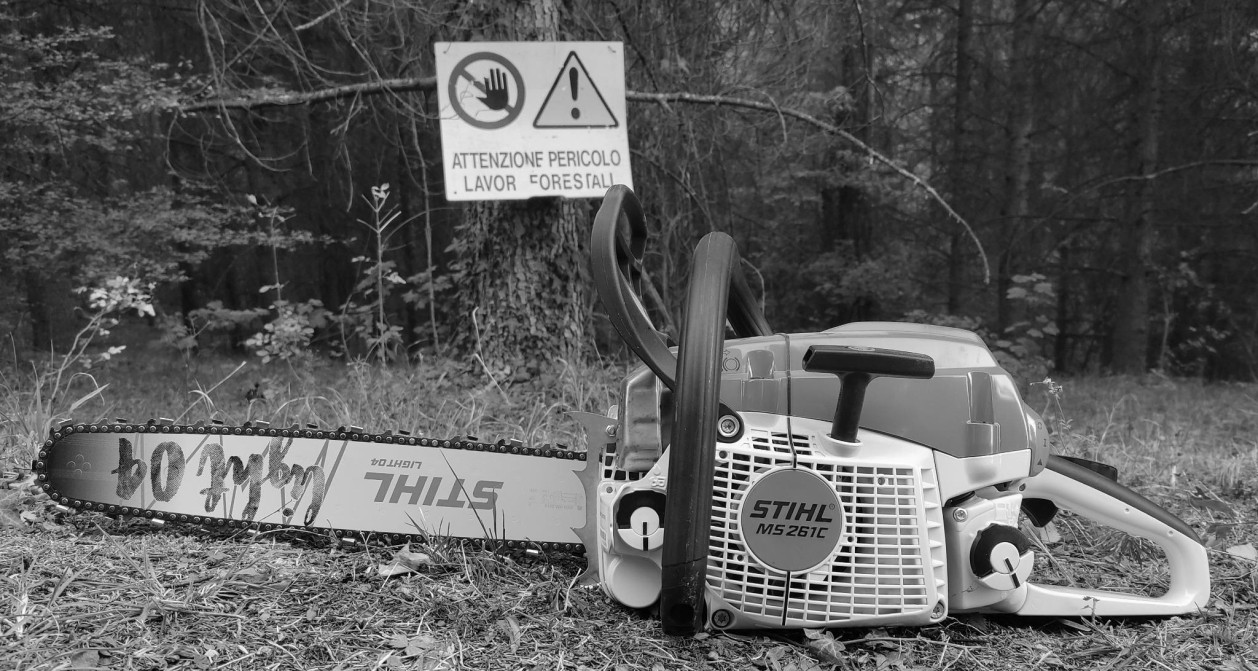
Fig. 1 Stihl MS 261C, used in the study for cross-cutting
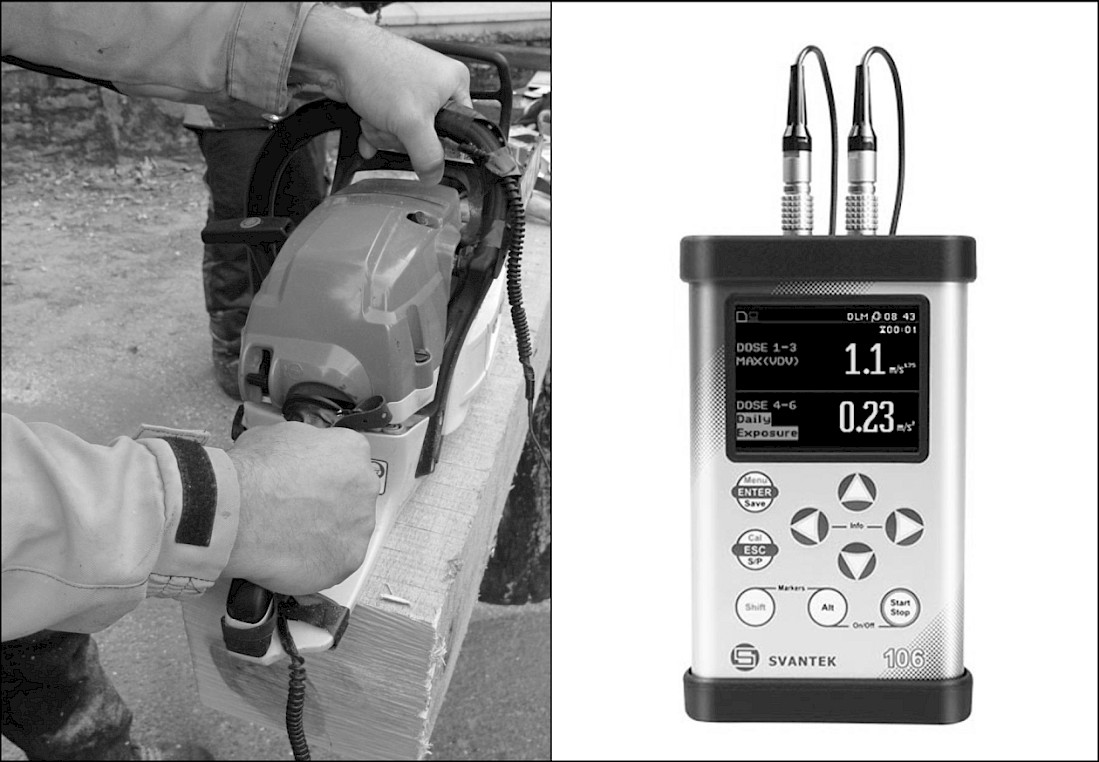
Fig. 2 Six-channels human vibration meter Svantek mod. 106
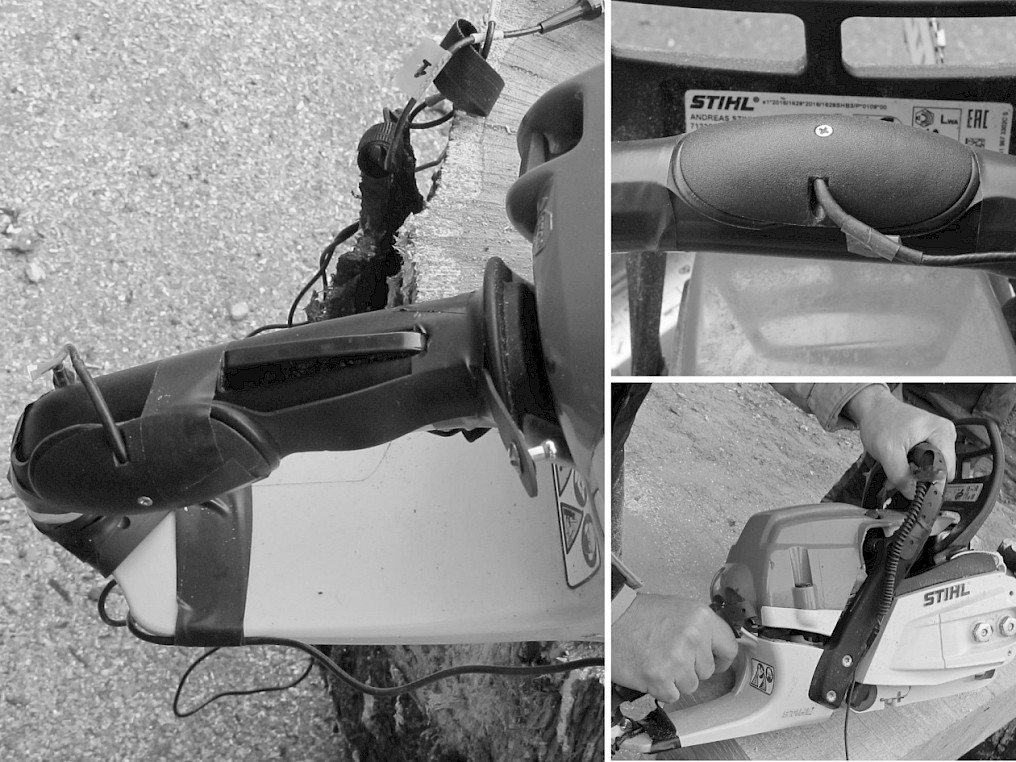
Fig. 3 Accelerometers fixed on both the front and rear handles
Table 3 Characteristics of wood beams used for the study
|
Wood beams characteristics |
|||
|
Wood species |
n. |
Basal density, kg m-3 |
Humidity, % |
|
Silver fir |
1 |
505 |
28.1 |
|
2 |
444 |
36.1 |
|
|
3 |
496 |
44.0 |
|
|
4 |
422 |
32.1 |
|
|
European beech |
1 |
729 |
43.3 |
|
2 |
700 |
45.4 |
|
|
3 |
695 |
40.1 |
|
To maintain homogeneous conditions during each cut and to prevent unexpected movements and vibrations of the beams, these were previously positioned horizontally at about 1 m from the ground on strong and stable wood supports (Fig. 4). A tractor with a front hydraulic lift equipped with forks was used to move and hold the beams on the two supports (Fig. 4).
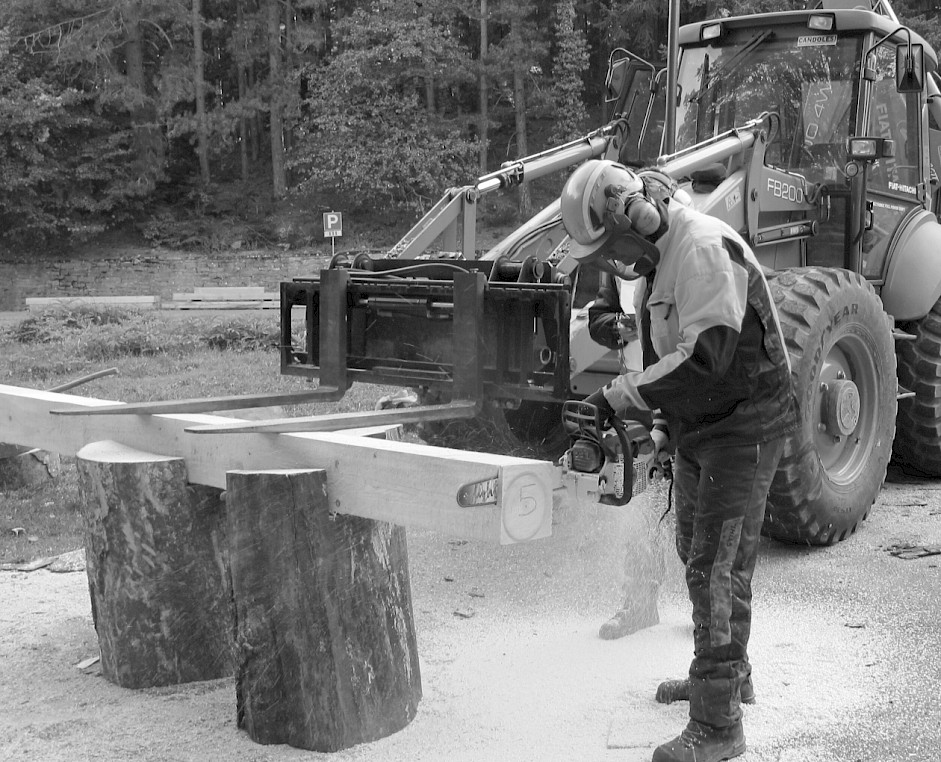
Fig. 4 Tractor holds a wood beam on wood supports while the operator performs cross cutting
Four experienced operators performed the cross-cuts by applying the following procedures:
- 1. The cross-cut (2 cm thick) was done perpendicularly to the longitudinal beam axis (Fig. 5)
- 2. The cross-cut was done starting at full throttle and at the maximum chain speed
- 3. During the cut, the chainsaw was not pushed in the cut direction but just supported
- 4. Both refuelling of the chainsaw and tensioning of the chain were done when needed or at the beginning of the cross-cutting of a new tree species. In case of interruptions due to lack of fuel, the cut was repeated after refuelling
- 5. To guarantee equal cutting conditions, cutting teeth have never been sharpened during the survey
- 6. To avoid differences between operators, a planned sequence of cuts was followed to allow each operator to cut under the same conditions as the others. The operators alternate themselves cross-cutting the same beam. With each chain, a different sequence of operators was followed during the cuts. In this way each operator was able to cut with a new chain for each depth gauge lowering level. In addition, to consider the possible variability of the wood density along the beam and between the beams, the cuts on the same beam were performed alternating the chains with different depth gauge lowering levels
- 7. This procedure was followed starting from the silver fir beams and then continuing on the beech ones. In detail, the square beams were cut by 4 operators that alternatively used 4 chains with a standard depth gauge lowering level »Standard – 0.65«, 4 with an intermediate level »Larger – 1.00« and 4 with a lower level »Extreme – 1.30«. The same procedure was followed for the beams of both tree species.
Fig. 5 Vibration measurements during cross-cutting
The ISO 5349-1:2004 standard was followed to determine the exposure of forest operators to HAV (International Organization for Standardization 2004). The daily exposure values of HAV were determined based on the A(8) frequency-weighted acceleration measures and on the values recorded on the three axes on each handle. The right procedures to determine the vibration exposure on the three orthogonal axes (x, y, z) are described by ISO 5349–2:2015 (International Organization for Standardization 2015). It defines the weighting frequency and the band filters to guarantee measurement comparison.
The results allowed us to identify the vibration effects on the hand based on the average frequency range of the one-third octave band (6.3 Hz to 1250 Hz) according to the standard ISO 5349-2: 2015 (International Organization for Standardization 2015). In addition, the standard defines the orientation of the Cartesian axes on which the measures will be recorded. The validated scheme considers the beginning of the third metacarpal sector, the »z« axis being parallel to the hand axis, and the »y« axis being perpendicular to the plane bounded by the »x« and »z« axes in left orientation. In accordance with ISO 5349-1 (International Organization for Standardization, n.d.), A(8) was calculated using Eq. [1]:

Where:

and:
A(8) 8-hour equivalent continuous vibration acceleration, m s-2
Aw-sum total frequency-weighted acceleration from the three orthogonal axes, m s-2
awx, awy, awz root-mean-square (RMS) values of the frequency-weighted accelerations along the x, y, and z axes, m s-2
Te total daily vibration exposure duration, hours.
The additional weighting frequency described in the ISO/TR 18570 was also investigated (International Organization for Standardization 2017). The equipment was chosen following the standards ISO 2631-1,2,5, ISO 5349 and the Directive 2002/44/EC; it permits measurements of parallel hand-arm vibrations on both chainsaw handles. The accelerations on both handles were measured and vibrations were then calculated (Sakakibara et al. 1989). The accelerometers were fixed by tape on the chainsaw handles (Fig. 3). Since the operators may have different behaviours in holding the chainsaw during cutting (Sowa 1998), the vibration accelerometer was also used, by an integrated force gauge, to collect the values related to the grip strength applied by the operators during the cut. To evaluate the cutting performance achieved across the three depth gauge levels and two tree species, cutting efficiency (Gorski 1993, Maciak et al. 2017) was calculated. This metric was defined as the ratio of the surface area (400 cm2) to the cutting time measured for each section. Since the cutting surface was always the same, only the cutting time was taken into consideration to evaluate the cutting efficiency. To determine cutting time, each measurement (4 or 5 cross-cuts) was video recorded using the digital camera fixed on a tripod. The video-editing software Openshot Video Editor was used to analyze each short clip, and the cutting time per section was then reported. The videos were analyzed frame by frame and the beginning and end of each cut were identified with a recording precision of 4/100 of a second (25 frames per second). The beginning of the cut was identified when the first wood chip was thrown away, and the end of the cut when the cut wood slice moved (started to fall). The cutting time was then calculated as the difference between the end and the start times. Before each cross-cut, in case of evidence of knots or wood defects, it was decided to exclude these beam portions to avoid unequal cutting conditions.
2.3 Statistical Analysis
Three levels of analysis were performed. The first focused on a general evaluation of cutting time to analyze differences between the two species, four operators and three depth-gauge lowering levels. The second analysis focused on evaluating daily vibration exposure (A(8)) as the tree species and chain depth gauge lowering level varied. The third analysis assessed differences in operators’ behaviour in relation to grip strength and vibration values measured on the chainsaw handles.
The Lilliefors test and the Levene test were used to test the data distribution and comparability of variances, respectively. Due to the normal distribution and homoscedasticity of the data relating to cutting time and vibration exposure, a parametric ANOVA and a post hoc Fisher's Least Significant Difference (LSD) test were applied. LSD test permits the comparison of differences between treatments based on group means, with default alpha level of 0.05. It returns p-values adjusted using Holm’s methods to correct the false-positive rate (FPR).
3. Results
During the study, 95 and 96 vibration measurements during cross-cutting were collected for silver fir and beech, respectively. It resulted in 848 cross-cuts and, since one measure of vibration corresponds to one minute of cut (i.e. 4 or 5 cross-cuts), more sections were needed for silver fir (466) than for beech (382). As silver fir had a lower density than beech, the average cutting time per section was shorter; therefore, a higher number of cuts was required, as confirmed by the results in Table 4.
3.1 Effects of Depth Gauge Lowering on Cutting Times
Table 4 Overall analysis of cutting times by all the operators reported considering the two species. In »Mean« column, different letters evidence statistical differences between the 3 depth gauge lowering levels. The percentage reduction of cutting times is referred to the »Standard – 0.65« depth gauge lowering level
|
Species |
Depth gauge lowering, mm |
Mean, s |
Difference, % (ref. »Standard – 0.65«) |
Std dev, s |
Samples, n |
Min, s |
Max, s |
|
All |
Standard – 0.65 |
5.33 a |
– |
0.84 |
280 |
3.64 |
8.52 |
|
Larger – 1.00 |
5.03 b |
–5.6 |
0.80 |
284 |
3.12 |
8.12 |
|
|
Extreme – 1.30 |
5.03 b |
–5.6 |
0.86 |
284 |
3.48 |
7.80 |
|
|
Silver fir |
Standard – 0.65 |
5.10 a |
– |
0.91 |
152 |
3.64 |
8.52 |
|
Larger – 1.00 |
4.65 b |
–8.8 |
0.71 |
157 |
3.12 |
6.64 |
|
|
Extreme – 1.30 |
4.50 b |
–11.8 |
0.66 |
157 |
3.48 |
6.56 |
|
|
Beech |
Standard – 0.65 |
5.61 ab |
– |
0.64 |
128 |
4.56 |
8.16 |
|
Larger – 1.00 |
5.50 b |
–2.0 |
0.65 |
127 |
4.48 |
8.12 |
|
|
Extreme – 1.30 |
5.68 b |
+1.4 |
0.59 |
127 |
4.56 |
7.80 |
The values related to cutting times are shown in Table 4 and Fig. 6. Results show that in some cases the depth gauge lowering level statistically affects the cutting times (Table 4). In particular, considering first all the measures on both species and later on silver fir only, the cutting times resulted lower when cutting with a »Larger – 1.00« and »Extreme – 1.30« depth gauge lowering level than with a »Standard – 0.65« level; the further reduction of cutting time between »Larger – 1.00« and »Extreme – 1.30« level measured for silver fir is not statistically significant. Regarding beech, the differences between the correct depth gauge lowering level and the others, in terms of cutting time, are not statistically significant.
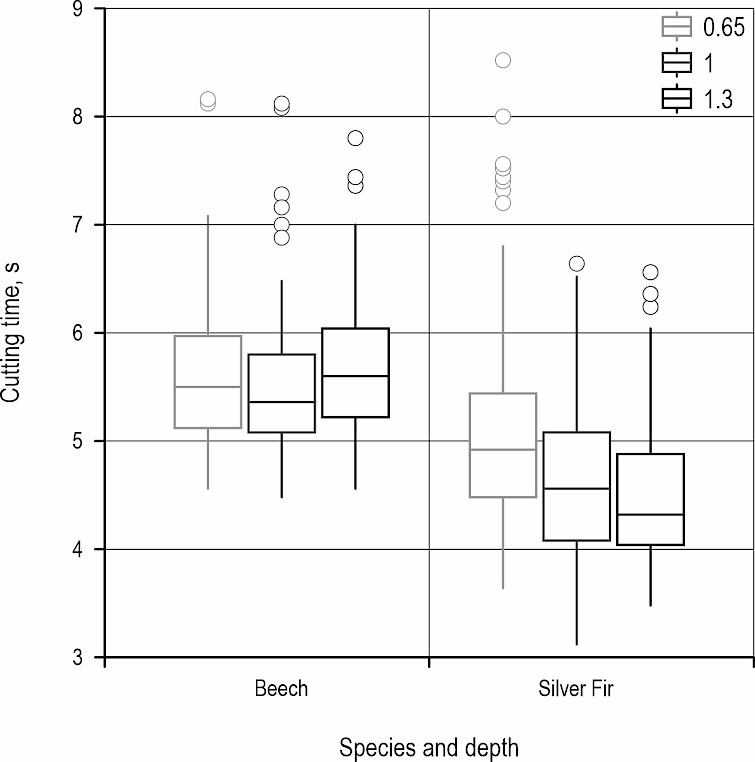
Fig. 6 Cutting time varying wood species and depth gauge lowering level. Different colours show »Standard« (light grey), »Larger« (dark grey) and »Extreme« (black) depth gauge lowering levels
Focusing on the effects of operators’ behaviour on the cutting time on both species, results show that only the operator number 4 did not report statistically significant differences in cutting times varying the three depth gauge lowering levels, while all the others show a statistical difference in their performance between the »Standard – 0.65« and the »Extreme – 1.30« levels, but not between the »Larger – 1.00« and the »Extreme – 1.30« levels (Table 5). A further investigation was carried out to evaluate any differences in cutting times between operators for each depth gauge lowering level and for each species. No statistically significant differences were recorded (Table 5).
Table 5 Cutting times performance of different operators on both species. In »Mean« column, different letters evidence statistical differences between the 3 depth gauge lowering levels per each operator
|
Operator n. |
Depth gauge lowering, mm |
Mean, s |
Std dev, s |
Samples, n |
Min, s |
Max, s |
|
1 |
Standard – 0.65 |
5.51 a |
0.74 |
68 |
4.24 |
8.12 |
|
Larger – 1.00 |
5.10 b |
0.72 |
72 |
3.96 |
7.28 |
|
|
Extreme – 1.30 |
5.13 b |
0.77 |
72 |
3.96 |
6.80 |
|
|
2 |
Standard – 0.65 |
4.95 a |
0.70 |
69 |
3.64 |
7.52 |
|
Larger – 1.00 |
4.72 ab |
0.70 |
72 |
3.60 |
6.36 |
|
|
Extreme – 1.30 |
4.64 b |
0.78 |
71 |
3.48 |
6.32 |
|
|
3 |
Standard – 0.65 |
6.01 a |
0.82 |
72 |
4.48 |
8.52 |
|
Larger – 1.00 |
5.57 b |
0.80 |
70 |
3.80 |
8.12 |
|
|
Extreme – 1.30 |
5.62 b |
0.74 |
69 |
4.32 |
7.80 |
|
|
4 |
Standard – 0.65 |
4.85 a |
0.48 |
71 |
3.80 |
5.96 |
|
Larger – 1.00 |
4.74 a |
0.71 |
70 |
3.12 |
6.40 |
|
|
Extreme – 1.30 |
4.75 a |
0.82 |
72 |
3.68 |
6.88 |
No statistically significant differences were recorded in cutting times between operators for each depth gauge lowering level and for each species.
3.2 Effects of Depth Gauge Lowering on Vibration Exposure
The vibration exposure was calculated considering the standard 8 h working day exposure level A(8) and the highest vibration value measured among the rear and front handles. According to FprCEN/TR 15350:2020 (European Committee for Standardization 2020), Te, the total daily vibration exposure for professional chainsaw use should not exceed three hours per day. This limit takes into account only the effective time during which the chainsaw is actually used. So long, as shown in Table 4, the difference in cutting time among the various depth gauges does not significantly affect the results, the A(8) calculation being useful for comparing the results with the exposure limit values. The comparison with the European Directive action value and exposure limit was conducted focusing on the mean values of vibration exposure recorded (Table 6). Considering together all the operators, daily exposure values to vibration A(8), for both species, handles and different depth gauge lowering levels are shown in Table 6. The vibration exposures were always higher on the rear handle than on the front one. The vibration exposure resulted always significantly higher for both »Larger – 1.00« and »Extreme – 1.30« depth gauge lowering levels than for »Standard – 0.65« level, with an increasing percentage of A(8) from 64% to 133% (Table 6). Moreover, only in the case of »Standard – 0.65« level, both the means and the maximum values of vibration exposure were under the daily exposure limit established by the law in 5 ms-2. On the contrary, the vibration exposure exceeded this limit for the »Extreme – 1.30« level (Fig. 7) on beech. On both species, the vibration exposure was over the action value of 2.5 ms-2 for both »Larger – 1.00« and »Extreme – 1.30« depth gauge lowering levels (Fig. 7), confirming that the chain must be sharpened in accordance with the manufacturer's instructions.
Table 6 Vibration exposure levels A(8) depending on wood species, handles and depth gauge lowering level. In »Mean« column, different letters evidence statistical differences between the 3 depth gauge lowering levels considering the same species and handle. The percentage increases of vibration exposure are referred to the »Standard – 0.65« depth gauge lowering level
|
Wood species |
Handle |
Depth gauge level |
Mean, ms-2 |
Difference, % (ref. »Standard – 0.65«) |
Std dev, ms-2 |
Samples, n |
Min, ms-2 |
Max, ms-2 |
|
Silver fir |
Front |
Standard – 0.65 |
1.55 b |
– |
0.25 |
31 |
1.17 |
2.20 |
|
Larger – 1.00 |
2.91 a |
+88 |
0.59 |
32 |
1.93 |
4.29 |
||
|
Extreme – 1.30 |
2.67 a |
+72 |
0.50 |
32 |
2.04 |
4.57 |
||
|
Rear |
Standard – 0.65 |
1.85 c |
– |
0.22 |
31 |
1.48 |
2.67 |
|
|
Larger – 1.00 |
3.44 a |
+86 |
0.66 |
32 |
2.46 |
5.20 |
||
|
Extreme – 1.30 |
3.03 b |
+64 |
0.30 |
32 |
2.45 |
3.65 |
||
|
Beech |
Front |
Standard – 0.65 |
1.86 c |
– |
0.29 |
32 |
1.44 |
2.47 |
|
Larger – 1.00 |
3.73 b |
+100 |
0.72 |
32 |
1.98 |
5.54 |
||
|
Extreme – 1.30 |
4.29 a |
+130 |
0.90 |
32 |
2.96 |
6.75 |
||
|
Rear |
Standard – 0.65 |
2.19 c |
– |
0.26 |
32 |
1.82 |
2.64 |
|
|
Larger – 1.00 |
4.46 b |
+104 |
0.57 |
32 |
2.62 |
5.88 |
||
|
Extreme – 1.30 |
5.11 a |
+133 |
0.90 |
32 |
3.62 |
7.53 |
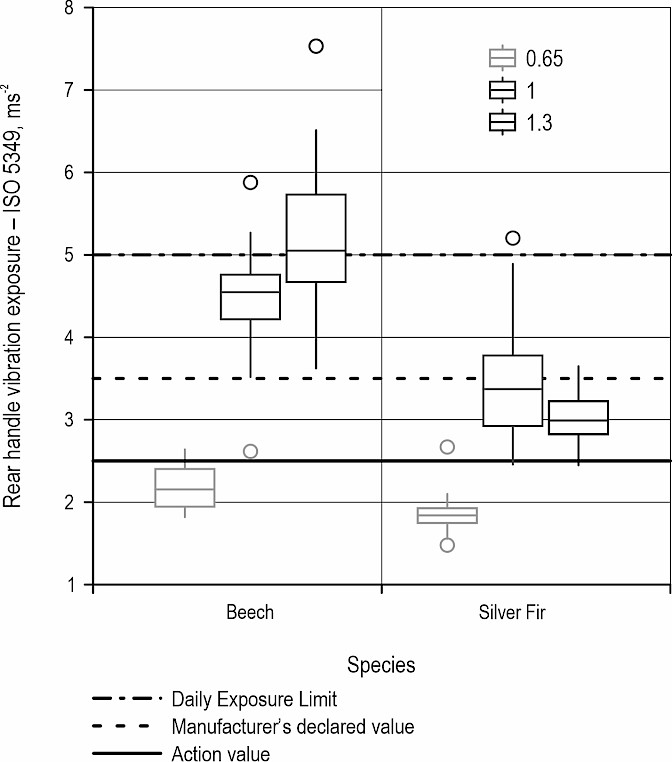
Fig. 7 Distribution of vibration exposure values measured on rear handle, depending on wood species and depth gauge lowering level. The three lines represent the vibration daily exposure limit of 5 ms-2 (dash-dotted), the action value of 2.5 ms-2 (continuous) and the vibration value declared by the manufacturer of 3.5 ms-2 (dashed)
Analyzing the mean vibration levels measured on the front and rear handles (Table 7) and considering the four operators, the results show no statistically significant differences between operators for the front handle but do for the rear handle. Furthermore, vibration values are higher for the rear handle.
As reported in the introduction, the different operators’ behaviour using chainsaw can affect the vibration measurements; for this reason, a comparison of mean vibration levels measured between operators was carried out. Indeed, on the rear handle, the measured mean levels of vibration were not statistically different between operators, while on the front handle, which is the one that supports the chainsaw during the cut, they were (Table 7).
Table 7 Vibration levels depending on wood species, handles and operators. In »Mean« column, different letters evidence statistical differences between the 4 operators considering the same species and handle
|
Wood species |
Handle |
Operator n. |
Mean, ms-2 |
Std dev, ms-2 |
Samples, n |
Min, ms-2 |
Max, ms-2 |
|
Silver fir |
Front |
1 |
4.11 ab |
1.08 |
23 |
2.33 |
6.01 |
|
2 |
3.93 ab |
1.27 |
24 |
2.27 |
7.15 |
||
|
3 |
3.55 b |
1.00 |
24 |
2.06 |
5.42 |
||
|
4 |
4.32 a |
1.55 |
24 |
1.96 |
7.62 |
||
|
Rear |
1 |
4.45 a |
1.23 |
23 |
2.46 |
7.07 |
|
|
2 |
4.95 a |
1.58 |
24 |
2.59 |
8.67 |
||
|
3 |
4.48 a |
1.20 |
24 |
2.67 |
6.51 |
||
|
4 |
4.66 a |
1.33 |
24 |
2.85 |
8.15 |
||
|
Beech |
Front |
1 |
5.90 a |
1.86 |
24 |
2.88 |
8.27 |
|
2 |
4.73 b |
1.39 |
24 |
2.43 |
7.24 |
||
|
3 |
4.76 b |
1.68 |
24 |
2.40 |
7.16 |
||
|
4 |
6.57 a |
2.66 |
24 |
2.75 |
11.25 |
||
|
Rear |
1 |
6.65 a |
2.29 |
24 |
3.03 |
9.86 |
|
|
2 |
6.26 a |
2.00 |
24 |
3.19 |
9.79 |
||
|
3 |
5.99 a |
2.29 |
24 |
3.03 |
10.85 |
||
|
4 |
7.24 a |
2.70 |
24 |
3.47 |
12.55 |
Since the four operators registered different mean vibration levels on the front handle, the operators’ grip strength on the handles was investigated to understand if the different level of vibrations recorded could be related to this parameter. In fact, the grip strength during cutting is a good indicator to measure the force applied by the operator in holding the chainsaw. The results show (Table 8) an evident difference between operators in terms of grip strength on both front and rear handle, but these differences lead to statistically significant differences in vibration values (between operators) only on the front handle. Moreover, the eventual role of different depth gauge lowering levels was investigated, but results show not significant differences due to this variable.
Table 8 Grip strength depending on wood species, handles and operators
|
Wood species |
Handle |
Operator n. |
Mean, N |
Std dev, N |
Samples, n |
Min, N |
Max, N |
|
Silver fir |
Front |
1 |
9.76 c |
8.59 |
23 |
0.890 |
43.26 |
|
2 |
48.99 a |
6.79 |
24 |
37.68 |
60.80 |
||
|
3 |
14.83 c |
9.79 |
24 |
2.26 |
52.46 |
||
|
4 |
31.43 b |
7.64 |
24 |
13.58 |
45.08 |
||
|
Rear |
1 |
22.74 b |
6.29 |
23 |
14.14 |
40.62 |
|
|
2 |
48.36 a |
7.98 |
24 |
20.81 |
54.49 |
||
|
3 |
14.63 c |
5.41 |
24 |
3.43 |
29.72 |
||
|
4 |
27.83 b |
5.21 |
24 |
16.80 |
39.53 |
||
|
Beech |
Front |
1 |
2.38 c |
8.12 |
24 |
1.18 |
40.22 |
|
2 |
37.60 a |
9.40 |
24 |
7.71 |
52.21 |
||
|
3 |
12.45 b |
6.05 |
24 |
1.13 |
23.43 |
||
|
4 |
19.99 b |
5.92 |
24 |
6.28 |
29.74 |
||
|
Rear |
1 |
24.61 c |
5.03 |
24 |
14.13 |
40.40 |
|
|
2 |
43.82 a |
4.94 |
24 |
33.05 |
53.87 |
||
|
3 |
25.15 c |
5.37 |
24 |
12.34 |
42.87 |
||
|
4 |
30.49 b |
4.64 |
24 |
22.42 |
42.25 |
4. Discussion
This study aimed to investigate the variations of both the vibration exposure and the cutting efficiency in cross-cutting operation, which was carried out at different depth gauge lowering levels (correct and over-standard levels).
The evaluation of cutting efficiency was carried out by measuring the cutting time of each processed beam section at the same time as the vibration exposure survey.
4.1 Cutting Efficiency
The results show that, in some cases, the depth gauge lowering statistically reduced the cutting times (Table 4); it is coherent with the findings of other studies (Arnold and Parmigiani 2015). In detail, taking all measures into account, a 5.6% reduction in cutting time was recorded for both the »Larger – 1.00« and »Extreme – 1.30” depth gauge lowering levels in comparison to the »Standard – 0.65” level.
Looking in more detail at the cutting times for each species, the reduction is most pronounced for silver fir, while it is minimal or even negative for beech. In the first case, the differences were statistically significant, while in the second case they were not. Specifically, in the case of silver fir, the reduction in cutting time was 8.8% and 11.8% in »Larger – 1.00« and in »Extreme – 1.30« levels, respectively, compared with »Standard – 0.65« level. In summary, according to the results, it can be stated that, with a medium-size chainsaw (50 cc), the depth gauge lowering gives a benefit in terms of cutting efficiency of approximately 10% for low-density species, while there is no significant variation and therefore no benefit for medium-high-density species. The difference in cutting efficiency due to wood density could be related to the fact that, as the density increases, the difficulty for the chain to remove the chips increases (Otto and Parmigiani 2015, Kuvik et al. 2017, Andrade et al. 2022, Neri et al. 2022). This difficulty further increases as the depth gauge lowering level increases because the chips to be removed are thicker (Arnold and Parmigiani 2015, Otto and Parmigiani 2015, Maciak et al. 2018). It is therefore conceivable that with a more powerful chainsaw this difficulty is reduced, and an advantage in cutting efficiency can be obtained even with beech and, in general, with high-density wood species (Marenče et al. 2017).
However, our findings demonstrated that the expected improvement in cutting performance, which leads many forest operators to excessively lower the depth gauge, is not justified by the actual reduction in cutting time, which at best remains limited or even non-existent.
4.2 Vibration Exposure
Decreasing the depth gauge below the recommended standard demonstrated a trade-off: a limited (or occasionally absent) improvement in cross-cutting performance alongside a substantial increase in vibration exposure.
Analysis across the two tree species confirmed this trend:
- Silver Fir: Comparing the »Standard – 0.65« and »Larger – 1.00« depth gauge lowering levels, cutting time was reduced by 8.8%, while vibrations increased by 86% (rear handle). An even greater reduction in cutting time (11.8%) was observed when comparing the »Standard – 0.65« and »Extreme – 1.30« levels, corresponding to a 64% increase in vibrations (rear handle).
- Beech: The trend was more pronounced. Relative to the »Standard – 0.65« level, the »Larger – 1.00« level showed a 2.0% decrease in cutting time and a 104% increase in vibrations. For the »Extreme – 1.30« level, a marginal increase in cutting time (1.4%) was recorded, combined with a significant 133% increase in vibrations (rear handle).
For all comparisons, the rear handle was used as the reference point for vibration levels, in compliance with ISO 5349-2, which mandates considering the maximum value measured between the two chainsaw handles (Goglia et al. 2012, Yovi and Yamada 2019).
In relation to the vibration exposure measured with three different depth gauge lowering levels, our findings revealed that the action value of 2.5 ms-2 set by the EU Directive 2002/44/CE is exceeded on both species, for the two wrong levels of depth gauge lowering (»Larger – 1.00« and »Extreme – 1.30«) (Table 6) and that the vibration exposure is always lower when the depth gauge is correctly set at »Standard – 0.65« lowering level. Cutting with the »Standard – 0.65« depth gauge lowering level, mean and maximum values of vibration exposure are always under the daily exposure limit value of 5 ms-2 for both species and handles, while for beech the mean values of vibration exposure are over the daily exposure limit value of 5 ms-2 for the »Extreme – 1.30« depth gauge lowering level.
Even working on beech with the »Extreme – 1.30« depth gauge lowering level, no vibration measurements for the rear handle under the action value of 2.5 ms-2 were recorded, with the minimum value of 3.62 ms-2 being registered. Therefore, in these cases, according to European Directives, being the vibration exposure A(8) over the action level of 2.5 ms-2, the risk assessment and the adoption of preventive and organizational measures to reduce to a minimum the vibration-related risk are mandatory.
For all these reasons, it is recommended to keep the depth gauge lowering at the standard level, as recommended by the manufacturer, as an excessive lowering leads to higher levels of kickback probability (Dąbrowski 2012) and greater vibration exposure (Dessureault et al. 1988, Hutton and Brubaker 1993).
According to our findings, wood density has a significant effect on hand-arm vibration exposure, as reported in previous studies (Goglia et al. 2012, Rottensteiner et al. 2012). In fact, for beech approximately 18.5% higher vibrations were recorded than for silver fir on the rear handle for the »Standard – 0.65« depth gauge lowering level. Furthermore, the depth gauge lowering increases the vibration levels, which resulted higher for beech than for silver fir. This confirmed that the higher the basal density of wood, the higher were the effects of bad habits of depth gauge lowering, which increased the probability of kickback, as stated by many authors (Dabrowski 2020, Kaliniewicz et al. 2018) and chainsaw lifespan reduction (ForestWorks 2009), without any improvement in terms of cutting efficiency (Table 4). Since the vibration levels may be affected by many different factors, including also the operators’ behaviour in holding and managing the chainsaw (Goglia et al. 2012, Yovi and Yamada 2019), the study also investigated the operators’ grip strength on both handles, to understand if the different vibration values measured could be related to this parameter. In fact, the grip strength during cutting is a good indicator to measure the force applied by the operator in holding the chainsaw (Koskimies 1993). The results show (Table 8) some differences between operators in terms of grip strength on both front and rear handle, but these differences only lead to statistically significant differences in vibration levels (between operators) on the front handle.
These results demonstrate unequivocally that the depth gauge lowering under the manufacturer’s recommendations exposes operators to excessive levels of vibrations, therefore exceeding the exposure limits established by the regulations. Moreover, it implies more chainsaw power requirements, higher fuel consumption and weight (Marenče et al. 2017) and therefore must be considered as incorrect and dangerous practice.
4.3 Manufacturer’s Declarations
The vibration levels reported in the technical manual of the chainsaw (Stihl MS261C) are shown in Table 9 together with the comparison with our results. It is important to note that the manufacturer does not distinguish between different tree species in the measurements and that the chain used is maintained in accordance with safety and standard recommendations. In fact, the mean vibration levels recorded in this study at the »Standard – 0.65« depth gauge lowering level differ slightly (from –26% to 4%) from those published in the technical manual, depending on the tree species and the handle considered. These deviations may also be due to the application of two different standards: the UNI EN ISO 5349 (International Organization for Standardization 2004, 2015) used in this study to measure the vibrations in working conditions, and the standards (e.g., ISO 22867:2011–EN62841-4-1) (Rukat and Jakubek 2017) applied by the manufacturer to measure vibrations under laboratory conditions. Therefore, the wood species, the type and maintenance level of the chain used, and the number of samples may have been different in the two investigations. However, similar values between the two handles, the two species and applying the »Standard – 0.65« depth gauge lowering level were recorded comparing the manufacturer’s declarations and our findings.
Table 9 Comparison between vibration levels measured for each species, on both handles and for each depth gauge lowering level and values declared by manufacturer (Stihl MS261C)
|
Wood species |
Handle |
Depth gauge level |
Declared, ms-2 |
Measured Mean, ms-2 |
Variation (ref. »Standard – 0.65« – declared value) |
|
Silver fir |
Front |
Standard – 0.65 |
3.5 |
2.58 |
–26% |
|
Larger – 1.00 |
4.85 |
+39% |
|||
|
Extreme – 1.30 |
4.45 |
+27% |
|||
|
Rear |
Standard – 0.65 |
3.5 |
3.08 |
–12% |
|
|
Larger – 1.00 |
5.73 |
+64% |
|||
|
Extreme – 1.30 |
5.05 |
+44% |
|||
|
Beech |
Front |
Standard – 0.65 |
3.5 |
3.11 |
–11% |
|
Larger – 1.00 |
6.21 |
+77% |
|||
|
Extreme – 1.30 |
7.15 |
+104% |
|||
|
Rear |
Standard – 0.65 |
3.5 |
3.65 |
+4% |
|
|
Larger – 1.00 |
7.43 |
+112% |
|||
|
Extreme – 1.30 |
8.52 |
+143% |
The largest deviations, (from 77% to 143%), from the values described by the manufacturer were recorded for beech on the front and rear handle varying the depth gauge lowering level from the »Standard – 0.65« level to the other two levels (»Larger – 1.00« and »Extreme – 1.30«).
Considering that the technical manual of a tool is the first document to be evaluated by the employer for the risk assessment, and taking into account the above-mentioned European Directives, which state that risks related to physical agents should be eliminated at source or reduced to a minimum, any maintenance practice that leads to an increase in vibrations, compared to the manufacturer’s declarations, must be considered incorrect and dangerous.
5. Conclusions
Considering the performances achieved by the chainsaw investigated in this study, the differences and the improvements recorded in cutting efficiency do not justify the drawbacks that the depth gauge lowering implies in terms of vibration exposure and chainsaw lifespan reduction. For all these reasons, the manufacturer’s instructions for the chain sharpening must be followed carefully. All these recommendations together with our findings can be useful to provide good operational practices in chainsaw training activities: the practice of the depth gauge lowering must be opposed by describing its disadvantages.
Therefore, to prevent occupational diseases related to vibration exposure, the use of personal protective equipment (PPE), such as gloves, together with the application of the correct techniques during the work and in chainsaw maintenance, is mandatory.
Gloves protect the hands from mechanical risks by keeping them warm and dry, and they can also reduce the risks associated with hand-arm vibrations by improving blood circulation in the hands and fingers.
Finally, given that modern chainsaws are becoming more powerful, errors in sharpening could significantly increase operators' exposure to vibrations. Therefore, it would be interesting to extend the study to include chainsaws with greater power.
Acknowledgements
The authors would like to express their gratitude to the Reparto Carabinieri Biodiversità di Vallombrosa for providing the wood beams and to Andreas Stihl S.p.A. for providing the chainsaw used in this study. A. Laschi thanks the University of Palermo for internal funds, project »FFR2025_Laschi_Andrea«.
Conflicts of Interest
The authors declare no conflict of interest. The founding sponsors had no role in the design of the study; in the collection, analyses, or interpretation of data; in the writing of the manuscript, and in the decision to publish the results.
6. References
Albizu-Urionabarrenetxea, P., Tolosana-Esteban, E., Roman-Jordan, E., 2013: Safety and health in forest harvesting operations. Diagnosis and preventive actions. A review. For. Syst. 22(3): 392–400. https://doi.org/10.5424/fs/2013223-02714
Almeida Andrade, A.C., de Brito, T.R., Silva, J.R.M., da Ferreira, S.C., Cardoso Junior, A.A., Lima, J.T., 2022: Influence of basic wood density on the specific cutting energy. Res. Soc. Dev. 11(7): e13511729674. https://doi.org/10.33448/rsd-v11i7.29674
Antonić, S., Danilović, M., Stojnić, D., Dražić, S., 2023: Impact of Chainsaw Power on Fuel and Oil Consumption. Sustainability 15(3): 2795. https://doi.org/10.3390/su15032795
Arnold, D., Parmigiani, J.P., 2015: A study of chainsaw kickback. For. Prod. J. 65(5–6): 232–238. https://doi.org/10.13073/FPJ-D-14-00096
Bačić, M., Pandur, Z., Šušnjar, M., Šporčić, M., Landekić, M., 2023: Daily Vibration Exposure in the Context of State and European Legislature: A Case Study among Chainsaw Operators in Croatia. Forests 14(5): 929. https://doi.org/10.3390/f14050929
Barnes, R., Longley, E.O., Smith, A.R.B., Allen, J.G., 1969: Vibration disease. Med. J. Aust. 1(18): 901–905. https://doi.org/10.5694/j.1326-5377.1969.tb49780.x
Bovenzi, M., Giannini, F., Rossi, S., 2000: Vibration-induced multifocal neuropathy in forestry workers: Electrophysiological findings in relation to vibration exposure and finger circulation. Int. Arch. Occup. Environ. Health 73(8): 519–527. https://doi.org/10.1007/s004200000177
Brammer, A.J., Pyykkö, I., 1987: Vibration-induced neuropathy: Detection by nerve conduction measurements. Scand. J. Work Environ. Health 13(4): 317–322. http://www.jstor.org/stable/40965472
Calvo, A., 2009: Musculoskeletal disorders (MSD) risks in forestry: a case study to suggest an ergonomic analysis. Agricultural Engineering International: The CIGR Ejournal XI(1149): 1–9.
Cheţa, M., Marcu, M.V., Borz, S.A., 2018: Workload, Exposure to Noise, and Risk of Musculoskeletal Disorders: A Case Study of Motor-Manual Tree Feeling and Processing in Poplar Clear Cuts. Forests 9(6): 300. https://doi.org/10.3390/f9060300
Dąbrowski, A., 2012: Reducing Kickback of Portable Combustion Chain Saws and Related Injury Risks: Laboratory Tests and Deductions. Int. J. Occup. Saf. Ergon. 18(3): 399–417. https://doi.org/10.1080/10803548.2012.11076943
Dabrowski, A., 2020: Analysis and Laboratory Testing of Technical Injury Prevention Measures for Portable Combustion Chainsaws. Forests 11(3): 276. https://doi.org/10.3390/f11030276
Dessureault, P.C., Laperrière, A., Vincent, J.Y., 1988: The control of chain saw vibration. Sound Vib. 22: 32–34.
Dos Santos Depoi, J., Brandelero, C., Werner, V., Schlosser, J.F., Russini, A., de Vargas, F., 2022: Hand-arm vibration in different operating conditions with a chainsaw. Floresta 52(1): 74–82. https://doi.org/10.5380/rf.v52 i1. 77415
European Committee for Standardization, 2020: Mechanical Vibration – Guideline for the Assessment of Exposure to Hand-Transmitted Vibration Using Available Information Including That Provided by Manufacturers of Machinery. FprCEN/TR 15350:2020.
Färkkilä, M., Aatola, S., Starck, J., Pyykko, I., Korhonen, O., 1985: Vibration induced neuropathy among forest workers. Acta Neurol. Scand. 71(3): 221–225. https://doi.org/10.1111/j.1600-0404.1985.tb03192.x
ForestWorks, 2009: Chainsaw Operator’s Manual: Chainsaw Safety, Maintenance and Cross-cutting Techniques. Landlinks Press.
Gendek, A., Aniszewska, M., Nurek, T., Moskalik, T., 2018: State of training and equipment of chainsaw operators employed for timber harvesting in Polish forests. Sylwan 162(2): 118–126.
Goglia, V., Suchomel, J., Žgela, J., Đukić, I., 2012: Forestry workers’ expossure to vibration in the context of Directive 2002/44/EC. Šum. list 136(5–6): 283–288.
Gorski, J., 1993: Wplyw sily posuwu i wysokosci rzazu na wydajnosc skrawania pila lancuchowa. Przegląd Techniki Rolniczej i Leśnej 04: 13–15.
Huber, M., Hoffmann, S., Brieger, F., Hartsch, F., Jaeger, D., Sauter, U.H., 2021: Vibration and Noise Exposure during Pre-Commercial Thinning Operations: What Are the Ergonomic Benefits of the Latest Generation Professional-Grade Battery-Powered Chainsaws? Forests 12(8): 1120. https://doi.org/10.3390/f12081120
Iftime, M.D., Dumitrascu, A.E., Ciobanu, V.D., 2020: Chainsaw operators’ exposure to occupational risk factors and incidence of professional diseases specific to the forestry field. Int. J. Occup. Saf. Ergon. 28(1): 8–19. https://doi.org/10.1080/10803548.2019.1703336
ISO, 2004: UNI EN ISO 5349-1:2004 Mechanical vibration – Measurement and evaluation of human exposure to hand- transmitted vibration – Part 1: General requirements.
ISO, 2015: UNI EN ISO 5349-2:2015 Mechanical vibration – Measurement and evaluation of human exposure to hand- transmitted vibration – Part 2: Practical guidance for measurement at the workplace.
ISO, 2017: ISO/TR 18570:2017 Mechanical vibration – Measurement and evaluation of human exposure to hand transmitted vibration – Supplementary method for assessing risk of vascular disorders.
Jourgholami, M., Majnounian, B., Zargham, N., 2013: Performance, Capability and Costs of Motor-Manual Tree Felling in Hyrcanian Hardwood Forest. Croat. J. For. Eng. 34(2): 283–293.
Kaliniewicz, Z., Maleszewski, Ł., Krzysiak, Z., 2018: Influence of saw chain type and wood species on the kickback angle of a chainsaw. Technical Sciences 21(4): 323–334. https://doi.org/10.31648/TS.4176
Karjalainen, T., 2001: Energy, carbon and other material flows in the life cycle assessment of forestry and forest products : achievements of the Working Group 1 of the COST Action E9. European Forest Institute.
Klun, J., Medved, M., 2007: Fatal accidents in forestry in some European countries. Croat. J. For. Eng. 28(1): 55–62.
Koskimies, K., 1993: Hand Grip Force Among Forest Workers. J. Low Freq. Noise Vibr. Act. Control 12(1): 1–7. https://doi.org/10.1177/026309239301200101
Koskimies, K., Farkkila, M., Pyykko, I., Jantti, V., Aatola, S., Starck, J., Inaba, R., 1990: Carpal tunnel syndrome in vibration disease. Br. J. Ind. Med. 47(6): 411–416. https://doi.org/10.1136/oem.47.6.411
Koutsianitis, D., Tsioras, P.A., 2017: Time Consumption and Production Costs of Two Small-Scale Wood Harvesting Systems in Northern Greece. Small-scale For. 16(1): 19–35. https://doi.org/10.1007/s11842-016-9340-3
Kuvik, T., Krilek, J., Kováč, J., Štefánek, M., Dvořák, J., 2017: Impact of the Selected Factors on the Cutting Force When Using a Chainsaw. Wood Res. 62(5): 807–814.
Labelle, E.R., Lemmer, K.J., 2019: Selected Environmental Impacts of Forest Harvesting Operations with Varying Degree of Mechanization. Croat. J. For. Eng. 40(2): 239–257. https://doi.org/10.5552/crojfe.2019.537
Landekić, M., Šporčić, M., Bačić, M., Pandur, Z., Bakarić, M., 2023: Workability and Physical Wellbeing Among Chainsaw Operators in Croatia. Croat. J. For. Eng. 44(1): 83–94. https://doi.org/10.5552/crojfe.2023.2073
Laschi, A., Marchi, E., Foderi, C., Neri, F., 2016: Identifying causes, dynamics and consequences of work accidents in forest operations in an alpine context. Saf. Sci. 89: 28–35. https://doi.org/10.1016/j.ssci.2016.05.017
Laschi, A., Neri, F., Marra, E., Fabiano, F., Frassinelli, N., Marchi, E., Paoloni, R., Foderi, C., 2023: Comparing the Productivity of the Latest Models of Li-Ion Battery and Petrol Chainsaws in a Conifer Clear-Cut Site. Forests 14(3): 585. https://doi.org/10.3390/f14030585
Liepiņš, K., Lazdiņš, A., Liepiņš, J., Prindulis, U., 2015: Productivity and Cost-Effectiveness of Mechanized and Motor-Manual Harvesting of Grey Alder (Alnus incana (L.) Moench): A Case Study in Latvia. Small-scale For. 14(4): 493–506. https://doi.org/10.1007/s11842-015-9302-1
Lundbäck, M., Häggström, C., Nordfjell, T., 2021: Worldwide trends in methods for harvesting and extracting industrial roundwood. Int. J. For. Eng. 32(3): 202–215. https://doi.org/10.1080/14942119.2021.1906617
Maciak, A., Górska, U., Zach, Ż., 2017: Impact of saw chain cutters type on blunting speed of blades and change of cutting efficiency. Ann. Wars. Univ. Life Sci.-SGGW, Agric. (Agric. For. Eng.) 70: 27–36. https://doi.org/10.22630/AAFE.2017.70.15
Maciak, A., Kubuśka, M., Moskalik, T., 2018: Instantaneous Cutting Force Variability in Chainsaws. Forests 9(10): 660. https://doi.org/10.3390/f9100660
Marchi, E., Neri, F., Cambi, M., Laschi, A., Foderi, C., Sciarra, G., Fabiano, F., 2017: Analysis of dust exposure during chainsaw forest operations. iForest 10(1): 341–347. https://doi.org/10.3832/ifor2123-009
Marenče, J., Mihelič, M., Poje, A., 2017: Influence of chain filing, tree species and chain type on cross cutting efficiency and health risk. Forests 8(12): 464. https://doi.org/10.3390/f8120464
Masci, F., Spatari, G., Giorgianni, C.M., Pernigotti, E., Antonangeli, L.M., Bordoni, V., Biasina, A.M., Pietrogrande, L., Colosio, C., 2021: Hand-wrist disorders in chainsaw operators: A follow-up study in a group of italian loggers. Int. J. Environ. Res. Public Health 18(14): 7217. https://doi.org/10.3390/ijerph18147217
Matache, M.G., Munteanu, M., Dumitru, D.N., Epure, M., 2020: Evaluation of hand transmitted chainsaw vibrations during wood cutting. E3S Web of Conferences 180: 3013. https://doi.org/10.1051/e3sconf/202018003013
Mergl, V., Staněk, L., 2025: Hand-arm vibration levels in hardwood and softwood cutting with battery-powered and petrol chainsaws. Int. J. For. Eng. 36(3): 360–367. https://doi.org/10.1080/14942119.2025.2482503
Miura, T., Kimura, K., Tominaga, Y., Kimotsuki, K., 1966: On the Raynaud’s phenomenon of occupational origin due to vibrating tools – its incidence in Japan. Report of the Institute for Science of Labour – Tokio 65: 1–11.
Monarca, D., Biondi, P., Cecchini, M., Santi, M., Guerrieri, M., Colantoni, A., Colopardi, F., 2008: Transmission of vibrations from portable agricultural machinery to the Hand-Arm System (HAV): risk assessment and definition of exposure time for daily action and exposure limits. Proceedings of International Conference »Innovation Technology to Empower Safety, Health and Welfare in Agriculture and Agro-food Systems«, September 15–17, Ragusa – Italy, 1–8 p.
Montorselli, N.B., Lombardini, C., Magagnotti, N., Marchi, E., Neri, F., Picchi, G., Spinelli, R., 2010: Relating safety, productivity and company type for motor-manual logging operations in the Italian Alps. Accid. Anal. Prev. 42(6): 2013–2017. https://doi.org/10.1016/j.aap.2010.06.011
Moskalik, T., Borz, A., Dvořák, J., Ferencik, M., Glushkov, S., Muiste, P., Lazdiņš, A., Styranivsky, O., 2017: Timber Harvesting Methods in Eastern European Countries: a Review. Croat. J. For. Eng. 38(2): 231–241.
Neri, F., Foderi, C., Laschi, A., Fabiano, F., Cambi, M., Sciarra, G., Aprea, M.C., Cenni, A., Marchi, E., 2016: Determining exhaust fumes exposure in chainsaw operations. Environ. Pollut. 218: 1162–1169. https://doi.org/10.1016/j.envpol.2016.08.070
Neri, F., Laschi, A., Bertuzzi, L., Galipò, G., Frassinelli, N., Fabiano, F., Marchi, E., Foderi, C., Marra, E., 2023: A Comparison between the Latest Models of Li-Ion Batteries and Petrol Chainsaws Assessing Noise and Vibration Exposure in Cross-Cutting. Forests 14(5): 898. https://doi.org/10.3390/f14050898
Neri, F., Laschi, A., Foderi, C., Fabiano, F., Bertuzzi, L., Marchi, E., 2018: Determining noise and vibration exposure in conifer cross-cutting operations by using Li-Ion batteries and electric chainsaws. Forests 9(8): 501. https://doi.org/10.3390/f9080501
Neri, F., Laschi, A., Marchi, E., Marra, E., Fabiano, F., Frassinelli, N., Foderi, C., 2022: Use of Battery-vs. Petrol-Powered Chainsaws in Forestry: Comparing Performances on Cutting Time. Forests 13(5): 683. https://doi.org/10.3390/f13050683
Newington, L., Harris, E.C., Walker-Bone, K., 2015: Carpal tunnel syndrome and work. Best Pract. Res. Clin. Rheumatol. 29(3): 440–453. https://doi.org/10.1016/j.berh.2015.04.026
Nilsson, T., Wahlström, J., Burström, L., 2017: Hand-arm vibration and the risk of vascular and neurological diseases – A systematic review and meta-analysis. PLoS ONE 12(7): e0180795. https://doi.org/10.1371/journal.pone.0180795
Otto, A., Parmigiani, J., 2015: Velocity, Depth-of-Cut, and Physical Property Effects on Saw Chain Cutting. BioResources 10(4): 7273–7291. https://doi.org/10.15376/biores.10.4.7273-7291
Pandur, Z., Šušnjar, M., Bačić, M., 2021: Battery technology – use in forestry. Croat. J. For. Eng. 42(1): 135–148. https://doi.org/10.5552/crojfe.2021.798
Pandur, Z., Šušnjar, M., Jurič, I., Pandur, I.I., Landekić, M., Šporčić, M., Bačić, M., 2025: Vibration Exposure of Battery and Petrol-Powered Chainsaws. Croat. J. For. Eng. 46(2): 387–396. https://doi.org/10.5552/crojfe.2025.3066
Papandrea, S.F., Cataldo, M.F., Zimbalatti, G., Grigolato, S., Proto, A.R., 2022: What Is the Current Ergonomic Condition of Chainsaws in Non-Professional Use? A Case Study to Determine Vibrations and Noises in Small-Scale Agroforestry Farms. Forests 13(11): 1876. https://doi.org/10.3390/f13111876
Poje, A., 2011: Influence of Working Conditions Factors on Exposure and Wood Cutters Workload. PhD thesis, Biotechnical Faculty of University of Ljubljana.
Rottensteiner, C., Tsioras, P., Stampfer, K., 2012: Wood density impact on hand-arm vibration. Croat. J. For. Eng. 33(2): 303–312.
Rukat, W., Jakubek, B., 2017: The influence of the cutting tooth design and wear of a saw chain on the vibration level of a chainsaw. Vib. Phys. Syst. 28: 2017009.
Hutton, S.G., Paris, N., Brubaker, R., 1993: The vibration characteristics of chain saws and their influence on vibration white finger disease. Ergonomics 36(8): 911–926. https://doi.org/10.1080/00140139308967956
Sakakibara, H., Kondo, T., Koike, Y., Miyao, M., Furuta, M., Yamada, S., Sakurai, N., Ono, Y., 1989: Combined effects of vibration and noise on palmar sweating in healthy subjects. Eur. J. Appl. Physiol. Occup. Physiol. 59(3): 195–198. https://doi.org/10.1007/BF02386187
Seppäläinen, A.M., 1972: Peripheral neuropathy in forest workers. A field study. Work, Environment, Health 9(3): 106–111.
Sowa, J.M., 1998: Analiza zagrożeń wibracyjnych operatorów pilarek spalinowych [Analyses of the chainsaw vibration hazard of cutters]. Zast. Ergon. 2: 189–196.
Sowa, J.M., Leszczyński, K., 2000: Zmiany w poziomie zagrożeń operatorów maszyn przy pozyskiwaniu drewna. Mat. Konf. Leśnej: Stan i Perspektywy Badań z Zakresu Użytkowania Lasu. Sękocin 30–31.
Staněk, L., Mergl, V., Nevrkla, P., 2025: Hand-arm vibration from cutting different tree species using battery powered and petrol engine chainsaws. Cent. Eur. For. J. 71(3): 196–206. https://doi.org/10.2478/forj-2025-0003
Trzcinski, G., 1995: Ocena stanu technicznego pilarek spalinowych bedacych wlasnoscia robotnikow lesnych [Assessment of the technical condition of chain saws owned by forestry workers]. Przegląd Techniki Rolniczej i Leśnej 01: 21–23.
Vusić, D., Šušnjar, M., Marchi, E., Spina, R., Zečić, Ž., Picchio, R., 2013: Skidding operations in thinning and shelterwood cut of mixed stands – Work productivity, energy inputs and emissions. Ecol. Eng. 61(part A): 216–223. https://doi.org/10.1016/j.ecoleng.2013.09.052
Yovi, E.Y., Yamada, Y., 2019: Addressing Occupational Ergonomics Issues in Indonesian Forestry: Laborers, Operators, or Equivalent Workers. Croat. J. For. Eng. 40(2): 351–363. https://doi.org/10.5552/crojfe.2019.558
© 2026 by the authors. Submitted for possible open access publication under the
terms and conditions of the Creative Commons Attribution (CC BY) license (http://creativecommons.org/licenses/by/4.0/).
Authors’ addresses:
Cristiano Foderi, PhD
e-mail: cristiano.foderi@unifi.it
Fabio Fabiano, PhD
e-mail: fabio.fabiano@unifi.it
Prof. Enrico Marchi, PhD
e-mail: enrico.marchi@unifi.it
Niccolò Frassinelli, PhD
e-mail: niccolo.frassinelli@unifi.it
Prof. Francesco Neri, PhD
e-mail: francesco.neri@unifi.it
University of Florence
Department of Agriculture
Food Environment and Forestry (DAGRI)
Via San Bonaventura 13
50145, Firenze
ITALY
Prof. Andrea Laschi, PhD *
e-mail: andrea.laschi@unipa.it
University of Palermo
Department of Agricultural
Food and Forest Sciences (SAAF)
Viale delle Scienze ed. 4
90128, Palermo
ITALY
Giovanni Galipò, PhD
e-mail: giovanni.galipo@carabinieri.it
Arma dei Carabinieri–Raggruppamento Carabinieri
Biodiversità Reparto Biodiversità di Vallombrosa
Vallombrosa, I-50066 Reggello
50145, Firenze
ITALY
Elena Marra, PhD
e-mail: elena.marra@slu.se
Swedish University of Agricultural Sciences
Department of Forest Bioeconomy and Technology (SLU)
907 36 Umeå
SWEDEN
Nicola Stacchini
e-mail: nicola.stacchini@uslsudest.toscana.it
Andrea Bogi
e-mail: andrea.bogi@uslsudest.toscana.it
Azienda USL Toscana Sud Est
Public Health Lab »Toscana Sud Est«
Strada di Ruffolo 4
53100, Siena
ITALY
Francesco Picciolo, PhD
e-mail: francesco.picciolo@unisi.it
University of Siena
Department of Physical sciences, Earth and environment
53100, Siena
ITALY
* Corresponding author
Received: February 08, 2025
Accepted: January 09, 2026
Original scientific paper