
Productivity, Cost and Energy Efficiency in Recultivation of Short Rotation Poplar Plantations
doi: https://doi.org/10.5552/crojfe.2027.4707
volume: 48, issue: 1
pp: 12
- Author(s):
-
- Spinelli Raffaele
- Ramantswana Muedanyi
- Magagnotti Natascia
- Eberhard Benno
- Article category:
- Original scientific paper
- Keywords:
- termination, mastication, mulcher, grinding, stump
Abstract
HTML
Recultivation is an essential task in the management of Short Rotation Forestry (SRF) poplar, which is grown on arable land and is generally integrated within a crop rotation system. This task involves destroying the poplar stumps and tilling the soil down to a depth suitable for establishing a new farm crop. Recultivation can be performed using versatile heavy forestry mulchers that simultaneously mulch the soil and remove stumps. The objective of this study was to develop long-term benchmark performance metrics for industrial mulchers used in the recultivation of SRF poplar. The study involved the collection of long-term data on a forestry mulcher working on 486 ha of harvested SRF poplar stands. Data were collected across 18 sites in Germany and Slovakia by maintaining detailed, site-specific logs for two years. Data recorded included position, time use, and fuel consumption, number of mulcher teeth replaced, soil type, and resprouting class. The data were analyzed using bootstrapping, allowing robust calculation of means, confidence intervals and regression models despite the low number of sites and non-normal data. The results show that mean fuel, time and teeth consumption were 181 L ha-1, 3.26 h ha-1, 0.75 teeth ha-1, respectively. The number of passes and soil type significantly affected fuel consumption, time consumption, and tooth wear. In contrast, resprouting and field size did not significantly affect the same dependent variables. The study's findings provide key benchmark figures for planning and estimating the cost of SRF poplar recultivation.
Productivity, Cost and Energy Efficiency in Recultivation of Short Rotation Poplar Plantations
Raffaele Spinelli, Muedanyi Ramantswana, Natascia Magagnotti, Benno Eberhard
https://doi.org/10.5552/crojfe.2027.4707
Abstract
Recultivation is an essential task in the management of Short Rotation Forestry (SRF) poplar, which is grown on arable land and is generally integrated within a crop rotation system. This task involves destroying the poplar stumps and tilling the soil down to a depth suitable for establishing a new farm crop. Recultivation can be performed using versatile heavy forestry mulchers that simultaneously mulch the soil and remove stumps. The objective of this study was to develop long-term benchmark performance metrics for industrial mulchers used in the recultivation of SRF poplar. The study involved the collection of long-term data on a forestry mulcher working on 486 ha of harvested SRF poplar stands. Data were collected across 18 sites in Germany and Slovakia by maintaining detailed, site-specific logs for two years. Data recorded included position, time use, and fuel consumption, number of mulcher teeth replaced, soil type, and resprouting class. The data were analyzed using bootstrapping, allowing robust calculation of means, confidence intervals and regression models despite the low number of sites and non-normal data. The results show that mean fuel, time and teeth consumption were 181 L ha-1, 3.26 h ha-1, 0.75 teeth ha-1, respectively. The number of passes and soil type significantly affected fuel consumption, time consumption, and tooth wear. In contrast, resprouting and field size did not significantly affect the same dependent variables. The study's findings provide key benchmark figures for planning and estimating the cost of SRF poplar recultivation.
Keywords: termination, mastication, mulcher, grinding, stump
1. Introduction
Forest plantations offer a most efficient way to produce industrial fiber, since their rapid growth rates and optimized management permit large harvests from a relatively small land resource (Morris 2022). Today, forest plantations account for 46% of the global wood supply, exceeding by a 2% margin the amounts extracted from natural forests (FAO 2024). Thus, forest plantations ease the pressure on natural habitats (Bousfield et al. 2024), while supporting the development of a bio-based economy, where carbon-intensive materials are replaced with renewable low-carbon alternatives (Nepal et al. 2021). For that reason, the contribution of plantation forestry to the global fiber supply is expected to increase to 75% by 2050 (McEwan et al. 2020). The higher productivity of forest plantations is explained by the widespread use of genetically selected propagation material, a rationalized management focused on production and the establishment on sites with favorable soil and climate conditions (Campinhos 1999, Stape et al. 2010).
While natural (or seminatural) forests are perennial, plantation forests are temporary crops that are replaced with other crops at the end of rotation. Crop rotation is a well-known agronomical practice that improves soil structure and fertility (Mudare et al. 2025), increases yields and water efficiency (Liangang et al. 2025) and prevents the accumulation of pests and pathogens over time (Al-Musawi et al. 2025), which would eventually lead to soil health degradation (Bose et al. 2023). From a purely financial viewpoint, crop rotation allows profiting from better market opportunities as they arise (Cerveny et al. 2023). Furthermore, forest plantations are a prime candidate when aiming to restore natural forests, given that the land they usually occupy is less valuable than that occupied by conventional food crops (De Valck et al. 2014).
Regardless of its reasons and expected benefits, crop rotation implies the termination of the old crop. Such an operation is relatively straightforward for conventional agricultural crops, and is often achieved by deep ploughing after harvesting the old crop, and before establishing the new one. In contrast, forest plantations leave substantial amounts of root material after the final harvest, which have been consistently estimated at approximately 20% of the above-ground wood stock (Fang et al. 2007, Bahrian et al. 2024). Depending on tree species, plantation density and rotation age, the below-ground mass of stumps and roots commonly amounts to 15–40 t ha-1 (Lodhiyal et al. 1992), but accumulation over multiple cycles can push it as high as 60 t ha-1 (Fuertes et al. 2023). Moreover, root systems develop into an interlaced net that resists deep ploughing and must be dealt with. Breaking up such a tight root net is especially important with those species that coppice from stumps and root suckers, lest they colonize the field regardless of attempts to replace a new crop (Kenefick et al. 2024).
There are several techniques for the mechanical disposal of tree rootstock, which can be categorized according to the following two factors:
- whether the rootstock mass is recovered or entirely wasted
- whether the process is continuous or discrete (i.e. each stump is treated individually).
By intersecting these two factors, continuous systems with (Picchi et al. 2016) and without (Jordanova and Marinov 2015) recovery are obtained, as well as discrete systems with (Spinelli et al. 2005) and without (Picchio et al. 2012) recovery.
While biomass recovery would theoretically generate a revenue stream and offset part of the disposal cost, contamination with soil restricts the potential use of root biomass and decreases its commercial value. Furthermore, recovery entails multiple tasks (e.g. windrowing, collection, comminution), which increase manager’s workload and overall cost (Casselli et al. 2018). For that reason, destroying the rootstocks and mixing them with the ground is the preferred solution in most cases, unless removal is dictated by sanitary reasons, such as root rot (Cleary et al. 2013, Vasaitis et al. 2008).
Discrete systems are best suited to widely spaced plantations, such as traditional poplar farms that are established at a density of 250–300 trees ha-1 (FAO 2008). In contrast, short rotation poplar plantations are established at relatively high densities, ranging from 1700 to over 10,000 trees ha-1. The recultivation of such dense stands is best managed with continuous systems that work full swaths over the old tree rows. That will speed up an otherwise slow and tedious process, with iterative stops every meter or less (Freitas and Horta 2019). Depending on whether the stumps are being recovered or not, stump pullers or mulchers can be employed, respectively (Pereira da Silva Correia et al. 2020). The latter are particularly popular because they are more versatile than stump pullers and can be used for several tasks besides rootstock disposal, including debrushing, thinning and surface fuel reduction operations (USDA 2004, Jain et al. 2018). In Europe, heavy mulchers are commonly used for the recultivation of traditional poplar plantations, successfully competing against excavators and lighter tractor-powered stump-grinding augers. Since the new high-density poplar plantations tend to occupy the same land and economic niche as traditional poplar stands, it is most likely that the same machines are also used for the recultivation of the newer plantations, and anecdotal evidence supports that hypothesis. However, neither the hypothesis nor the anecdotal evidence mentioned above are corroborated by solid scientific data (Jordanova and Marinov 2015).
To our knowledge, very few scientific studies have been conducted on the use of mulchers on new high-density poplar plantations, since the late 1990s (Forbrig and Hencke 2000, Boelcke 2008, Landgraf et al. 2009, Stoell et al. 2016). While conducted with utmost diligence and professionalism, those studies account for few ha each, or less than 4 days of operation in total: therefore, they offer a detailed insight into the process, capable of highlighting the effect of relevant variables, but their relatively short duration limits their capacity to provide solid benchmark figures, which are best obtained from large datasets (Spinelli et al. 2009). Besides, many of those studies have been conducted either on widely-spaced (6 x 6 m) traditional plantations or tightly-spaced (3 x 0.5–1 m) biomass crops – not on the more modern medium-density (3 x 2 m) plantations designed for the production of industrial fiber (Sheppard and Spiecker 2014, Dănilă et al. 2022).
Therefore, the goal of this study was to produce long-term benchmark figures for the performance of industrial mulchers applied to the recultivation of short-rotation poplar plantations, and in particular: time consumption, fuel consumption and mulcher teeth replacement rate. The study also aimed at finding the relationships (if any) between the indicators and field characteristics, such as field size, soil texture and the presence and size of any resprouts. For that purpose, the study is based on a large total area and long operational duration, covering multiple sites and spanning a wide range of working conditions typical of short rotation poplar plantations, such as different soil types and stump resprouting (from no resprouting to 5-m tall resprouts).
2. Materials and Methods
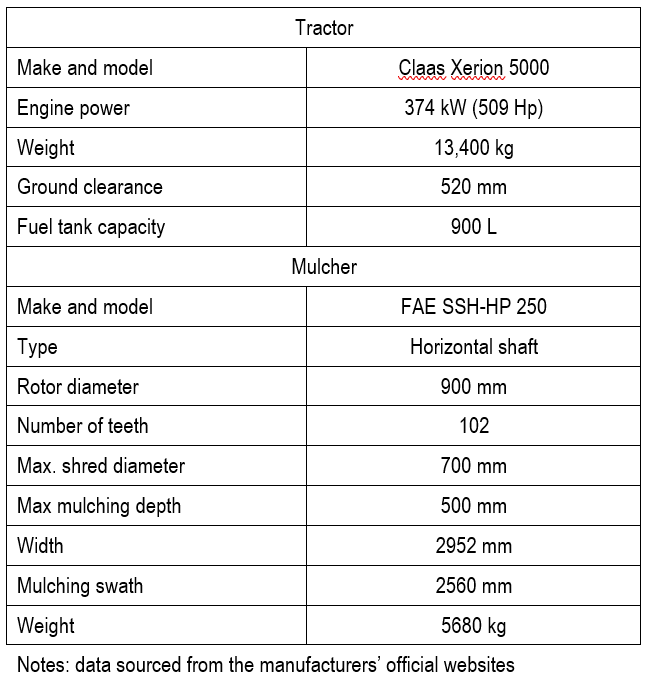
The authors selected a heavy forestry mulcher operated by a large professional company offering forestry services, gardening and landscaping located in Brandenburg, Germany. The company operates in the whole of Central Europe and is regularly engaged in recultivation work in Germany and Slovakia. In the past few years, the company has secured several recultivation contracts for a wide array of SRF poplar plantations that were to be re-naturalized (see De Valck et al. 2014) or returned to agriculture. That simplified the collection of a long-term, multi-site dataset, while guaranteeing consistency in terms of technology and management. The mulcher itself was representative of that family of specialized industrial machines best suited to recultivation for a professional contracting business and fell within the K6 Class as defined by Hnilica et al. (2017). Those machines are currently the most efficient at the financial and operational levels (Kumhàla et al. 2016), providing the cheapest, the fastest and the best work quality. The mulcher selected for the study was powered by a heavy farm tractor, which was used for other farming jobs when the mulcher was not in use (Table 1, Fig. 1).
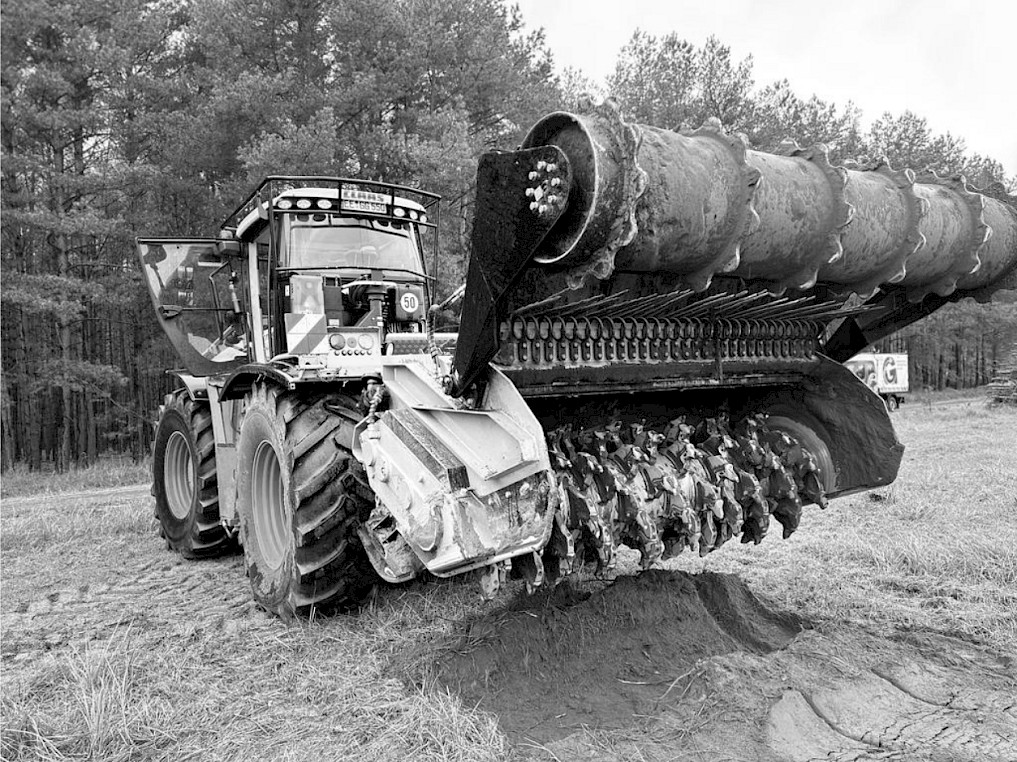
Fig. 1 The tractor-mounted mulcher used for the study
Table 1 Technical specifications of the tractor-mounted mulcher
Data were collected in the years 2023 and 2024 from 18 sites, mostly in western Slovakia. All sites included in the study represented former agricultural fields planted with SRF poplar at a 3 x 2 m spacing (or similar – spacing within the rows can show little variations within the 2.00–2.50 m range) (Fig. 2). The soil was mulched to a depth of 40 cm, which was deemed sufficient to permanently destroy the stumps, thus removing physical hindrance and resprouting risk at one time. The working width of the mulcher was sufficient to cover the whole area with a single pass, so that a second pass was only applied when soil and/or crop conditions were such that complete destruction of the rootstock and full soil refining could not be achieved with one pass only. Soil texture varied from sandy to clay, with intermediate gradations. Average field size was 27 ha. Most plantations were terminated after one or two rotations only, due to changes in legislation and industrial business policy.
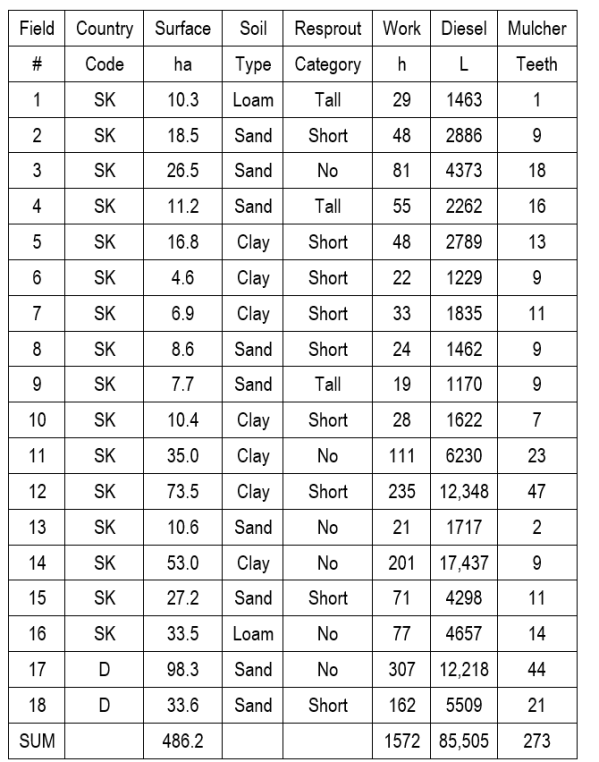
For the purpose of the study, the contractor agreed to keep a detailed logbook, where he recorded the main work data of each job (Table 2). All valid records included: date, location, field size (ha), work hours (h), fuel use (L), n° of passes (1 or 2), n° of mulcher teeth being replaced, soil type, stump resprouting class (no resprouting to 5-m tall sprouts). The contractor extracted position, time use and fuel consumption data from the field reports issued by tractor’s on-board computer, while the number of teeth replaced was noted directly by the company’s mechanics. As a result, the hours reported in this study represent machine hours, when the engine is running. They include minor delays when the engine is still on, but exclude all major delays and preparation time. For that reason, they might be equated to PSH15 time (working time including delays up to a maximum duration of 15 minutes), which is often used in the time studies of forestry equipment (Koŝir et al. 2015). Terrain was generally flat, with a maximum inclination of 5%. Soil type was obtained from the official soil maps (Bielek et al. 2005, Ballabio et al. 2016). The height of the resprouts eventually present on the stumps at the time of mulching was visually estimated by the field manager and attributed to one of the following classes: no resprouts, resprouts up to 1.5 m height, resprouts taller than 1.5 m. The field manager would also append short descriptions of any noticeable events and/or unusual site features.
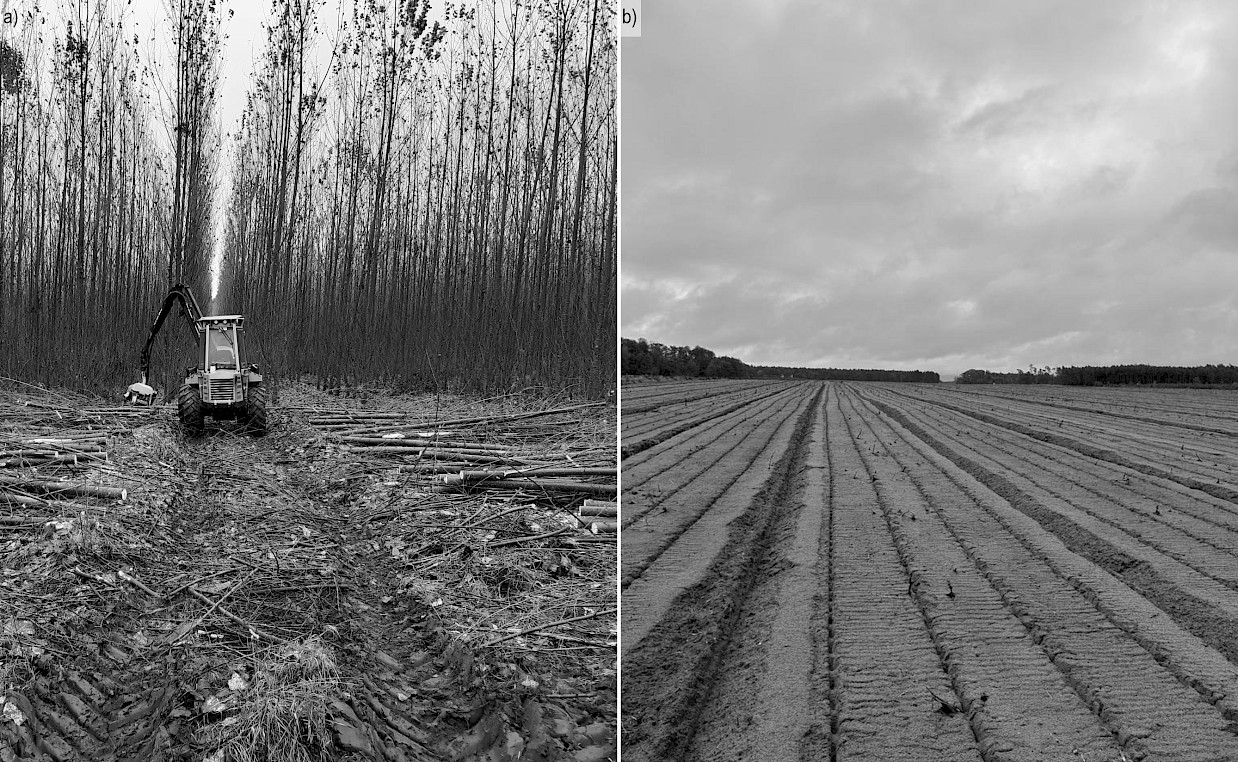
Fig. 2 SRF poplar before (a) and after recultivation (b)
Overall, the dataset represented 486 ha of short rotation poplar, which were returned to tilled fields at the expenditure of 1572 machine hours and 85,505 litres of diesel (Table 2). While the total operational coverage was large and may offer a solid general benchmark, the number of independent replications was relatively small (n=18), given that each field represented one repetition. For that reason, data were analyzed with the bootstrapping technique, which generates a large number (≥1000) of proxy samples by sampling with replacement from the original data. That allows computing all essential statistics and models (e.g. OLS) without a strong reliance on parametric assumptions, which are difficult to fulfill when the number of replications is small and the study is an observational one (Fig. 3). Bootstrapping performs better than traditional methods with small or non-normal samples (Efron 1979). Advances in computing have facilitated intensive resampling, and the bootstrap approximation is often used to compute least squares estimates (Freedman 1981). Most recently, it started being used in forest engineering studies, as well (Amirteimoori and Zadmirzaei 2025).
Table 2 Main results of the study: summary of raw data
Before analysis, data was cleaned by coercing numeric fields and harmonizing categorical labels. Nonparametric bootstrapping was performed with 10,000 resamples of the mean for each dependent variable, reporting 95% confidence intervals. For modeling, ordinary least squares (OLS) regressions were fit for each dependent variable with fixed predictors: numerical, binary and categorical. HC3 correction was applied to the OLS to account for heteroskedasticity and obtain robust standard error estimates. All analyses were conducted with Python 3.12 (Linux), using the following packages: pandas (data handling and preparation), statsmodels (modeling and robust standard error estimates) and matplotlib (plotting). The chosen dependent variables were: time consumption (h ha-1), fuel consumption (L ha-1) and tooth wear (n° teeth 10xha-1); independent variables were: field size (ha), n° of passes, resprout (present vs. absent) and soil type (clay, loam and sand).
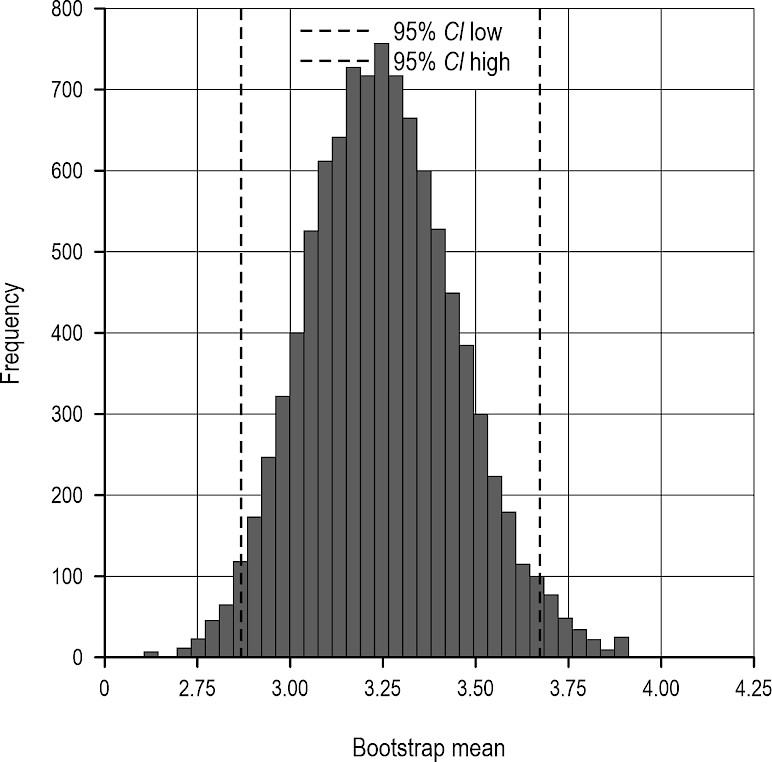
Fig. 3 Example of data normalization obtained through bootstrapping
3. Results
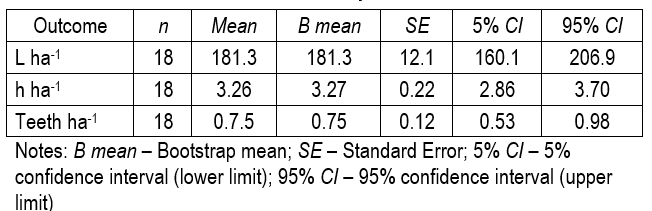
Mean fuel, time and teeth consumption were 181 L ha-1, 3.26 h ha-1, 0.75 teeth ha-1, respectively (Table 3). The difference between actual means and bootstrap means was indeed minimal, pointing to a good approximation of the resampled values. Bootstrap confidence intervals (95%) provide a measure of uncertainty around sample means, which is relatively small. The difference between the mean and the 5% tails at both ends is below 15% for fuel and time consumption, and within 30% for tooth wear, which is the parameter most affected by erratic events, such as encounters with isolated rocks or other hard objects.
Table 3 Main results: descriptive statistics
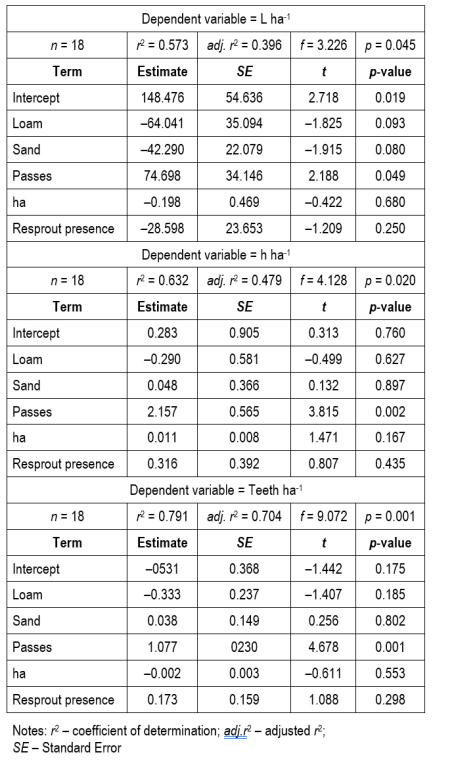
Regression analysis identified the number of passes as the strongest and most significant predictor of fuel consumption, time consumption and tooth wear (Table 4). Soil type also showed a marked effect on fuel consumption, although the statistical significance of such effect is only valid at the 10% level. That is strongly suggestive of an effect that seems logical: fuel consumption is highest for heavy clay soils and lowest for smooth textured loamy soils, exactly matching the anecdotal evidence reported by operators. Soil type seems to affect tooth wear as well, which is highest on abrasive sandy soils and lowest on good loamy soils. That is also a logical finding, but the analysis could not prove it to be statistically significant at the 5% or even the 10% level.
The presence of resprouting did not seem to have any significant effects on any of the dependent variables, and the same was true for field size.
Table 4 Results of OLS regression analysis
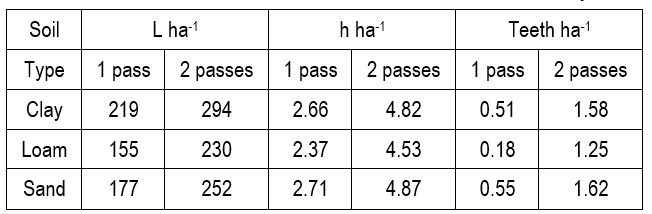
The regression equations shown in Table 4 have been used to estimate mean fuel consumption, time consumption and tooth wear as a function of the number of passes (1 or 2) and of soil type. Results are shown in Table 5, which highlights that adding a second pass will increase fuel consumption by 35–50% and time consumption by 80-90%, depending on soil type. Adding a second pass will triple tooth wear figures. Moving from loam to clay soils (i.e. the most forgiving and the most taxing, respectively), fuel consumption may increase by 30–40% and time consumption by 6–12%. Tooth wear may grow more than twice as large. Soil effects are more marked for single pass operations than for double pass operations, which seems logical given that the second pass will be conducted on a soil that has been already loosened.
Table 5 Modeled fuel, time and teeth consumption as a function of soil type and n° of passes
4. Discussion
Before endeavoring into a meaningful discussion of results, it is important to address the main limitations of the research the study is based upon, so that any insights can be framed within their own applicability constraints, and their reliability can be assessed against the correct background. One of the main limitations of the study is that it includes only one machine and one company. However representative, that machine and company can offer a partial picture only, which excludes other operators, different machines and alternative work techniques. On the other hand, the company and machine selected for the study are among the most experienced, competent and reputed in Central Europe and they conducted their work in order to match the exacting specifications of large professional customers, with high demands on work quality and financial efficiency. For that reason, we may state that the case presented in this study is a typical example (although not the only one) of the industrial recultivation of European poplar SRF, conducted according to best practice.
A second limitation of the study is the observational character, which resulted in an unbalanced experimental design and reduced analytical resolution. This likely confounded the effects of some of the main factors influencing recultivation efficiency, such as soil type or resprouting vigor. In fact, the study returned suggestive trends for soil type effects, especially with respect to fuel consumption and tooth wear, but these did not reach conventional statistical significance levels. These trends could have been proved within a study specifically designed to target soil effects. Such a study design should have included an explicit control of soil moisture content, given its strong effect on tillage efficiency. As the study spanned many months and places, it is most likely that the same soil type may have been worked under varying moisture content conditions, thus expanding within-treatment variability. In contrast, stump resprouting showed no visible effect on any of the explained variables. It is possible that heavy resprouting has a strong psychological effect as it hinders operator visibility but poses no actual physical hindrance to a powerful mulcher designed to grind soil and stones.
A third possible limtation of this study is the aggregation of data at field level, rather than at day, hour or cycle level. Obviously, aggregation at field level hides within-field variability; since the recultivation of each field took several days, it denies day-level resolution to our benchmarks. On the other hand, it also dampens the background noise generated by daily variability, and if the resulting benchmarks are used for field-level predictions, it simply makes those predictions more robust and generally easier to handle. In such instance, the main drawback of field-level aggregation would be the dramatic reduction in the number of valid observations, with its potential negative effects on data distribution: that was effectively solved through bootstrapping. Users desiring an accurate benchmark for predicting daily productivity should conduct a similar study as ours, this time at day or shift level.
Nevertheless, this is the first recultivation study conducted on so many fields (18) and over such a large area (>480 ha), and its results offer a very robust benchmark, if not a detailed one. This is not a modeling study aimed at gauging the effect of site conditions and work technique on performance, but rather a benchmarking study that offers solid reference values for landscape-scale assessments. In that respect, this study remains quite valuable, given that the reference figures available for the recultivation of European SRF are based on short-term studies, conducted on a few hectares at best. While those studies have a relatively good resolution, they offer limited insights on landscape-level variability, with a significant risk for large scaling errors when applied to scenario predictions (e.g. Schweier et al. 2017). Furthermore, the few available references about the recultivation of SRF poplar refer most often to traditional or very short rotation plantations, with the more recent medium-rotation plantations being addressed by only two studies (Table 6). Medium-rotation plantations are considered especially promising for their capacity to provide quality fiber within a relatively short time.
Table 6 Main results of other recultivations studies found in bibliography
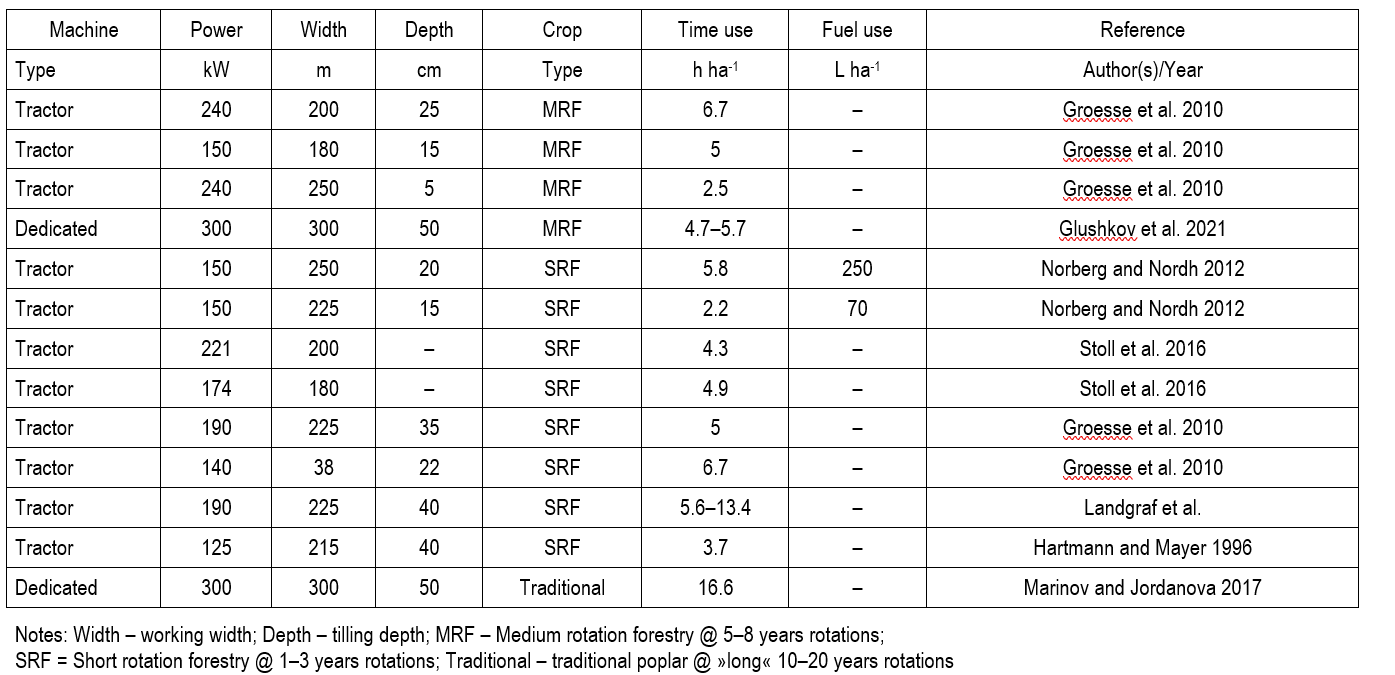
A first comparison with the results of those studies indicates that our figures are well within the ballpark: available literature indicates a time consumption between 2.5 and 6.7 h ha-1 for the recultivation of the newer medium rotation plantations (Table 6). While well within that bracket, the 95% confidence limits for this study fall closer to the lower end, as they range from 2.7 h ha-1 (lower CI) to 3.7 h ha-1 (higher CI). That may point to the progress made within the field over the last decade and to the higher efficiency of the large industrial machine used for this study, which surpasses those used in the quoted studies in size and power. That machine also emerges as the fastest as compared to all others, even when matched with studies conducted on very short rotation plantations and traditional poplar stands, possibly for the same reasons. A lower time consumption (i.e. 2.2 h ha-1) is reported only for the shallow recultivation (15 cm vs. 40 cm depth) of very short rotation plantations and can be explained by the smaller rootstocks and the lower work quality target (Norberg and Nordh 2012).
In that regard, we have to issue an important caveat: not all studies may have used the same time references for their records. The inclusion of downtime and the type of downtime being included is another potential source of variability, especially for technical studies that do not describe the study methods in detail. The difference between productive hours (the time the machine is actually doing productive work) and scheduled worksite hours (the duration of the paid work day) can be relatively large (Bjorheden 1991, Harstela 1991). The figures obtained from this study represent hour meter (machine clock) time, that is the time the tractor engine is running. That generally includes minor downtime when the tractor engine is kept running (e.g. phone calls, checks, reconnaissance) and could be roughly equated to the classic PSH15 time, or productive system hour including delays up to 15 minutes in duration (REFA 1991). PSH15 time has been shown to represent almost 90% of worksite time (Spinelli and Visser 1998). In contrast, productive work time may represent 70% of worksite time, while PSH15 time, which includes short delays, generally represents about 85–90% of total worksite time. The ambiguity about the actual time being reported is a frequent obstacle to the accurate comparison of productivity figures, which scientists have tried to solve several times with variable success (Bjorheden et al. 1995, Magagnotti et al. 2013). Most of the quoted studies are based on hour meter time or PSH 15 time, but if some had used productive time then their corresponding hour meter time consumption would have been even higher than the productive time figures reported, further reinforcing the notion of a higher overall productivity of the large mulcher tested in this study.
No such ambiguity may plague fuel consumption figures if they are reported on an hectare basis, but only one of the available studies reports fuel consumption, estimating it at 250 L ha-1 for a full quality multi-pass job with a time consumption of 5.8 h ha-1. While still reasonably close to our estimates, that figure is 20% higher than the upper limit of the 95% confidence interval determined in our study, which may depend on the lower scale efficiency of the smaller 150 kW tractor studied by Norberg and Nordh (2012) and/or the higher planting density. Very short rotation plantations may offer smaller rootstocks, but in much larger numbers.
As a matter of fact, plantation density and stump size are important factors to consider when choosing the recultivation technique. Individual stump grinding with a hydraulic auger is a better solution than continuous grinding with a mulcher when recultivating traditional poplar plantations established at a density <300 trees ha-1, where stump diameter exceeds 20 cm. In that case, use of a hydraulic auger allows cutting stump grinding cost to a half (Glushkov et al. 2021). A tractor-mounted auger is lighter, cheaper to operate and attacks the stumps only, without tilling the soil in between: that is one of the reasons why the auger is faster than the mulcher and can cover one hectare in less than 2 hours (Picchio et al. 2012). For that same reason, establishing a new crop may require additional site preparation (e.g. tillage) if the stumps have been ground with an auger, whereas the mulcher leaves the soil thoroughly tilled and ready for sowing. Furthermore, the mulcher can deal with any logging residues, residual trees and shrubs left behind after harvesting, which is not the case with the auger. Additional cleaning work of that kind may explain why some studies report very large mulching times for traditional poplar stands (e.g. Marinov and Jordanova 2017, Marinov and Peev 2024). In that regard, a major advantage of mulching is that all work is done in one single pass (or two passes, sometimes) using the same machine, thus saving time and relocation cost (one machine instead of multiple machines) in the least.
Overall, comparison with the existing literature confirms the general reliability of our findings. In fact, it may also corroborate the suggestive information we obtained for soil effects; Marinov and Peev (2024) found that a 300 kW mulcher would incur a 33% increment in fuel consumption and a 14% increment in time consumption when moving from sandy soils to clay soils, both figures matching almost exactly those we found in this study for the same soil type shift.
5. Conclusions
This study offers key reference values for estimating SRF poplar recultivation cost with better assurance than was possible before. Time use, fuel consumption and tooth wear are the fundamental contributors to operational costs: once they are known with some accuracy, one can easily apply local prices and obtain a reliable cost estimate. That is very important, given that recultivation and site preparation in general are among the most work-intensive activities in poplar management, regardless of plantation scheme – traditional or biomass (Hansen et al. 1984, Keča et al. 2015). SRF poplar is an agricultural crop and must be conceived as the component of a rotation scheme, whereby different crops alternate on the same fields in order to preserve and enhance soil fertility, biodiversity and more in general environmental protection. Contrary to traditional forests, SRF poplar is not permanent: it may occupy the same fields for 5 to 20 years, but it will be eventually terminated to the benefit of another crop, and possibly return to the site again after the rotation has gone full circle. For that reason, recultivation is an essential task in SRF poplar cultivation and possibly the task that has obtained less attention, at least compared with planting, weeding and harvesting. This study fills the gap by providing solid reference figures for such important operation, as conducted with state-of-the-art industrial technology, capable of minimizing resource consumption, site occupation time and overall cost.
Acknowledgments
The Authors acknowledge the support of Mr. Davide Porzio, operations manager at Galle GmbH, Sonnenwalde, Germany, who contributed crucial data and advice.
6. References
Al-Musawi, Z.K., Vona, V., Kulmány, I.M., 2025: Utilizing Different Crop Rotation Systems for Agricultural and Environmental Sustainability: A Review. Agron. 15 (8): 1966. https://doi.org/10.3390/agronomy15081966
Amirteimoori, A., Zadmirzaei, M., 2025: A Data-driven Two-Stage Bootstrap Approach for Analyzing Forestry Technical Efficiency in Sweden. Austrian J. For. Sci. 142 (4): 297–320. https://doi.org/10.53203/fs.2504.1
Bahrian, J., Firouzan, A.H., Naghdi, R., Hashemi, S.H., 2024: Estimation and modeling of the biomass and carbon storage in the stump and root of Populus deltoides. Environ. Challen. 15: 100884. https://doi.org/10.1016/j.envc.2024.100884
Björheden, R., 1991: Basic time study concepts for International comparison of time study reports. J. For. Eng. 2(2): 33–39. https://doi.org/10.1080/08435243.1991.10702626
Björheden, R., Apel, K., Shiba, M., Thompson, M.A., 1995: IUFRO Forest work study nomenclature. Swedish Univ. of Agricultural Science, Dept. of Operational Efficiency, Garpenberg, Sweden, 16 p.
Bielek, P., Čurlik, J., Fulajtár, E., Houšková, B., Ilavská, B., Kobza, J., 2005: Soil survey and managing of soil data in Slovakia. European soil bureau research report 9: 317–329.
Ballabio, C., Panagos, P., Montanarella, L., 2016: Mapping topsoil physical properties at European scale using the LUCAS database. Geoderma 261: 110–123. https://doi.org/10.1016/j.geoderma.2015.07.006
Boelcke, B., 2008: Rodung einer Kurzumtriebsfläche mit Pappeln und Weiden. Informationen der Landesforschungsanstalt für Landwirtschaft und Fischerei Mecklenburg-Vorpommern, Gülzow, 22.04.2008. https://www.lfamv.de/index.php?/content/view/full/5232)
Bose, T., Hammerbacher, A., Slippers, B., Roux, J., Wingfield, M., 2023: Continuous Replanting Could Degrade Soil Health in Short‑Rotation Plantation Forestry. Curr. For. Rep. 9(4): 230–250. https://doi.org/10.1007/s40725-023-00188-z
Bousfield, C.G., Morton, O., Edwards, D.P., 2024: Climate change will exacerbate land conflict between agriculture and timber production. Nature Climate Change 14(10): 1071–1077. https://doi.org/10.1038/s41558-024.02113-z
Casselli, V., Prata, G.A., Seixas, F., 2018: Rendimento operacional e viabilidade econômica na colheita de tocos de eucalipto em dois sistemas de extração. Scientia Forestalis 46(117): 97–106. dx.doi.org/10.18671/scifor.v46n117.09
Cerveny, J., Prochazka, P., Soukupova, J., Svoboda, R., Severova, L., Smutka, L., Cabelkova, I., Dvorak, M., 2023: Rooted in richness: unearthing the economic and ecological synergy of crop rotation. Front. Sustain. Food Syst. 7: 1298897. https://doi.org/10.3389/fsufs.2023.1298897
Cleary, M.R., Arhipova, N., Morrison, D.J., Thomsen, I.M., Sturrock, R.N., Vasaitis, R., Gaitnieks, T., Stenlid, J., 2013: Stump removal to control root disease in Canada and Scandinavia: A synthesis of results from longterm trials. For. Ecol. Manag. 290: 5–14. https://doi.org/10.1016/j.foreco.2012.05.040
De Valck, J., Vlaeminck, P., Broekx, S., Liekens, I., Aertsens, J., Chen, W., Vranken, L., 2014: Benefits of clearing forest plantations to restore nature? Evidence from a discrete choice experiment in Flanders, Belgium. Land. Urban Plann. 125: 65–75. https://doi.org/10.1016/j.landurbplan.2014.02.006
Efron, B., 1979: Bootstrap Methods: Another Look at the Jackknife. Ann. Stat. 7(1): 1–26. https://doi.org/10.1214/aos/1176344552
Fang, J.Y., Guo, Z.D., Piao, S.L., Chen, A.P., 2007: Terrestrial vegetation carbon sinks in China, 1981–2000. Sci. China: Ser D 50(9): 1341–1350. https://doi.org/10.1007/s11430-007-0049-1
FAO (ed.) 2008: Field Handbook – Poplar Harvesting. International Poplar Commission Working Paper IPC/8. Forest Management Division, FAO, Rome (unpublished), 60 p. https://www.fao.org/4/k3305e/k3305e.pdf
FAO (ed.) 2024: The State of the World's Forest 2024 – Forest sector innovations towards a more sustainable future. FAO, Rome. https://www.fao.org/publications/fao-flagship-publications/the-state-of-the-worlds-forests/en
Forbrig, A., Encke, B.G., 2000: Bodenvorbereitung streifenweise unter Schirm mit Fräse. Tagungsführer zur 13. KWF-Tagung, Raum Celle, Hsg. KWF und AFZ-Der Wald 44–46.
Freedman, D.A., 1981: Bootstrapping Regression Models. Ann. Stat. 9(6): 1218–1228. https://doi.org/10.1214/aos/1176345638
Freitas, J.M., Horta, J.R., 2019: Rotas de produção de biomassa residual florestal en operações mecanizadas. In: Guerra SPS and Eufrade Junior HJ. Recuperação energética da biomassa de tocos e raízes de florestas plantadas. Botucatu: Editora Fepaf, 45–54 p.
Fuertes, A., Oliveira, N., Cañellas, I., Sixto, H., Rodríguez-Soalleiro, R., Hanewinkel, M., Sperlich, D., 2023: Assessing the potential of poplar short rotation plantations to contribute to a low-carbon bioeconomy under water-limited conditions. J. Environ. Manag. 347: 119062. https://doi.org/10.1016/j.jenvman.2023.119062
Große, W., Böcker, L., Landgraf, D., Scholz, V., 2010: Rückwandlung von Plantagenflächen in Ackerland. In: Bemmann, A., Knust, C., AGROWOOD Kurzumtriebsplantagen in Deutschland und europäische Perspektive. Weißensee Verlag, Frankfurt am Main, 130–138 p.
Glushkov, S., Popikov, P.I., Malyukov, S.V., Chakarov, V., Boyadzhiev, D., 2021: Study of the work of a self-propelled mulcher in the preparation of forest soild for planting poplar in the conditions of Bulgaria. IOP Conference Series: Earth and Environmental Science 875(1): 012006. https://doi.org/10.1088/175-1315/875/1/012006
Hansen, E., Netzer, D., Rietveld, W., 1984: Site Preparation for Intensively Cultured Hybrid Poplar Plantations. Research Note NC-320. St. Paul, MN: U.S. Dept. of Agriculture, Forest Service, North Central Forest Experiment Station.
Harstela, P., 1991: Work studies in forestry. Silva Carel. 18: 41 p.
Hartmann, H., Mayer, B., 1997: Rekultivierung von Kurzumtriebsplantagen. Landtechnik 52(1): 26–27. https://doi.org/10.15150/lt.1997.2580
Hnilica, R., Kotus, M., Jankovský, M., Hnilicová, M., Dado, M., 2017: Qualitative classification of mulchers. Agron. Res. 15(5): 1890–1896. https://doi.org/10.15159/AR.17.049
Keča, L., Keča, N., Pajid, S., 2011: Investment Appraisal of Poplar Plantations in Serbia. Balt. For. 17(2): 268–279.
Kenefick, C., Livesley, S., Farrell, C., 2024: A systematic review of resprouting in woody plants and potential implications for the management of urban plantings. Ecol. Evol. 14(1): e10839. https://doi.org/10.1002/ece3.10839
Košir, B., Magagnotti, N., Spinelli, R., 2015: The role of work studies in forest engineering: status and perspectives. Int. J. For. Eng. 26(3): 160–170. https://doi.org/10.1080/14942119.2015.1111043
Kumhála, F., Chyba, J., Pexa, M., Čedík, J., 2016: Measurement of mulcher power input in relation to yield. Agron. Res. 14 (4): 1380–1385.
Jain, T., Sikkink, P., Keefe, R., Byrne, J., 2018: To masticate or not: useful tips for treating forest, woodland, and shrubland vegetation. Gen. Tech. Rep. RMRS-GTR-381. Fort Collins, CO: US Department of Agriculture, Forest Service, Rocky Mountain Research Station, 55 p. https://doi.org/10.2737/RMRS-GTR-381
Jordanova, V., Marinov, K., 2015: Study of milling technology unit performance for site preparation of forest area for afforestation. For. Ideas. vol. 21 no. 2(50): 335–346.
Landgraf, D., Boecker L., Wuestenhagen, D., 2009: Rodungsfräsen zur Rückumwandlung von Schnell- wuchsplantagen? AFZ Der Wald 6: 284–285.
Liangang, X., Yudi, W., Chenxi, Z., Kebing, Z., Rongqin, Z., Zhixiang, X., 2025: Crop rotation enhances yield and water productivity: Uncovering potential drivers through global field experiment synthesis. Agr. Water Manag. 317: 109644. https://doi.org/10.1016/j.agwat.2025.109644
Lodhiyal, L.S., Singh, R.P., Rana, B.S., 1992: Biomass and productivity in an age series of short rotation Populus del-toides plantations. Trop. Ecol. 33: 214–222.
Magagnotti, N., Kanzian, C., Schulmeyer, F., Spinelli, R., 2013: A new guide for work studies in forestry. Int. J. For. Eng. 24(3): 249–253. https://doi.org/10.1080/14942119.2013.856613
Marinov, K., Jordanova, V., 2017: Comparative analysis of site preparation costs of poplar plantations establishment by various technological schemes. J. Agric. Sci.Technol.B. 7(2): 79–90. https://doi.org/10.17265/2161-6264/2017.02.006/
Marinov, K., Peev, D., 2024: Models for determining the operating costs of self-propelled forestry rotary tillers for soil preparation of poplar plantations establishment. For. Sci. 60(3): 225–245.
McEwan, A., Marchi, E., Spinelli, R., Brink, M., 2020: Past, present and future of industrial plantation forestry and implication on future timber harvesting technology. J. For. Res. 31(2): 339–351. https://doi.org/10.1007/s11676-019-01019-3
Morris, A.R., 2022: Changing use of species and hybrids in South African forest plantations. South. For. 84(3): 193–205. https://doi.org/10.2989/20702620.2022.2110538
Mudare, S., Jing, J., Makowski, D., He, X., Liang, Z., Sims, Z., Wanger, T.C., Tilman, D., Zhang, F., Cong, W.F., 2025: Crop rotations synergize yield, nutrition, and revenue: a meta-analysis. Nat Commun. 16(1): 9552. https://doi.org/10.1038/s41467-025-64567-9
Nepal, P., Johnston, C.M., Ganguly, I., 2021: Effects on global forests and wood product markets of increased demand for mass timber. Sustain. 13(24): 13943. https://doi.org/10.3390/su132413943
Norberg, I., Nordh, N.E., 2012: Termination of a willow cultivation – fastest and cheapest by shallow cultivation (Att avsluta en salixodling – snabbast och billigast med ytlig uppbrytning). JTI-Informerar, JTI:s Skriftserie, 2–12 p.
Pereira da Silva Correia, T., Caldas Lopes, A.G., Faggion, F., Rodrigues de Brito, G., Gomes de Sousa, S.F., 2020: Operational performance and costs of mechanized stump extraction sets. Engenharia na Agricultura 28(1): 326–335. https://doi.org/10.5016/1984-5529.2025.v53.1397
Picchio, R., Verani, S., Sperandio, G., Spina, R., Marchi, E., 2012: Stump grinding on a poplar plantation: Working time, productivity, and economic and energetic inputs. Ecol. Eng. 40: 117–120. https://doi.org/10.1016/j.ecoleng.2011.11.012
Picchi, G., Pari, L., Scarfone, A., Barontini, M., Spinelli, R., 2016: Unearthing the hidden resource: biomass from rootstock recovery. Biofuels. Bioprod. Bioref. 10(3): 270–280. https://doi.org/10.1002/bbb.1643
REFA, 1991: Principles of work studies, REFA-methods and theory about business organization (in German), Grundlagen der Arbeitsgestaltung, Refa-Methodenlehre der Betriebsorganisation, Carl Hanser Verlag. München, 282 p.
Schweier, J., Molina-Herrera, S., Ghirardo, A., Grote, R., Diaz-Pines, E., Kreuzwieser, J., Haas, E., Butterbach-Bahl, K., Rennenberg, H., Schnitzler, J.P., Becker, G., 2017: Environmental impacts of bioenergy wood production from poplar short-rotation coppice grown at a marginal agricultural site in Germany. Glob. Chan. Biol. Bioenerg. 9(7): 1207–1221. https://doi.org/10.1111/gcbb.12423
Sheppard, J., Spiecker, H.M.C., 2014: Influence of spacing on biomass and bark proportion for three hybrid poplar clones at an age of four years. In Proceedings of the Agroforestry Systems – A Modern Response to Global Challenges of Climate Change, Food Production, Bioenergy Needs, and Environmental Restoration, Porano, Italy, 16–17 October.
Sohngen, B., Mendelsohn, R., Sedjo, R., 1999: Forest management, conservation, and global timber markets. Am. J. Agr. Econ. 81(1): 1–13. https://doi.org/10.2307/1244446
Spinelli, R., Visser, R., 2008: Analyzing and Estimating Delays in Harvester Operations. Int. J. For. Eng. 19(1): 36–41. https://doi.org/10.1080/14942119.2008.10702558
Spinelli, R., Nati, C., Magagnotti, N., 2005: Harvesting and transport of root biomass from fast-growing poplar plantations. Silva Fenn. 39(4): article id 365. https://doi.org/10.14214/sf.365
Spinelli, R., Nati, C., Magagnotti, N., 2009: Using modified foragers to harvest short-rotation poplar plantations. Biomass Bioenerg. 33(5): 817–821. https://doi.org/10.1016/j.biombioe.2009.01.001
Stape, J.L., Binkley, D., Ryan, M.G., Fonseca, S., Loos, R.A., Takahashi, E.N., Silva, C.R., Silva, S.R., Hakamada, R.E., Ferreira, J.M.A., Lima, A.M.N., Gava, J.L., Leite, F.P., Andrade, H.B., Alves, J.M., Silva, G.G.C., Azevedo M.R., 2010: The Brazil Eucalyptus Potential Productivity Project: Influence of water, nutrients and stand uniformity on wood production. For. Ecol. Manag. 259(9): 1684–1694. https://doi.org/10.1016/j.foreco.2010.01.012
Stoll, B., Huettl, K., Dabizzi, D., 2016; Zurück auf Start. AFZ DerWald 1/2016: 25–27.
USDA Forest Service, 2004: Fuels planning: science synthesis and integration; economic uses fact sheet 01: mastication treatments and costs. 2004. https://www.fs.usda.gov/forestmanagement/equipment-catalog/mulchers.shtml
Vasaitis, R., Stenlid, J., Thomsen, I.M., Barklund, P., Dahlberg, A., 2008: Stump removal to control root rot in forest stands. A literature study. Silva Fenn. 42(3): 457–483.
© 2026 by the authors. Submitted for possible open access publication under the
terms and conditions of the Creative Commons Attribution (CC BY) license (http://creativecommons.org/licenses/by/4.0/).
Authors’ addresses:
Spinelli Raffaele, PhD
e-mail: raffaele.spinelli@cnr.it
Magagnotti Natascia, PhD
e-mail: natascia.magagnotti@cnr.it
Eberhard Benno, PhD
e-mail: Benno.Eberhard@gmx.at
National Research Council
Institute of Bioeconomy
Via Madonna del Piano 10
59100 Sesto Fiorentino
ITALY
Ramantswana Muedanyi, PhD
e-mail: Muedanyi.Ramantswana@mandela.ac.za
Nelson Mandela University – George Campus
Forestry Department
Private Bag X 6531
George, 6530, Western Cape
REPUBLIC OF SOUTH AFRICA
Received: January 07, 2026
Accepted: February 20, 2026
Original scientific paper