

From XS to XL: A New Size Classification of Forwarders Based on Payload and Machine Characteristics
doi: https://doi.org/10.5552/crojfe.2027.5800
volume: issue, issue:
pp: 18
- Author(s):
-
- Poršinsky Tomislav
- Grden David
- Bumber Zoran
- Đuka Andreja
- Article category:
- Original scientific paper
- Keywords:
- forwarder payload, dimensional characteristics, timber extraction, timber forwarding
Abstract
HTML
Forwarders are usually classified based on characteristics such as the number of wheels, net weight, payload, engine power, vehicle width, and the loader's lifting torque and boom reach. Existing forwarder classifications are either too basic or too detailed. Even though payload is the most significant influencing factor of timber extraction productivity by forwarders, classification of forwarders should be based not only on the forwarders payload, but also on their other characteristics. A database consisting of 115 market-available forwarders in 2025 was gathered and analyzed, leading to a new forwarder categorization where forwarders are divided into five classes and are presented with 16 different and comparable characteristics. The proposed classification distinguishes five forwarder classes: XS (<4 t), S (4–9 t), M (9–15 t), L (15–20 t), and XL (>20 t), each characterized by corresponding ranges of machine parameters. Eight-wheeled forwarders with hydrostatic-mechanical transmission predominate on the current market. The proposed five-class categorization provides an updated, comprehensive framework for comparing forwarders and supporting machine selection based on operational requirements.
From XS to XL: A New Size Classification of Forwarders Based on Payload and Machine Characteristics
Tomislav Poršinsky, David Grden, Zoran Bumber, Andreja Đuka
https://doi.org/10.5552/crojfe.2027.5800
Abstract
Forwarders are usually classified based on characteristics such as the number of wheels, net weight, payload, engine power, vehicle width, and the loader's lifting torque and boom reach. Existing forwarder classifications are either too basic or too detailed. Even though payload is the most significant influencing factor of timber extraction productivity by forwarders, classification of forwarders should be based not only on the forwarders payload, but also on their other characteristics. A database consisting of 115 market-available forwarders in 2025 was gathered and analyzed, leading to a new forwarder categorization where forwarders are divided into five classes and are presented with 16 different and comparable characteristics. The proposed classification distinguishes five forwarder classes: XS (<4 t), S (4–9 t), M (9–15 t), L (15–20 t), and XL (>20 t), each characterized by corresponding ranges of machine parameters. Eight-wheeled forwarders with hydrostatic-mechanical transmission predominate on the current market. The proposed five-class categorization provides an updated, comprehensive framework for comparing forwarders and supporting machine selection based on operational requirements.
Keywords: forwarder payload, dimensional characteristics, timber extraction, timber forwarding
1. Introduction
Timber extraction using a forwarder is a specific form of primary timber transport in which the entire load is carried off the ground on wheels, so only rolling resistance needs to be overcome during vehicle movement. Timber processed by a cut-to-length method is collected and loaded using a hydraulic loader, requiring a parallel secondary forest road network spaced at approximately twice the loader's reach.
The need to use fully mechanized technologies in harvesting operations has increased due to higher productivity and to eliminate physically demanding work (Slama et al. 2025, Szewczyk et al. 2025). The first forwarder, the Brunett 350 Boxer, was manufactured in Sweden in 1962 (Nordfjell et al. 2019). Proto et al. (2018) and Papandrea et al. (2025) state that modern forwarders are an effective extraction option during harvesting operations, enabling higher mechanization. The same authors add that carrying logs from the forest stand to the roadside landing site or processing areas has a lower environmental impact than tree-length skidding.
In addition to running-gear design and wheel count, forwarders are usually classified by characteristics such as number of wheels, net weight, payload, engine power, vehicle width, and the loader's lifting torque and boom reach (Tables 1 and 2). The most common classification of forwarders (Athanassiadis et al. 1999) is based on their rated payload: 1) light (<10 t), 2) medium-weight (10–14 t), and 3) heavy (>14 t). The German Kuratorium für Waldarbeit und Forsttechnik (KWF) also uses this classification in its test reports for forwarders (Hauck 2002).
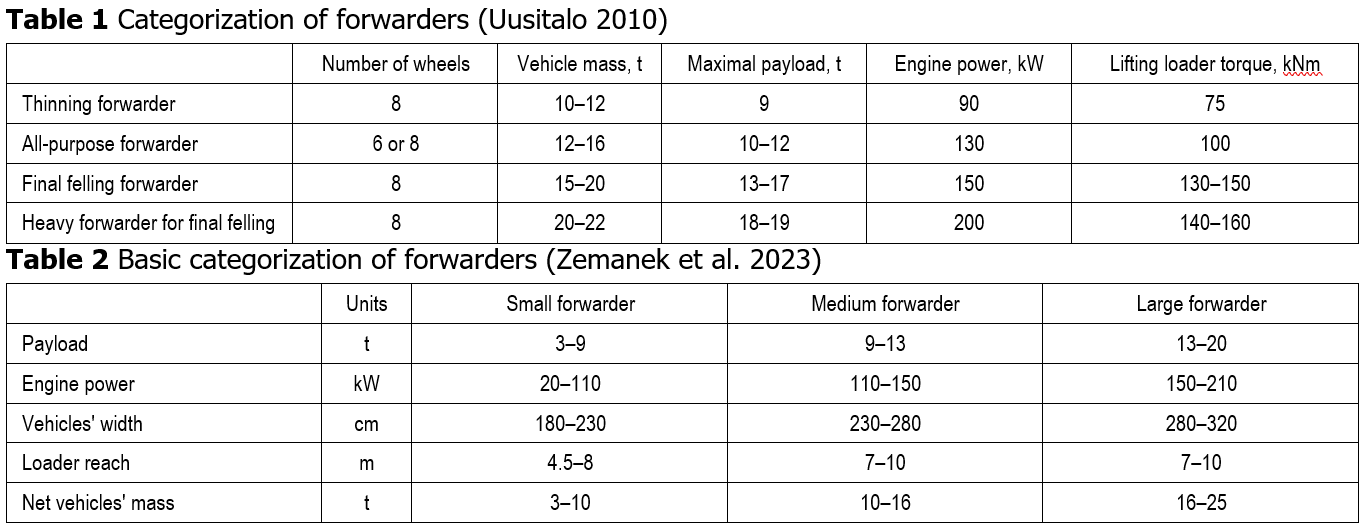
Analyzing the forwarder market, Nordfjell et al. (2019) propose a new classification of forwarders into eight classes depending on their payload: 1) Micro (<2 t), 2) XXS (2–5 t), 3) XS (5–8 t), 4) S (8–11 t), 5) M (11–14 t), 6) L (14–17 t), 7) XL (17–20 t), and 8) XXL (>20 t).
The dimensional and mass characteristics of forwarders (Fig. 1) are defined by ISO 13860 (2016) and include 13 lengths, 15 heights, 4 widths, 6 angles, 2 cross-sectional areas, 1 radius, 1 diameter, and 4 masses. Forwarder manufacturers and certification bodies often report mobility indicators not covered by ISO 13860 (2016), such as the vehicle's approach, ramp (break-over) and departure angles (Poršinsky et al. 2022a).
Regardless of the manufacturer, the mass characteristics of forwarders on flat terrain exhibit a consistent pattern:
- the distribution of the vehicle's net mass places 60% of the mass on the front axle and 40% on the rear axle (Suvinen 2006)
- the entire load of timber (the forwarder payload) is carried by the vehicle's rear axle (Poršinsky and Horvat 2005).
Based on the dimensional and mass characteristics of forwarders, KWF developed a load distribution plan for forwarders on flat terrain (Weise 2003). This plan aims to evaluate design quality during procurement and assist in planning timber forwarding of various log lengths when the bunk cross-section is fully utilized, considering following constraints:
- the maximum load of timber – regardless of length or center of gravity position – must not exceed the manufacturer's declared payload
- the maximum permissible load on the front and rear axles must not be exceeded
- the tire load capacity per axle must not be exceeded
- the load on the front axle must not fall below 20% of the total mass of a loaded forwarder.
Nordfjel et al. (2019) refer to the ratio of payload to the net mass of an empty forwarder as the »load index«, noting that it is approximately 0.80 for modern forwarders. In contrast, for forwarders from 1970, it was approximately 1.0. Cadei et al. (2020) continue that payload should be positively related to productivity, while Eriksson and Lindroos (2014) argue that productivity between forwarders with different payloads decreased with extraction distance, in both final felling and thinning. Larger forwarders lead to a higher initial investment but, conversely, are expected to have higher productivity and a lower cost per cubic meter.
The ISO 13860 (2016) does not mention the center of gravity of the forwarder – a mass indicator essential when modeling the distribution of axle loads and contact pressures and the mobility of forest vehicles concerning the longitudinal slope of the terrain and the direction of movement of the vehicle (Poršinsky et al. 2022a). Using the example of the Komatsu 875 forwarder, Bumber et al. (2023) show a method for determining the center of gravity of the forwarder, and Poršinsky et al. (2023) develop a model for the distribution of axle loads and the assessment of the mobility of the forwarder when transporting timber uphill and downhill.
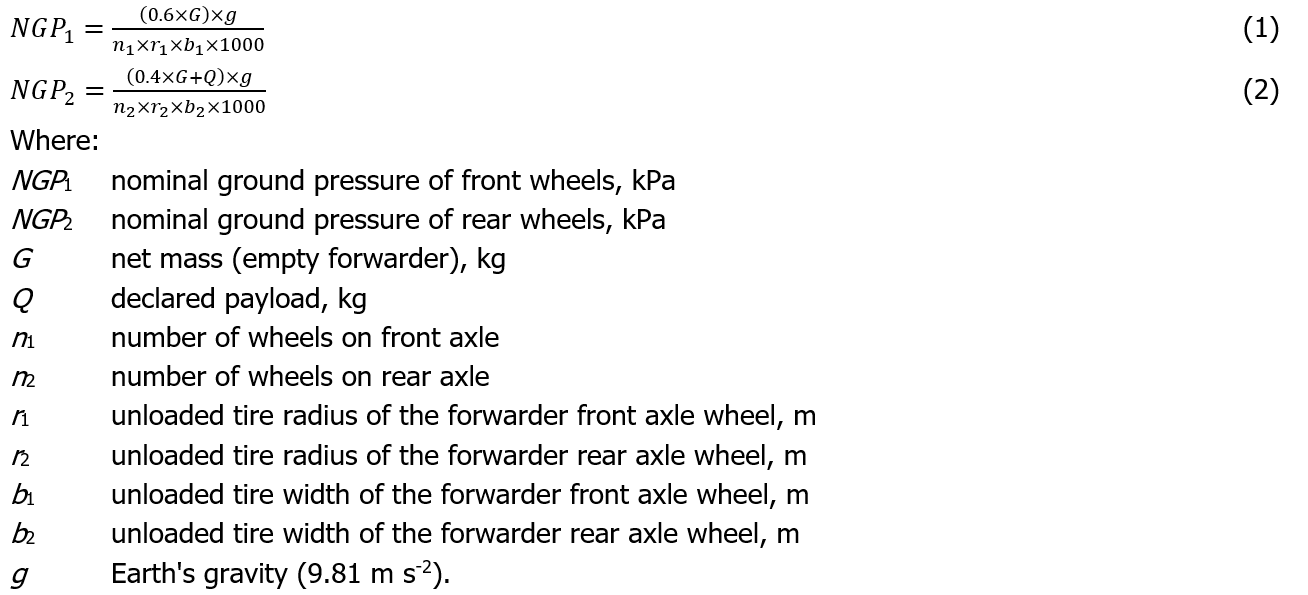
Furthermore, ISO 13860 (2016) does not provide a formula for estimating the contact pressures of a loaded forwarder on forest soil. Given the significant impact of forwarder contact pressures on forest soils with limited load-bearing capacity, Poršinsky et al. (2022a) propose using nominal ground pressure as an indicator of a forwarder's environmental suitability; this choice is based on the calculation simplicity and its acceptance among forestry experts. Poje et al. (2026) note that a decrease in nominal ground pressure would reduce the risk of soil disturbance, rutting, and soil compaction. Nominal ground pressure is calculated separately for the wheels of the front axle and the rear axle due to:
- unequal distribution of the vehicle net mass across the axles
- the fact that the rear axle bears the timber load
- differing number of wheels per axle (six-wheeled vs. ten-wheeled forwarders)
- unequal wheel dimensions between the front and rear axles of six-wheeled forwarders.
Diesel engines power the forwarders with pre-charging, in which the transmission system transmits power (torque, rotation speed) from the drive engine to all wheels of the vehicle. The basic task of transmission is to reduce the revolutions of drive engine and increase the wheels' torque to achieve circumferential traction force (Đuka 2014). The characteristics of diesel engines (number of cylinders, engine volume, engine power, engine torque) are determined by ISO 3046-1 (2002). Depending on the type of power transmission installed in forest vehicles, they differ: mechanical, hydrodynamic-mechanical, hydrostatic-mechanical and hydrostatic transmission (Uusitalo 2010). Until 1989, six-wheel forwarders with hydrodynamic-mechanical transmission prevailed, and since 2010, eight-wheel forwarders with hydrostatic-mechanical transmission have prevailed (Nordfjell et al. 2010).
Compared to mechanical transmissions, the hydrodynamic-mechanical transmission replaces the clutch with a hydrodynamic torque converter; this eliminates the primary drawback of mechanical transmissions – the inability to achieve a constant tractive force and rotational speed curve. In hydrostatic-mechanical transmissions, the diesel engine drives the forwarder's hydrostatic system. This hydrostatic system, consisting of a pump and a hydraulic motor, converts mechanical power into hydrostatic power – a function performed by a mechanical gearbox in conventional transmissions. Although hydrostatic transmissions entail higher mechanical losses, they allow for gear changes without interrupting power flow and enable computer-controlled power transmission alongside simple lever-based operation (Poršinsky 2005). Uusitalo (2010) notes that most Scandinavian forestry vehicles use hydrostatic-mechanical transmission systems because they are easy to maintain, have a long service life, and allow easier control of engine power under demanding operating conditions.
Since 2019, diesel engines in forestry vehicles have been required to meet exhaust emission limits (nitrogen oxides – NOx, carbon monoxide – CO, hydrocarbons – HC, and particulate matter – PM) in accordance with the EU Stage V emission standard for internal combustion engines installed in non-road mobile machinery, pursuant to Directive 97/68/EC (Hagan et al. 2022). To ensure environmental compatibility and compliance with the EU Stage V emission limits, forwarder diesel engines are equipped with exhaust after-treatment systems:
- Diesel Oxidation Catalyst (DOC)
- Exhaust Gas Recirculation (EGR) valve
- Diesel Particulate Filter (DPF)
- Selective Catalytic Reduction (SCR).
A hydraulic loader, mounted behind the dual-axis angle and in front of the forwarder semi-trailer's load-space headboard, is used to load and unload timber. ISO 17591 (2002) defines the classification, terminology, and components of hydraulic loaders used in timber harvesting. The forwarder's hydraulic loader is powered by its hydraulic system. The characteristics of the hydraulic loader (e.g., loader mass, lifting torque, slewing torque, maximum boom reach, gross lifting capacity at maximum boom reach, etc.) are specified by EN 12999 (2020).
Driven by the aim to use forwarders on steep terrain, the practice of equipping them with an additional winch began in the early 2000s. Tethered systems support and stabilize the operation of forwarders, skidders, harvesters, and feller bunchers on steep slopes (Holzfeind et al. 2020, Gülci et al. 2025). In this case, the winch is not intended for collecting timber, but for anchoring and/or providing additional traction, thereby extending the forwarder's range of safe, efficient, and environmentally acceptable operation from 33% to 55% longitudinal slope (Visser and Stampfer 2015). Utilizing cable winch systems in forestry vehicles and machinery refers to:
- ensuring efficient and safe vehicle operation regarding longitudinal stability on steeper slopes
- providing additional traction under adverse soil moisture conditions
- minimizing damage to the forest soil caused by wheel slip in such conditions.
The fundamental concept of morphological analysis in forestry machines is to establish relationships among geometric, mass, and other machine characteristics, to determine:
- the current state of development
- underlying properties and regularity principles
- potential directions of forestry machine development (Horvat 1993, Poršinsky 1997).
Horvat et al. (2004) state that the results of the morphological analyses conducted assist forestry experts in:
- selecting new machines
- choosing the machine best suited for use under various operating conditions
- defining preliminary parameters for the design of new machines within established families of forestry machinery.
This paper proposes a new, updated forwarder categorization based on prior knowledge and the state of the art in vehicles.
2. Materials and Methods
To create a database of 115 current forwarder models, data were sourced from manufacturers' promotional materials available on their websites until the end of 2025 (Grden 2026). In addition to basic forwarder specifications (manufacturer and model, number of wheels, and front blade equipment), the database includes seventy forwarder characteristics, which can be grouped into:
- dimensional and mass characteristics of the forwarder in accordance with ISO 13860 (2016), shown in Figs. 1A and 1B.
- forwarder dimensional characteristics not covered by ISO 13860 (2016): 1) Forwarder approach angle, 2) Forwarder departure angle.
- forwarder engine characteristics: 1) Number of cylinders, 2) Cylinder displacement, 3) Maximum engine power, 4) Engine speed at maximum power, 5) Maximum torque, 6) Engine speed at maximum torque, 7) Fuel tank capacity, 8) Euro emission standard level.
- forwarder transmission characteristics: 1) Transmission type, 2) Tractive force.
- forwarder hydraulic system characteristics: 1) Operating pressure, 2) Maximum oil flow, 3) Hydraulic oil tank capacity.
- hydraulic loader characteristics: 1) Loader manufacturer and model, 2) Loader mass, 3) Gross lifting moment, 4) Slewing torque, 5) Maximum boom reach, 6) Gross lifting capacity at maximum boom reach.
- Dimensions of forwarder front and rear tires.
The database includes 115 forwarder models offered by their manufacturers in 2025: Alstor (3), Amkodor (8), Belarus (2), Bell (2), EcoLog (3), Entracon (3), Equus (1), Falcon (1), Farma (1), HSM (8), Jarcrac (1), John Deere (8), LKT (1), Logbullet (3), Logset (7), Komatsu (7), Kinetic (2), Kranman (5), Malwa (1), Noe (5), Novotný (3), Pfanzelt Felix (2), Ponsse (10), ProSilva (1), Ritter (1), Rottne (6), Sampo-Rosenlew (3), Sogedep (1), TimberPro (2), Terri (1), Tigercat (4), Vimek (3), Weiler (2), Welte (2), ZKT (1) and Xuvol (1).
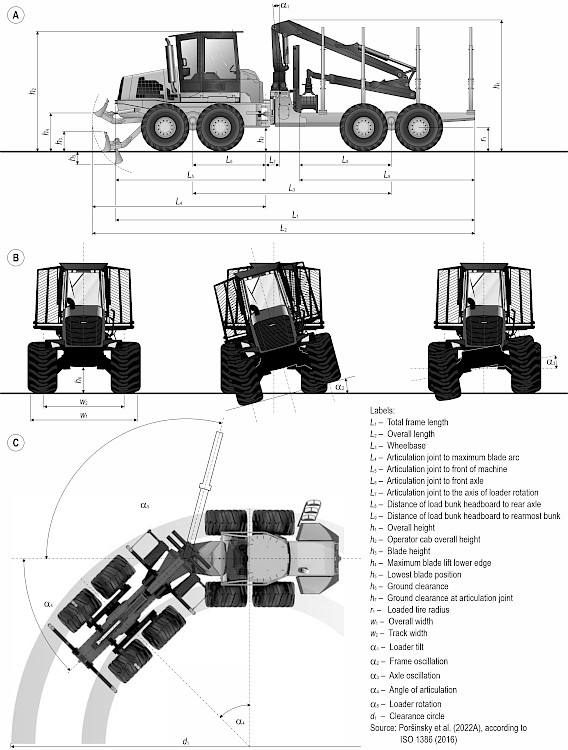
Fig. 1A Forwarders' dimensional and mass characteristics
For the forwarders included in the database, manufacturers do not always list every specified feature. It is particularly important to highlight the variations in data for specific forwarder models, as some manufacturers offer various options, such as:
- a shorter or longer bunk, or the inclusion/exclusion of a front blade, which affects the forwarder's overall length
- a choice of engine based on performance as well as EU exhaust emission standards
- a choice of hydraulic loader based on performance and the inclusion of an additional telescopic extension, i.e. boom reach, which affects lifting and slewing torques, and the vehicle's net and gross weight
- different bunk widths (narrower for roundwood, wider for energy wood and forest residues), which affect the bunk cross-section
- different tire dimensions, which affect the ground contact pressure of the front and rear wheels as well as the vehicle's overall width.
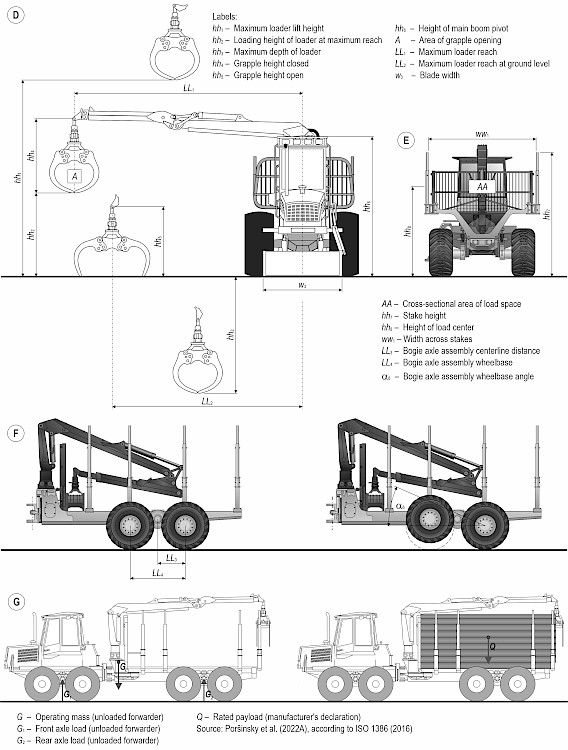
Fig. 1B Forwarders' dimensional and mass characteristics
Due to the existence of various configurations for specific forwarder models from the same manufacturer, it was necessary to standardize certain morphological characteristics when entering data into the database; this process involved the following assumptions:
- for forwarder models offering a choice of bunk lengths, the shorter rear chassis option was selected –designed based on the declared load capacity for broadleaved timber (which has a higher density than coniferous wood)
- overall length of the forwarder is influenced by the presence of a front blade; this component was included in the total length calculation only for models supplied with a front blade as standard equipment
- for models offering a choice of engines or hydraulic cranes, the database recorded the specifications for the engines and cranes installed by the manufacturer as standard equipment
- regarding hydraulic cranes, the option featuring an additional telescopic extension was always selected due to its greater reach
- where options existed for different bunk widths (or cross-sectional areas), the configurations installed by the manufacturer as standard equipment for transporting roundwood were selected
- for models offering a choice of tire sizes, wider tires were selected to enhance the forwarder's environmental performance.
The following morphological characteristics were selected from the database for the morphological analysis of forwarders:
- three mass characteristics: Net mass (kg), Declared payload (kg), and Gross mass (kg)
- six dimensional characteristics: Overall length (mm), Distance of load bunk headboard to rearmost bunk, i. e., bunk length (mm), Overall height (mm), Overall width (mm), Angle of articulation (°), and Bunk cross-section (m 2 )
- five engine characteristics: Number of cylinders, Cylinder displacement (cm 3 ), Maximum engine power (kW), Maximum torque (Nm), and Euro emission standard level
- transmission type (mechanical, hydrodynamic-mechanical, hydrostatic-mechanical)
- five hydraulic loader characteristics: Loader manufacturer and model, Gross loader lifting torque (kNm), Loader slewing torque (kNm), Maximum loader reach (m), and Gross lifting capacity at maximum loader reach (kg)
- front and rear tire dimensions.
The morphological analysis of the forwarder includes nine derived characteristics: form index considering the ratio between maximum vehicle width / maximum vehicle length and the ratio between maximum vehicle height / maximum vehicle length, loading space volume (m3), specific power (kW/gross tonne), specific torque (Nm/gross tonne), net unit mass (kg/kW), gross unit mass (kg/kW), nominal ground pressure of front (Eq. 1) wheels (kPa), and nominal ground pressure of rear (Eq. 2) wheels (kPa).
3. Results
This section is divided by subheadings. It should provide a concise and precise description of the experimental results, their interpretation as well as the experimental conclusions that can be drawn.
3.1 Form Index
For the 115 modern forwarders offered by manufacturers in 2025, it is notable that they all fall below the H = W line – meaning that vehicle height exceeds width, with no distinct grouping of forwarders based on the number of wheels (Fig. 2). The form index h1/L2 ranges from 0.32 to 0.61, with a median value of 0.39, while the form index w1/L2 ranges from 0.25 to 0.42, with a median of 0.29. Including cable skidders in the form index analysis reveals a clear distinction between the two machine categories (Fig. 2). Cable skidders are generally positioned above and to the left of the main forwarder cluster, with higher values for both form indices. Their height-to-length ratio (h1/L2) ranges from 0.43 to 0.57, with a mean of 0.47 and a median of 0.46, while the width-to-length ratio (w1/L2) ranges from 0.35 to 0.49, with both the mean and median equal to 0.40. In contrast, most forwarders form a relatively compact cluster characterized by lower values of both form indices. Nevertheless, some overlap is evident. The observed overlap is mainly associated with several shorter forwarder models, whose higher form indices place them morphologically closer to skidders. The similarity is also reflected in their functional versatility, as some of these machines can be equipped with upward-facing grapples on the rear chassis for tree-length timber extraction, effectively allowing them to operate as clambunk skidders.
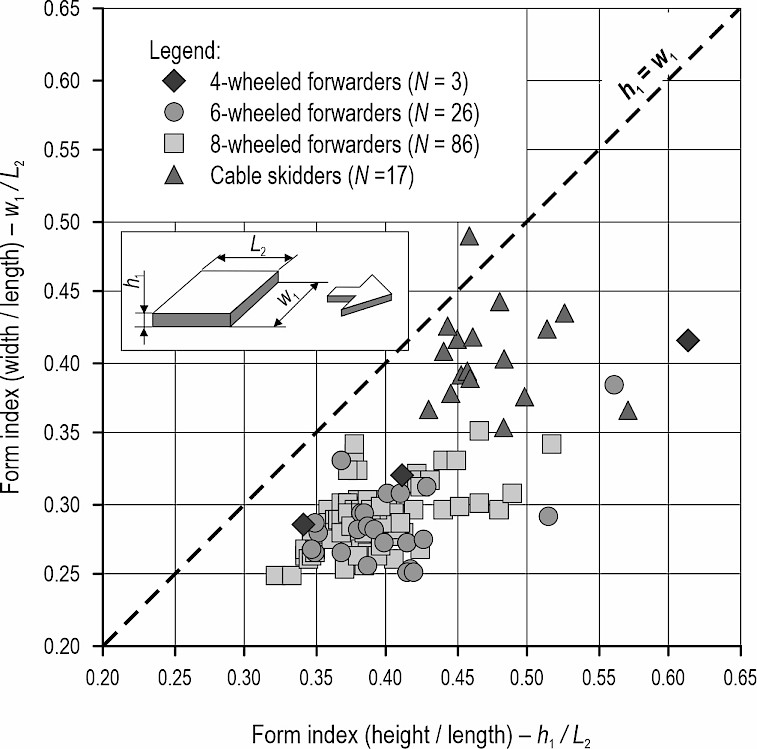
Fig. 2 Dependence of form index w1/L2 to h1/L2
3.2 Mass Characteristics of Forwarders
An analysis of the mass characteristics of modern forwarders indicates an increasing diversification of forwarder size classes. On the one hand, lighter, the so-called thinning forwarders have emerged for operations in younger stands; on the other, high-capacity forwarders with greater net and gross masses are available for regeneration and final felling operations (Fig. 3).
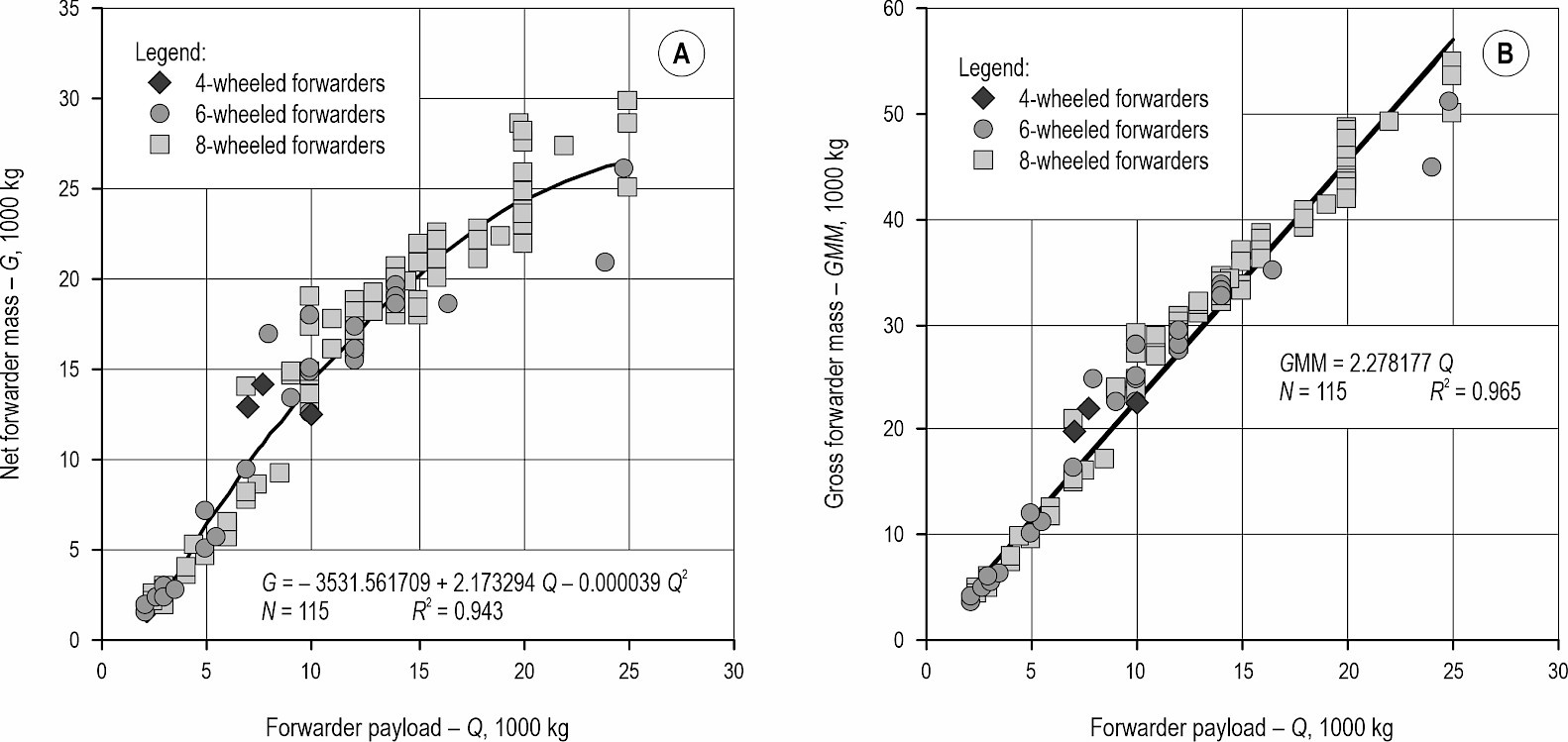
Fig. 3 Dependence of forwarder net (A) and gross (B) mass on payload
The data on the dependence of net mass on the forwarder payload were matched by regression analysis with a second-order polynomial (Fig. 3A), and the gross mass on the forwarder's carrying capacity with a line through the origin (Fig. 3B), with high values of the coefficients of determination (R2>0.94). It should also be emphasized that, concerning the mass characteristics, there was no separation of individual groups of forwarders by the number of vehicle wheels, and that an increase in one mass characteristic increases the remaining two. Based on the mass characteristics of modern forwarders (Fig. 3), they can be classified into five purpose categories (Table 3).
Table 3 Comparative overview of mass characteristics of five forwarder categories
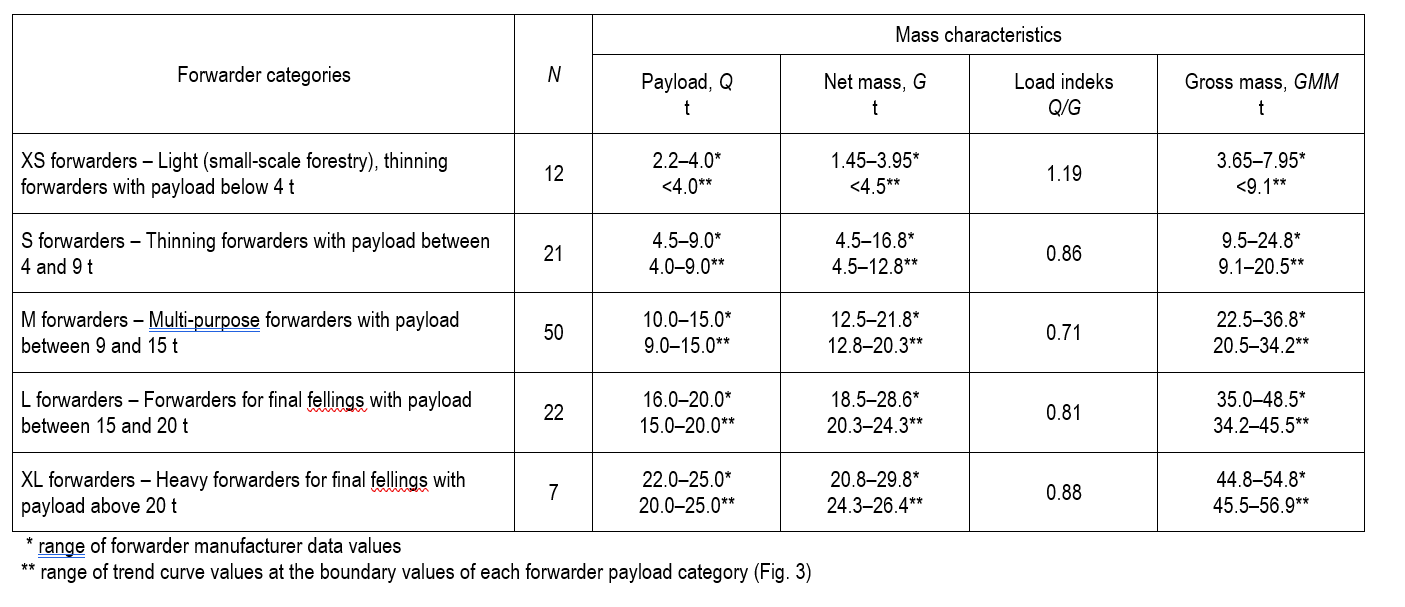
The load index (Q/G) was below 1 for all forwarder categories except XS forwarders (1.19), indicating that only this category exceeds machine net mass with payload capacity, highlighting the high load-carrying efficiency of lightweight forwarders relative to their own mass.
3.3 Dimensional Characteristics of Forwarders
The analysis of forwarder dimensional characteristics covered the vehicle's overall dimensions (total length, total width, and total height) as well as the length and volume of the loading space. The analysis of the overall dimensions of modern forwarders in relation to payload is presented in Fig. 4 (length), 5 (height), and 6 (width). The relationships were fitted using an increasing exponential function (y = a xᵇ) based on the facts that: 1) in the absence of mass, the overall dimensions of this forestry vehicle do not exist, and 2) there is a limiting value for overall dimensions determined by technological requirements and/or (sub-)legislative regulations.
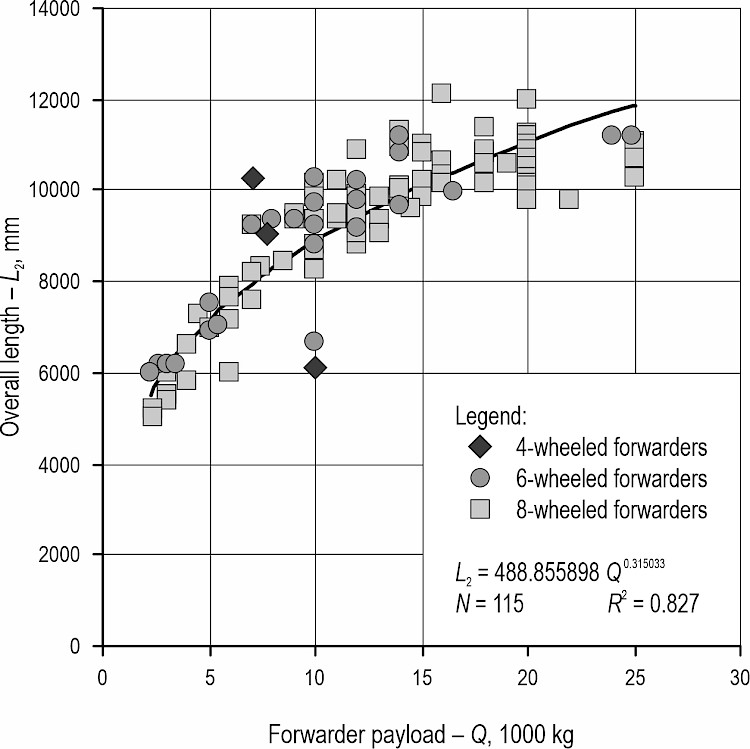
Fig. 4 Dependence of forwarder length on payload
When comparing how forwarder length and width relate to payload, it is evident that length (Fig. 4) increases more rapidly than vehicle width (Fig. 5). The increase in forwarder length associated with greater payload is disadvantageous for maneuverability during forest operations, as greater length implies a larger turning circle and reduced mobility. However, unfavorable trend of increasing length is somewhat mitigated by articulated steering; the use of an asymmetrically positioned articulation joint - necessitated by the mounting of a hydraulic loader on the rear chassis and the required length of the loading space which allows a smaller turning circle despite the forwarder's relatively long wheelbase or overall length. Of the 115 forwarders included in this research, manufacturers reported steering angle for 69 vehicles, ranging from ±40° to ±50° with an average value of ±44°.
Regression analyses of the relationship between maximum forwarder length and payload show a high coefficient of determination (Fig. 4) with R2=0.82.
It should be noted that the maximum width of a particular forwarder model is also influenced by the dimensions of its pneumatic tires. Regression analyses of the relationship between maximum forwarder width and payload show a high coefficient of determination (Fig. 5) with R =0.91.
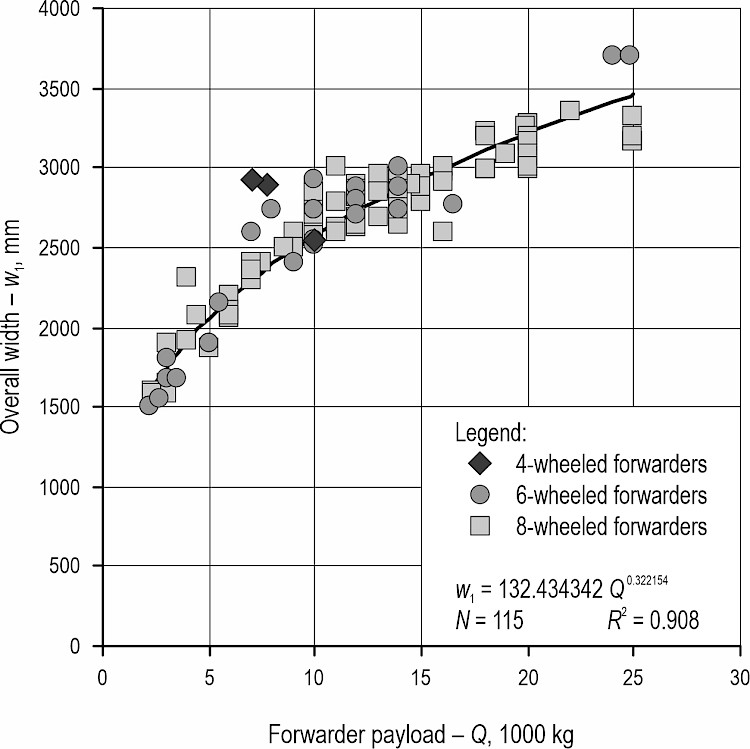
Fig. 5 Dependence of forwarder width on payload
An analysis of the relationship between maximum forwarder height and mass characteristics (Fig. 6) revealed a faster increase in height than in maximum forwarder width (Fig. 5). Regression analyses of maximum forwarder height against payload show high coefficients of determination (Fig. 6) for payload and height ratio (R2=0.84).
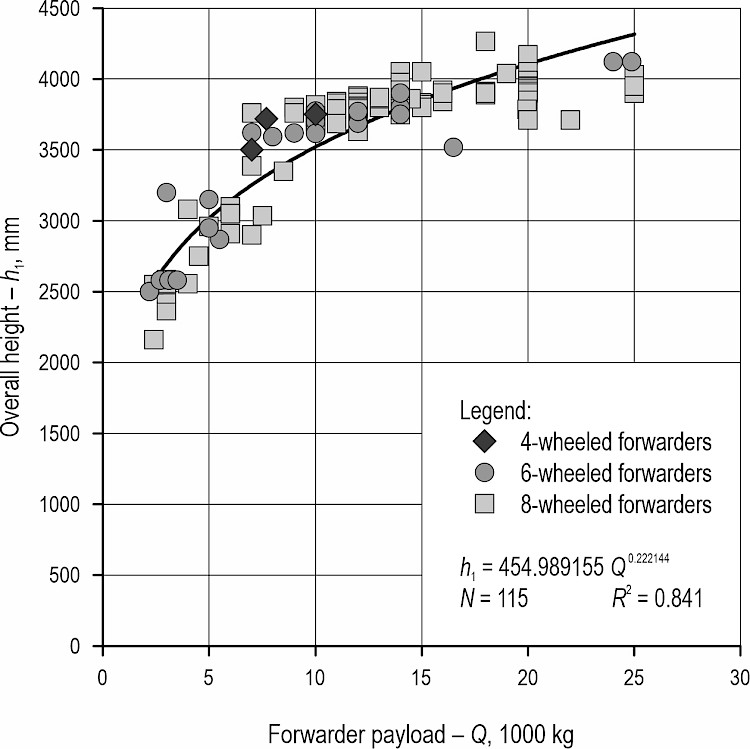
Fig. 6 Dependence of forwarder height on payload
Data on bunk length and volume in relation to forwarder payload were evaluated using regression analysis with an increasing exponential function (Fig. 7), yielding coefficients of determination of R2=0.73 and R2=0.902. Forwarder bunk volumes increase with payload according to designated vehicle classes.
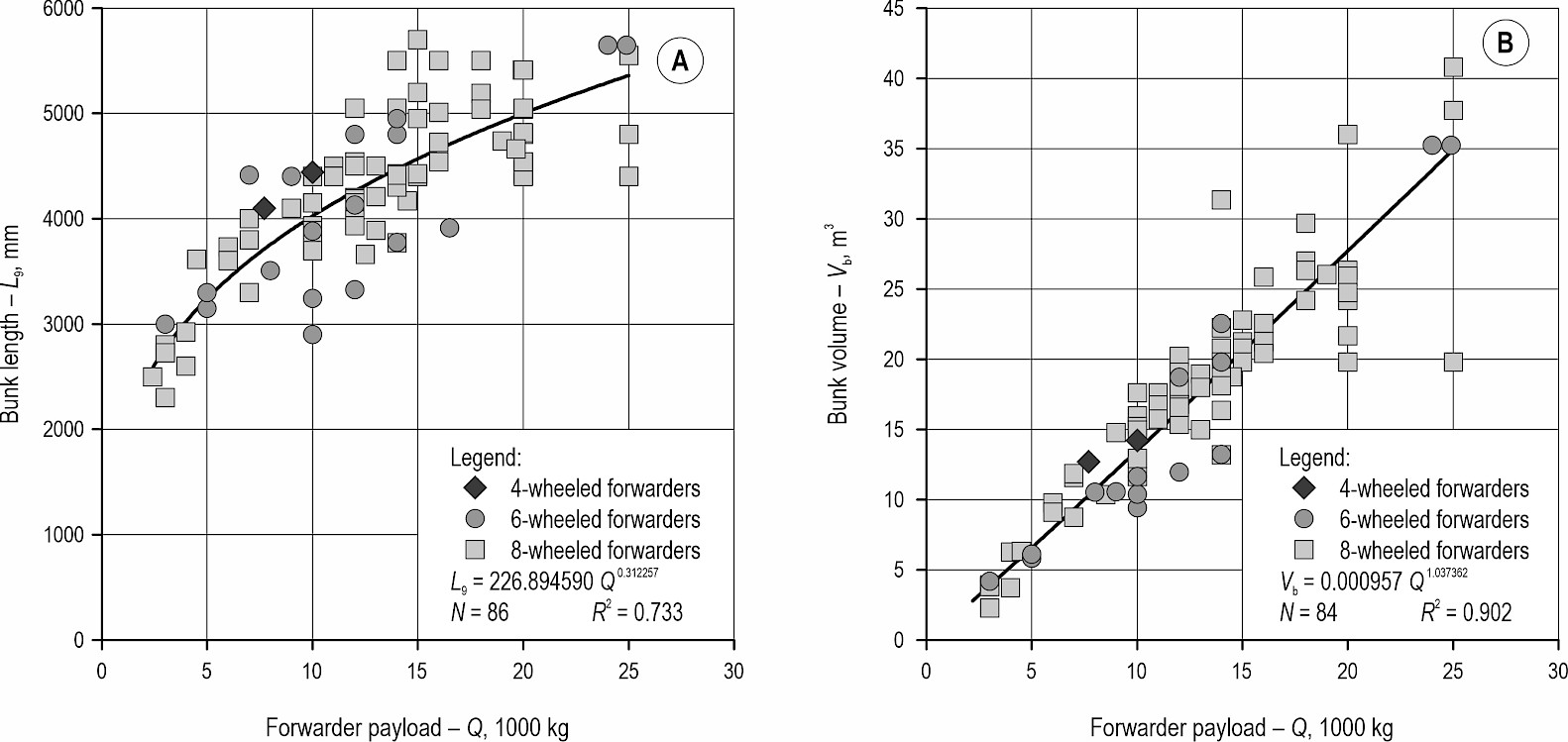
Fig. 7 Dependence of bunk length (A) and volume (B) on payload
3.4 Characteristics of Forwarder Engines
Forwarders are powered by turbocharged diesel engines, the key characteristics of which are engine power (Fig. 8), engine displacement (Fig. 9A), and engine torque (Fig. 9B). While torque depends primarily on engine displacement, engine power is influenced not only by displacement but also by the number of cylinders, engine speed, turbocharger and intercooler, fuel injection system (common rail), air intake and exhaust systems, and fuel quality.
The relationship between the diesel engine rated power and the forwarder payload (Fig. 8) was analyzed using second-order polynomial regression, yielding a high coefficient of determination (R2=0.89). Furthermore, no distinct groups of forwarders emerged by number of wheels regarding engine power, and engine power increased with any increase in the forwarder payload.
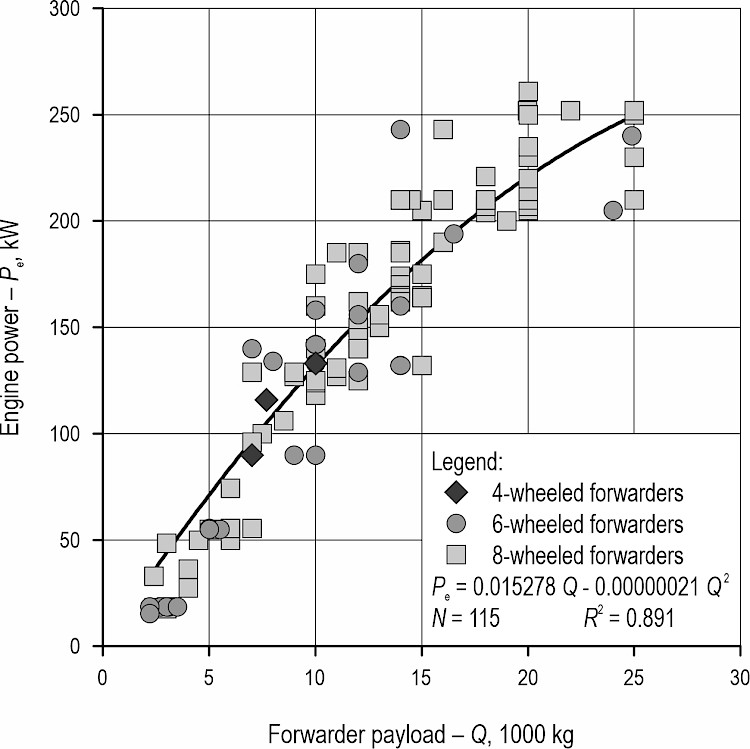
Fig. 8 Dependence of engine power on payload
Data on forwarder payload regarding displacement (Fig. 9A) and drive motor torque (Fig. 9B) were evaluated using second-order polynomial regression analysis, with a coefficient of determination (R2) of approximately 0.85.
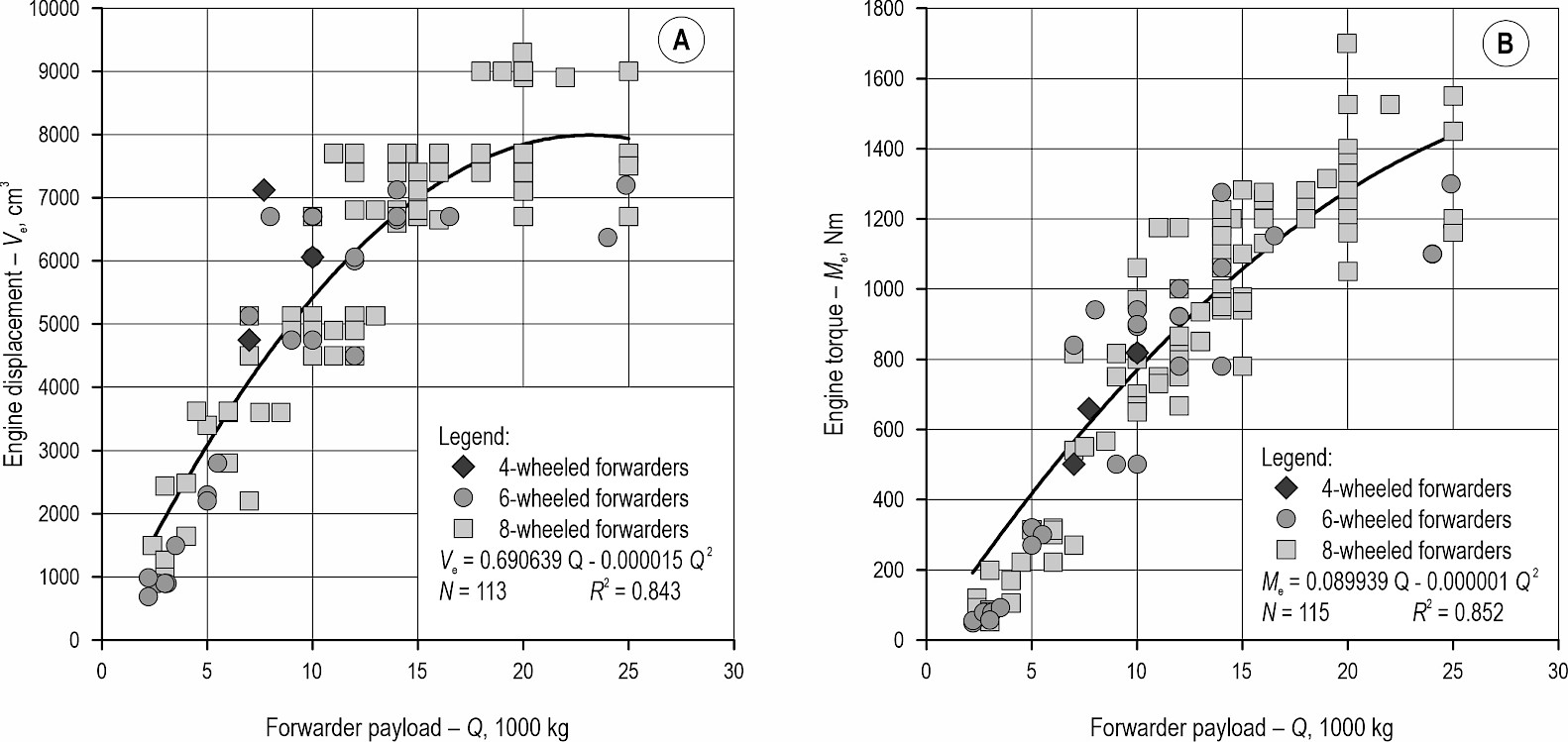
Fig. 9 Dependence of engine displacement (A) and engine torque (B) on payload
Further analysis of forwarder engines indicated that engines with:
- three cylinders are in forwarders with a displacement of <1000 (1600) cm 3 , power <30 kW, and engine torque <100 Nm,
- four cylinders are in forwarders with a displacement of 1500 cm 3 to 5130 cm 3 , power of 30 kW to 175 kW, and engine torque of 100 to 970 Nm,
- six cylinders are in forwarders with a displacement of 6000 cm 3 to 9300 cm 3 , power of 120 kW to 260 kW, and engine torque of 780 to 1700 Nm.
3.5 Characteristics of Forwarder Hydraulic Loaders
Forwarders are equipped with hydraulic loaders for loading and unloading timber; their key characteristics include gross lifting torque (the product of the maximum load the loader can lift at maximum boom reach) (Fig. 10A), gross slewing torque (Fig. 10B), maximum boom reach (Fig. 10C), and gross lifting capacity at maximum boom reach (Fig. 10D). These hydraulic loader specifications refer to values excluding the weight of the grapple (Poršinsky 2005). Subtracting the torque due to Earth's gravity (9.81 m/s2) generated by the grapple's weight from the loader's gross lifting/slewing torque yields the net values for these parameters. This approach accounts for the fact that hydraulic loaders can be fitted with different grapples – varying in size and gripping capacity, depending on the forwarder's specific application (thinning and/or regeneration felling).
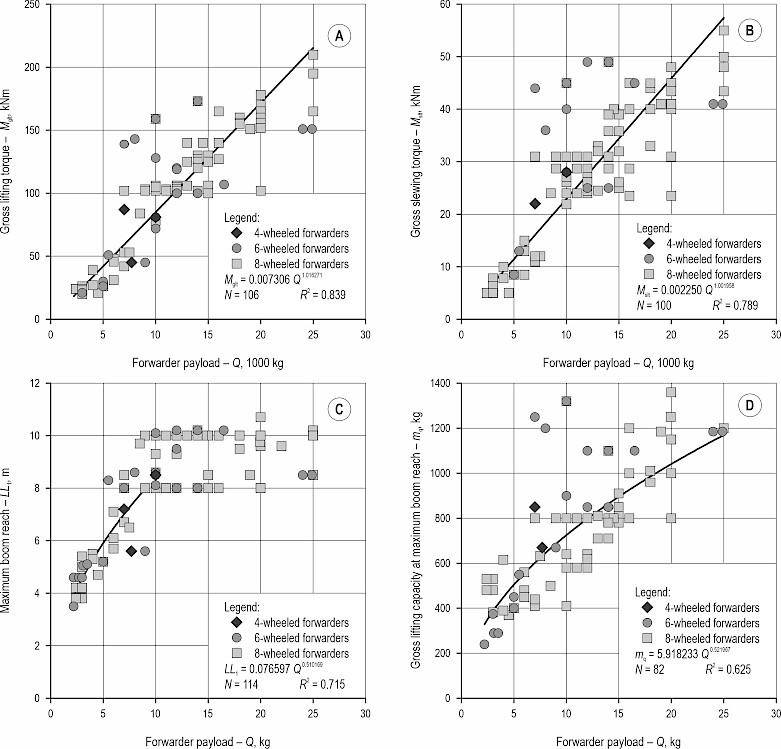
Fig. 10 Dependence of forwarder hydraulic loader characteristics on payload
The data on the gross lifting torque (Fig. 10A) and gross torque (Fig. 10B) of the hydraulic loader and the forwarder payload were investigated by regression analysis with an increasing exponential function, with the values of the coefficient of determination (R2=0.84 and R2=0.79).
Regarding the relationship between the maximum boom reach of the hydraulic loader and the forwarder payload (Fig. 10C), regression analysis was performed only on data for forwarders with a payload below 9 t; this is because the maximum loader reach of forwarders with a payload above 9 t is 8 m or 10 m, depending on whether the loaders have one or two extension booms.
Relatively little data is available for 4-wheeled forwarders, making it impossible to identify a distinct trend for this group reliably. Nevertheless, the reported values for gross lifting capacity at maximum boom reach (Fig. 10D) generally align with the regression relationship for forwarder payload. Certain 4-wheeled models lie above the regression curve, which may indicate relatively higher loader lifting capacity relative to the vehicle's total payload; however, given the small sample size, this finding should be interpreted with caution.
3.6 Nominal Ground Pressure (NGP)
A vehicle's contact pressure is the ratio of its weight to the area of contact with the ground (soil surface) and indicates a specific forestry vehicle's environmental suitability (Poršinsky and Horvat 2005, Poršinsky et al. 2011). The same authors state that nominal ground pressure is the most widely accepted method for expressing the contact pressures of forestry vehicles, representing the minimum pressure a vehicle can exert under conditions of reduced soil bearing capacity. A distinctive feature of this metric is how the wheel-to-ground contact area is calculated, specifically as the product of the tire width and radius.
Due to the uneven distribution of the forwarder's gross mass across the vehicle's axles, the nominal ground pressure is presented separately for the wheels of the front axle (Fig. 11A) and the rear axle (Fig. 11B). The dimensions of the tires also influence the nominal ground pressure values for the front and rear axle wheels. Forwarders with a net mass of less than 4.5 t are fitted with 300 mm and 400 mm wide tires; those with a net mass between 4.5 t and 7 t use 500 mm wide tires; and forwarders with a net mass exceeding 8 t are equipped with tires having widths of 600 mm, 615 mm, 710 mm, 750 mm, and 780 mm.
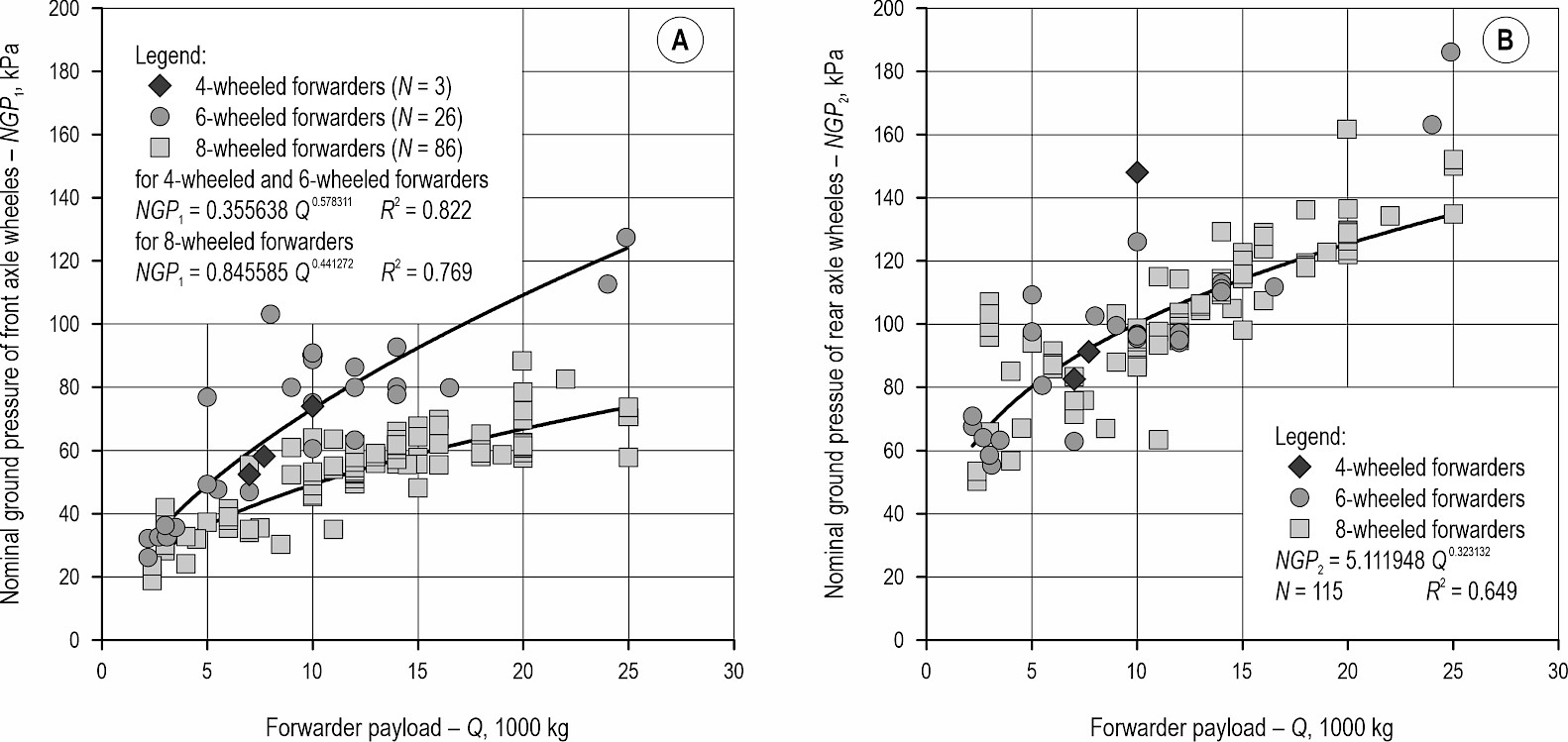
Fig. 11 Dependence of NGP of front axle (A) and rear axle (B) on payload
Fig. 11A shows a distinct separation: four- and six-wheeled forwarders exhibit higher nominal ground pressure values than eight-wheeled ones; regression analysis was used to fit curves to these two separate data clusters. The relationship between the nominal ground pressure of the rear-axle wheels (Fig. 11B) and the forwarder payload was modeled using an increasing exponential function, yielding a coefficient of determination of R2=0.65.
4. Discussion
The existing classification of forwarders into three or four categories solely by forwarder payload and/or net mass is inappropriate due to the high range of values (Athanassiadis et al. 1999, Uusitalo 2010), or thea too wide range of values within the categories (Zemanek et al. 2023), while the classification of forwarders into eight categories only by forwarder payload without other characteristics (Nordfjell et al. 2019) is maybe too detailed. Given that, in addition to the distance of timber forwarding, payload is the most significant influencing factor of timber extraction by forwarders (Poršinsky et al. 2022a), classification of forwarders should be based not only on the forwarders payload, but also on their other characteristics.
Legal restrictions on forwarder use often concern relocating forwarders between work sites without engaging a truck with a lowbed semitrailer to rationalize costs. In such cases, the forwarder travels partly on public roads, which requires compliance with the appropriate legislative framework. Concerning maximum permissible dimensions and weights, EU Directive 96/53/EC is relevant for vehicles falling within its scope, as it prescribes maximum length, width and height of vehicles and, as such, is in accordance with the basic limiting dimensions specified in the Croatian Ordinance on Technical Conditions for Vehicles in Road Traffic (NN 85/16). When a forwarder's dimension, gross weight, or axle load exceeds the limits permitted for standard traffic, its movement on public roads in Croatia is governed by national regulations on special transport. The values specified in the Ordinance on Special Transport (NN 39/26) define characteristics such as length <23 m, height <4.2 m, width <3 m, weight 44 t (for vehicles with up to 5 axles and 48 t for vehicles with 6 or more axles), and prescribed axle loads or those specified by traffic signs in the context of conditions where no special permit is required. If, because of its design characteristics, a forwarder exceeds any specified permissible limit, its independent movement on a public road requires a special transport operation. EU Directive 96/53/EC provides a broader EU framework for permissible dimensions and weights.
Regarding technical roadworthiness, EU Directive 2014/45/EU should be mentioned, as it allows Member States to exempt vehicles used for agricultural, horticultural, forestry, or similar purposes, provided they are used primarily on the terrain where such activities take place, including the forest traffic infrastructure network. This is particularly relevant for forwarders, as it demonstrates that EU legislation distinguishes between machinery used primarily off-road and vehicles whose primary purpose is road transport. According to Croatian legislation, when forwarders take part in traffic on public roads, several orinaces apply: Road Traffic Safety Act (NN 67/08) and the Ordinance on Technical Requirements for Vehicles in Road Traffic (NN 85/16, 24/17, 70/19, 60/20, 79/23, and 6/25), while the method and procedure for determining vehicle roadworthiness through technical inspection are governed by the Ordinance on Technical Inspections of Vehicles (NN 16/18, 63/19, 117/20, 100/22, and 4/25).
Net vehicle mass, declared load capacity, and gross vehicle mass are three mass characteristics defining forwarders in accordance with ISO 13860 (2016), and they are frequently used for forwarder classification. Although higher values for these mass characteristics are considered disadvantageous, a forwarder's gross mass is more significant during timber extraction; it generates the adhesive load needed to transfer circumferential force from the wheels to the ground (Bumber et al. 2023). Conversely, higher forwarder mass is viewed negatively because it increases rolling resistance and wheel contact pressure on forest soil (Lindroos and Wästerlund 2014, Poršinsky et al. 2023).
In an analysis of 52 forwarders, Horvat (1993) identified net mass ranges of 5 t to 17 t and declared payloads of 6 t to 18 t, noting that the payload-to-net-mass ratio is approximately 1. Nordfjel et al. (2019) found the payload-to-net-mass ratio to be ~0.80, while it was ~1.0 for forwarders in 1970. The same authors explain the decrease in payload relative to net weight in the past period by the fact that the forwarder payload grew more slowly relative to the vehicle's net weight due to the installation of more powerful engines and heavier (stronger) hydraulic loaders. In this research, the load index (Q/G) was lower than 1 in all forwarder categories except the XS category, where it reached 1.19. Thus, only XS forwarders have a payload capacity greater than their net machine mass, demonstrating the comparatively high load-carrying efficiency of lightweight forwarders in relation to their own mass.
An increase in forwarder length is associated with greater mass and is disadvantageous for maneuverability during forest operations, as greater length implies a larger turning radius and reduced mobility, as Šušnjar et al. (2018) already confirmed for forest tractor assemblies. However, this adverse trend is somewhat mitigated by articulated steering; an asymmetrically positioned articulation joint – necessitated by the mounting of a hydraulic loader on the rear chassis and the need for sufficient load-space length which allows a smaller turning radius despite the forwarder's relatively long wheelbase or overall length. Of the 115 forwarders included in this analysis, manufacturers specified this feature for 69 vehicles, with articulation angles ranging from ±40° to ±50° and an average value of ±44°. A front blade also affects the forwarder's overall length. Of the 115 forwarder models covered in the analysis, 19 are supplied by manufacturers with a front blade as standard equipment.
Technological requirements for timber forwarding also concern the width of secondary forest infrastructure: in lowland and hilly forest areas, it consists of unpaved forwarder trails 3 m wide, whereas in mountainous areas, it comprises constructed skid roads 3.5 m wide (Pentek et al. 2014). This issue becomes particularly important with the increasing use of large-capacity forwarders exceeding 15 t of payload, as their greater overall dimensions and operating mass may impose additional requirements on both forest infrastructure network and machine relocation between worksites. Still, narrower forwarders can reduce damage to unmarked standing trees (Poršinsky and Ožura 2006, Lopes et al. 2018).
In addition to the timber extraction distance, the most significant factor influencing forwarder productivity is the quantity (mass, volume) of timber transported in a single machine cycle (Proto et al. 2018, Poršinsky et al. 2022b), which depends on the vehicle manufacturer's declared payload and the dimensional characteristics of the bunk. When loading roundwood, it is not possible to fully utilize the bunk volume; therefore, KWF uses a bunk utilization factor of 0.7 in its test reports for forwarders (Hauck 2002). Using the example of the forwarder Valmet 840.2, Poršinsky et al. (2014) determine the utilization of the bunk cross-section between 0.65 and 0.75.
When investigating forwarders' engines, Horvat (1993) and Poršinsky (2005) use the unit mass of forwarders: the ratio of net mass to engine power (kg net/kW) or gross mass to engine power (kg gross/kW). In contrast, Nordfjell et al. (2019) use the specific engine power of forwarders: the ratio of engine power to gross mass (kW/gross t) and the specific engine torque of forwarders: the ratio of engine torque to gross mass (Nm/gross t).
Database analysis showed that, regarding the drive system, eight-wheeled forwarders with hydrostatic-mechanical transmissions predominate, while mechanical or hydrodynamic-mechanical transmissions are the exception rather than the rule, in accordance with previous research by Nordfjell et al. (2019).
Under EU emission standards for internal combustion engines in non-road mobile machinery, 90 forwarders (78%) of the 115 analyzed models meet the Euro V standard.
A morphological analysis of modern forwarders revealed that:
- vehicle height exceeds vehicle width
- there are no clearly defined threshold values where the increase in overall dimensions ceases, despite the increase in mass characteristics
- the average forwarder load index is 0.82
- on average, 1 kW of engine power supports 111 kg of net forwarder mass
- on average, 1 kW of engine power supports 198 kg of gross forwarder mass
- on average, 1 tonne of gross forwarder mass requires 5.1 kW of engine power
- on average, 1 tonne of gross forwarder mass requires 29.1 Nm of engine torque
- existing forwarder categorizations are no longer adequate.
5. Conclusions
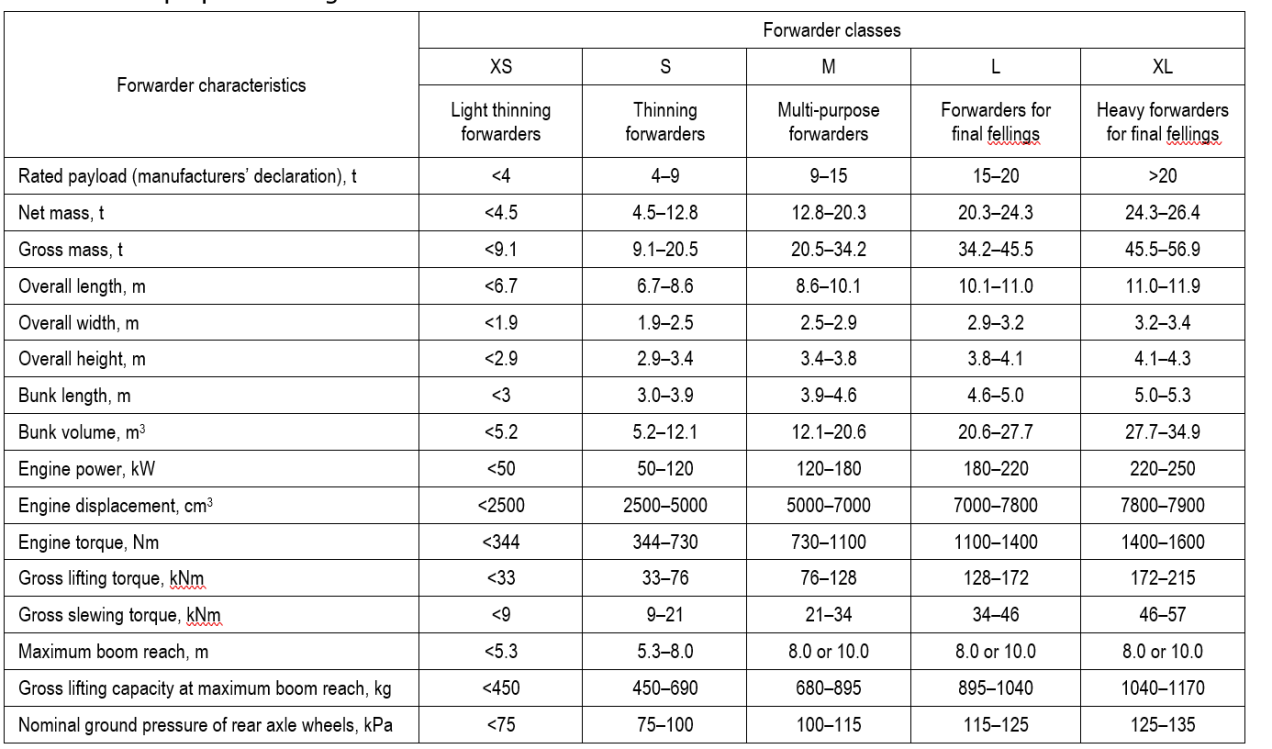
In addition to the basic ideas of morphological analysis of forest vehicles, the present study also proved to be a useful tool for creating an up-to-date categorization, as shown in Table 4. Table 4 shows the proposed forwarder categorization based on sixteen different characteristics, which divides forwarders into five classes based on a database of 115 forwarders offered worldwide by numerous manufacturers.
Table 4 New proposed categorization of forwarders
Acknowledgments
This research was partially co-funded by the institutional research project entitled »Application of Modern Technologies in Planning Forest Accessibility and Wood Harvesting Operations«, subsidized by the European Union (NextGenerationEU).
6. References
Athanassiadis, D., Lidestav, G., Wästerlund, I., 1999: Fuel, Hydraulic Oil and Lubricant Consumption in Swedish Mechanized Harvesting Operations, 1996. J. Forest Eng. 10(1): 59–66. https://doi.org/10.1080/08435243.1999.10702725
Bumber, Z., Ðuka, A., Pandur, Z., Poršinsky, T., 2023: Gradeability of a Forwarder Based on Traction Performance. Forests 14(1): 103. https://doi.org/10.3390/f14010103
Cadei, A., Mologni, O., Röser, D., Cavalli, R., Grigolato, S., 2020: Forwarder Productivity in Salvage Logging Operations in Difficult Terrain. Forests 11(3): 341. https://doi.org/10.3390/f11030341
Đuka, A., 2014: Development of terrain trafficability model for planning timber extraction by skidder. PhD Thesis, Forestry Faculty of Zagreb University, 1–303 p.
EN 12999: 2020 Cranes – Loader crane, 1–107.
EU Directive 96/53/EC, 1996: Council Directive 96/53/EC of 25 July 1996 laying down for certain road vehicles circulating within the Community the maximum authorized dimensions in national and international traffic and the maximum authorized weights in international traffic. Official Journal L 235, 17 September, 59–75 p.
EU Directive 2014/45/EU, 2014: Directive 2014/45/EU of the European Parliament and of the Council of 3 April 2014 on periodic roadworthiness tests for motor vehicles and their trailers and repealing Directive 2009/40/EC Text with EEA relevance. Official Journal of the European Union, L 127, 29 April, 51–128 p.
Eriksson, M., Lindroos, O., 2014: Productivity of harvesters and forwarders in CTL operations in northern Sweden based on large follow-up datasets. Int. J. For. Eng. 25(3): 179–200. https://doi.org/10.1080/14942119.2014.974309
Grden, D., 2026: Morphological Analysis of the State-of-the-Art Forwarders. Graduation thesis, University of Zagreb – Faculty of Forestry and Wood Technology, 1–71 p.
Gülci, N., Sessions, J., Green, P., 2025: Assessment of tethered harvester productivity in steep terrain conditions: A case study in Western Oregon, USA. Šum. list 149(9–10): 457–465. https://doi.org/10.31298/sl.149.9-10.5
Hagan, R., Markey, E., Clancy, J., Keating, M., Donnelly, A., O'Connor, D.J., Morrison, L., McGillicuddy, E.J., 2022: Non-Road Mobile Machinery Emissions and Regulations: A Review. Air 1(1): 14–36. https://doi.org/10.3390/air1010002
Hauck, B., 2002: Volle Ladung in der Prüfarbeit! KWF Forsttechnische Informationen 1+2: 1–3.
Holzfeind, T., Visser, R., Chung, W., Holzleitner, F., Erber, G., 2020: Development and Benefits of Winch-Assist Harvesting. Curr. For. Rep. 6(3): 201–209. https://doi.org/10.1007/s40725-020-00121-8
Horvat, D., 1993: A Contribution to the Study of Vehicle Mobility on Forest Soil. PhD Thesis, Faculty of Mechanical Engineering and Naval Architecture, University of Zagreb, 1–234 p.
Horvat, D., Poršinsky, T., Krpan, A.P.B., Pentek, T., Šušnjar, M., 2004: Suitability Evaluation of Forwarders Based on Morphological Analysis. Strojarstvo 46(4–6): 149–160.
ISO 3046-1: 2002: Reciprocating internal combustion engines – Performance, Part 1: Declarations of power, fuel and lubricating oil consumptions, and test methods – Additional requirements for engines for general use, 1–30 p.
ISO 17591, 2002: Machinery for forestry – Knuckleboom log loaders – Identification terminology, classification and component nomenclature, 1–7 p.
ISO 13860, 2016: Machinery for forestry – Forwarders – Terms, definitions and commercial specifications, 1–12 p.
Lindroos, O., Wästerlund, I., 2014: Theoretical Potentials of Forwarder Trailers with and without Axle Load Restrictions. Croat. j. for. eng. 35(2): 211–219.
Lopes, E.S., Oliveira, F.M., Droog, A., 2018: Damage to residual trees following commercial thinning by harvester and forwarder in a Pinus taeda stand in Southern Brazil. For. Sci. 46(118): 167–175. https://doi.org/10.18671/scifor.v46n118.03
NN, 2008: Zakon o sigurnosti prometa na cestama (NN 67/08, 48/10, 74/11, 80/13, 158/13, 92/14, 64/15, 108/17, 70/19, 42/20, 85/22, 114/22)
NN, 2016: Pravilnik o tehničkim uvjetima vozila na cestama (NN 85/16, 24/17, 70/19, 60/20, 60/20, 79/23, 5/25)
NN, 2018: Pravilnik o tehničkim pregledima vozila (NN 16/18, 63/19, 117/20, 100/22, 4/25)
NN, 2026: Pravilnik o izvanrednom prijevozu (NN 39/26)
Nordfjell T,R., Björheden, M., Thor, I., Wästerlund, 2010: Changes in technical performance, mechanical availability and prices of machines used in forest operations in Sweden from 1985 to 2010. Scand. J. For. Res. 25(4): 382–389. https://doi.org/10.1080/02827581.2010.498385
Nordfjell, T., Öhman, E., Lindroos, O., Ager, B., 2019: The technical development of forwarders in Sweden between 1962 and 2012 and of sales between 1975 and 2017. Int. J. Forest Eng. 30(1): 1–13. https://doi.org/10.1080/14942119.2019.1591074
Papandrea, S.F., Stoilov, S., Cataldo, M.F., Nichev, P., Angelov, G., Proto, A.R., 2025: How Different Distribution of Assortments on Worksites Influences Forwarder Performance in Coniferous Plantations. Croat. j. for. eng. 46(1): 33–45. https://doi.org/10.5552/crojfe.2025.2593
Pentek, T., Nevečerel, H., Ecimović, T., Lepoglavec, K., Papa, I., Tomašić, Ž., 2014: Strategic planning of forest road network in Croatia – analysis of present situation as basis for future activities. Nova meh. šumar. 35(1): 63–78.
Poje, A., Krč, J., Leban, V., 2026: Designing Harvester Trail Systems for Mechanized Logging Across Diverse Soil Types Using Nominal Ground Pressure Criteria. Croat. j. for. eng. 47(2): 333–348. https://doi.org/10.5552/crojfe.2026.2519
Poršinsky, T., 1997: The morphological analysis determination of the Kockums 850 and Timberjack 1210 positions in the forwarder family. Meh. šumar. 22(3): 129–139.
Poršinsky, T., 2005: Efficiency and Environmental Evaluation of Timberjack 1710 Forwarder on Roundwood Extraction from Croatian Lowland Forests. PhD Thesis, Forestry Faculty of Zagreb University, 1–170 p.
Poršinsky, T., Horvat, D., 2005: Wheel Numeric as Parameter for Assessing Environmental Acceptability of Vehicles for Timber Extraction. Nova meh. šumar. 26(1): 25–38.
Poršinsky, T., Ožura, M., 2006: Damage to standing trees in timber forwarding. Nova meh. šumar. 27(1): 41–49.
Poršinsky, T., Stankić, I., Bosner, A., 2011: Ecoefficient Timber Forwarding Based on Nominal Ground Pressure Analysis. Croat. j. for. eng. 31(1): 345–356.
Poršinsky, T., Đuka, A., Busić, O., 2014: Influence of Prescribed Method of Roundwood Scaling on Timber Transport. Nova meh. šumar. 35(1): 1–9.
Poršinsky, T., Pandur, Z., Bumber, Z., Lovrinčević, M., Ursić, B., Đuka, A., 2022a: Dimensional and Mass Characteristics of Forwarders. Šum. list 146(9–10): 387–401. https://doi.org/10.31298/sl.146.9-10.1
Poršinsky, T., Bumber, Z., Pandur, Z., Moro, M., Lovrinčević, M., Đuka, A., 2022b: Dimensional Characteristics of Forwarder Loading Space. Nova meh. šumar. 43(1): 19–26. https://doi.org/10.5552/nms.2022.3
Poršinsky, T., Bumber, Z., Pandur, Z., Đuka, A., 2023: Forwarder's Working Range – From Modeling to Support for Operational Application. Šum. list 147(7–8): 319–334. https://doi.org/10.31298/sl.147.7-8.2
Proto, A.R., Macrì, G., Visser, R., Harrill, H., Russo, D., Zimbalatti, G., 2018: Factors affecting forwarder productivity. Eur. J. Forest Res. 137(2): 143–151. https://doi.org/10.1007/s10342-017-1088-6
Sláma, D., Staněk, L., Mergl, V., 2025: Magnitude of WBV Affecting the Tractor with a Timber Trailer Operator During Individual Timber Forwarding Operations. South-east Eur. for. 16(1): 43–51. https://doi. org/10.15177/seefor.25-01
Suvinen, A., 2006: A GIS-based simulation model for terrain tractability. J. Terramech. 43(4): 427–449. https://doi.org/10.1016/j.jterra.2005.05.002
Szewczyk, G., Podlaski, R., Kulak, D., Leszczyński, K., Stańczykiewicz, A., Tylek, P., 2025: Time Consumption of Timber Harvesting and Forwarding from Pine Thinning Stands in Terrain with Linear Unevenness. Croat. j. for. eng. 46(2): 257–271. https://doi.org/10.5552/crojfe.2025.3081
Šušnjar, M., Horvat, D., Kristić, A., Pandur, Z., 2008: Morphological analysis of forest tractor assemblies. Croat. j. for. eng. 29(1): 41–51.
Uusitalo, J., 2010: Introduction to forest operations and technology. JVP Forest Systems, 1–287.
Visser, R., Stampfer, K, 2015: Expanding Ground-based Harvesting onto Steep Terrain: A Review. Croat. j. for. eng. 36(2): 321–331.
Weise, G., 2003: Load Distribution Plans for Forwarders. Landtechnik 58(1): 30–31.
Zemánek, T., Neruda, J., Nevrkla, P., Staněk, L., Ulrich, R., 2023: Harvesters and forwarders in forestry. Faculty of Forestry and Wood Technology Mendel University in Brno, ABA International, 1–96 p.
© 2026 by the authors. Submitted for possible open access publication under the
terms and conditions of the Creative Commons Attribution (CC BY) license (http://creativecommons.org/licenses/by/4.0/).
Authors’ addresses:
Prof. Tomislav Poršinsky, PhD
e-mail: tporsinsky@sumfak.unizg.hr
David Grden, MSc
e-mail: dgrden@sumfak.unizg.hr
Assoc. prof. Andreja Đuka, PhD *
e-mail: aduka@sumfak.unizg.hr
University of Zagreb
Faculty of forestry and wood technology
Institute of Forest Engineering
Svetošimunska cesta 23
10000, Zagreb
CROATIA
Zoran Bumber, MSc
e-mail: zoran.bumber@hrsume.hr
Croatian Forests Ltd., Zagreb
Directorate Zagreb
Ulica kneza Branimira 1
10000, Zagreb
CROATIA
* Corresponding author
Received: September 01, 2026
Accepted: November 04, 2026
Original scientific paper