

MEMS Inclinometers as a Method for Studying Harvester Productivity in Forestry Harvesting
doi: https://doi.org/10.5552/crojfe.2027.3259
volume: issue, issue:
pp: 17
- Author(s):
-
- Piskunov Maxim
- Article category:
- Original scientific paper
- Keywords:
- mechanized cut-to-length technology, time study, productivity, harvester head, angle, swinging of the attachment
Abstract
HTML
The study presents five arrays of harvester head inclination angles. The measurements were taken using a MEMS inclinometer during harvester operation under the control of the same operator. The recording durations ranged from 2100 to 3600 seconds. MEMS inclinometers can record both the vertical and horizontal positions of the head. The study revealed that the head was in a vertical position 28% of the time and in a horizontal position 72% of the time. The average duration of a single episode was 12 seconds with the head positioned vertically and 33 seconds with the head positioned horizontally. Statistical analysis of all data arrays revealed the average inclination angles of the head: 76.0 degrees when operating in the vertical position and –4.2 degrees in the horizontal position. The positive direction of rotation is defined as the rotation of the head from the horizontal position towards its working vertical position. Data from inclinometers enabled a detailed analysis of the technological cycle of the harvester by operation type. Each operation was characterized by its own set of statistical parameters, including standard deviation, range, and interquartile range, which describe the dispersion of inclination angle values. These parameters enabled the distinction of individual operations within the complete data array. Based on the statistical processing of all data arrays, these parameters took the following values for each operation (standard deviation / range / interquartile range, in degrees): movement of the harvester with a vertically positioned head from one working position to another: 10.8/56.9/14.3; guidance of the head at the tree: 9.3/67.9/10.7; movement of the harvester with the grabbed tree during the bucking process: 4.9/28.4/5.5; delimbing and bucking the tree: 5.9/52.4/6.6; cutting the top part of the tree and collecting the branches onto the forwarding trail: 13.2/108.0/15.2; and movement of the harvester from one working position to another with a horizontally positioned head: 14.4/78.7/20.4. The average shares of these operations in the total structure of the technological cycle were as follows: 3.5%; 14.5%; 4.9%; 35.2%; 14.6%, and 5.6%, respectively. In addition: bringing the head to vertical –3.5%; tree felling –12.8%; other operations –3.0%; pauses –3.0%. The angle values, presented in the form of continuous data arrays, provide new data for the analysis of logging mechanics.
MEMS Inclinometers as a Method for Studying Harvester Productivity in Forestry Harvesting
Maxim Piskunov
https://doi.org/10.5552/crojfe.2027.3259
Abstract
The study presents five arrays of harvester head inclination angles. The measurements were taken using a MEMS inclinometer during harvester operation under the control of the same operator. The recording durations ranged from 2100 to 3600 seconds. MEMS inclinometers can record both the vertical and horizontal positions of the head. The study revealed that the head was in a vertical position 28% of the time and in a horizontal position 72% of the time. The average duration of a single episode was 12 seconds with the head positioned vertically and 33 seconds with the head positioned horizontally. Statistical analysis of all data arrays revealed the average inclination angles of the head: 76.0 degrees when operating in the vertical position and –4.2 degrees in the horizontal position. The positive direction of rotation is defined as the rotation of the head from the horizontal position towards its working vertical position. Data from inclinometers enabled a detailed analysis of the technological cycle of the harvester by operation type. Each operation was characterized by its own set of statistical parameters, including standard deviation, range, and interquartile range, which describe the dispersion of inclination angle values. These parameters enabled the distinction of individual operations within the complete data array. Based on the statistical processing of all data arrays, these parameters took the following values for each operation (standard deviation / range / interquartile range, in degrees): movement of the harvester with a vertically positioned head from one working position to another: 10.8/56.9/14.3; guidance of the head at the tree: 9.3/67.9/10.7; movement of the harvester with the grabbed tree during the bucking process: 4.9/28.4/5.5; delimbing and bucking the tree: 5.9/52.4/6.6; cutting the top part of the tree and collecting the branches onto the forwarding trail: 13.2/108.0/15.2; and movement of the harvester from one working position to another with a horizontally positioned head: 14.4/78.7/20.4. The average shares of these operations in the total structure of the technological cycle were as follows: 3.5%; 14.5%; 4.9%; 35.2%; 14.6%, and 5.6%, respectively. In addition: bringing the head to vertical –3.5%; tree felling –12.8%; other operations –3.0%; pauses –3.0%. The angle values, presented in the form of continuous data arrays, provide new data for the analysis of logging mechanics.
Keywords: mechanized cut-to-length technology, time study, productivity, harvester head, angle, swinging of the attachment
1. Introduction
The widespread use of harvesters in the logging process maintains the relevance of research related to modeling the working process of this type of machines. Research is conducted on both the entire harvester cycle (Hiesl and Benjamin 2015) and individual operations within the cycle (Prinz et al. 2021). Tools that allow researchers to gather information about the logging process without the need for a researcher to be present at the sites where logging machines are operating become increasingly widespread. Thus, methods for describing work processes based on the data automatically recorded by onboard computers of harvesters and forwarders (Manner et al. 2016, Olivera et al. 2016, Brewer et al. 2018, Rossit et al. 2019, Liski et al. 2020, Kemmerer and Labelle 2021, Eliasson et al. 2023) and on the data automatically accumulated in the databases of large forestry companies (Eriksson and Lindroos 2014) are used.
To analyze logging operations, the use of digital video cameras that record the progress of the process is becoming widespread. Studying the skidder operation using four digital video recorders installed outside the cab (Contreras et al. 2017) allows us to determine the duration of elements of the working cycle such as: movement without load (empty), maneuvering before grabbing logs, grabbing logs, moving with a load, unhooking logs, maneuvering to leave the loading area, pauses in work. The source for determining the elements of the working process of a feller buncher in the work of Pan et al. (2022) were audio and video fragments filmed with a digital camera located on the machine cab.
Studying the logging process with satellite navigation systems is another way to collect information about the logging process. Tracking the parameters of technological operations for carriages in cable logging systems using the satellite navigation system was tested in the work of Gallo et al. (2021). The work of Strandgard and Mitchell (2015) presents a method that allows one to obtain information about the operation of a forwarder using the satellite navigation system and vibration sensors. The authors propose an automated system that processes GPS and sensor data, which makes it possible to reduce the degree of participation of a human-observer in processing the information received when describing the working processes of the machine.
A promising direction for collecting experimental data and building models based on this information is the use of micro-electromechanical (MEMS) inertial measuring devices. Thus, the work (Keefe at al. 2019) presents the results of using sensors installed in smartphones when analyzing the work process of a feller equipped with a hand-operated chainsaw. Each feller carried a smartphone during work operations. The built-in devices of the smartphone, which included a gyroscope and acceleration and sound sensors, recorded readings. These readings were correlated with the operations performed by the feller. In the feller’s working process operations such as: the feller’s movement, tree felling and unproductive pauses were considered. Four characteristics were analyzed in the arrays of recorded data: average value, standard deviation, interquartile range and skewness. The authors obtained models with the forecasting accuracy that varies from 65.9% to 99.6%.
The same authors (Zimbelman and Keefe 2021) describe a method for recognizing the activity of logging workers in cable skidding operations. Each worker wore a smartwatch that recorded accelerometer data at 25 Hz. Using machine learning algorithms predictive models were developed that classified various operations performed by workers. This work confirms that technological operations can be distinguished from each other based on the accelerometer readings. Recognition of the working process operations using inertial measurement devices of smartphones, but already for technological machines, has found continuation in the work of Becker and Keefe 2022. The authors investigated the working process of a brush cutter, which included 5 operations: chopping; moving the machine or working equipment to the chopped object; movement of the machine from one working site to another; mulching; pauses.
The prospects of using MEMS sensors for research practice are also confirmed by the works devoted to the study of technological processes of machines based on the layout, characteristics and methods of work close to logging machines. For example, the use of a smartphone installed in an excavator cab to automatically record engine vibration signatures in the form of three-dimensional acceleration in the work process is presented in the work of Mathur et al. (2015). The resulting arrays of acceleration values were used to extract various characteristics of the time and frequency domains, which were tested and classified according to various equipment actions (idling, excavator movement, cab rotation, crane movement) using machine learning algorithms. The use of MEMS – three-axis accelerometers for analyzing the working process of an excavator is presented in the work of Ahn et al. (2015). Acceleration signals were recorded for idle mode, stationary operating mode, and background values with the engine turned off. The work points out the statistical significance of the differences in the distributions of the values of the average resulting acceleration, standard deviation and peak loads along the coordinate axes and in different operating modes of the excavator. The work of Molaei et al. (2023) proposes a supervised learning algorithm for recognizing excavator actions using the data about movement obtained from four inertial measurement units mounted on various moving parts of the machine.
The presented analysis of scientific articles indicates that the study of work processes of harvesters and the development of the methods aimed at obtaining new data about the work process, including the methods that allow automating the data collection, is a relevant area for research. During the harvester operation, the harvester head changes its position. A forced change in the head position is used when the operator, using a hydraulic drive, moves the head from a horizontal position to a vertical one and back. The harvester head inclination angle also changes in both horizontal and vertical positions as a result of its swinging during logging operations. This research aims to study changes in the harvester head inclination angle during the harvester basic operations.
The primary research hypothesis is that each operation has its own range and spread of values for the attachment inclination angles; these characteristics will show statistically significant differences across operations. The hypothesis in the applied aspect of the study is based on the fact that the MEMS inclinometer is a promising tool for obtaining data on the working process of the harvester. Thus, the aim of the work is to analyze the change in the values of the harvester head inclination angles, measured using a MEMS inclinometer, in the operations of the harvester technological cycle.
2. Materials and Methods
The research was carried out in logging areas of the Republic of Karelia (Pryazhinsky district) in October 2023 and in February – March 2024. The experimental harvester was Amkodor 2561 harvester equipped with Kesla 1395H hydraulic crane and Kesla 25RH harvester head. The research was carried out in logging areas of operating enterprises. The experience of the operator who took part in the experiment was more than 5 years of work with machines of this type. The operator controlled the harvester in his typical mode of operation, that is, no special conditions for measurements were created or selected. The harvester was used to carry out felling, delimbing and bucking into logs, as well as movement through the cutting area. Data collection was carried out in different working conditions.
Conditions in the first group of experiments. The harvester carried out the operations of felling, delimbing and bucking into logs all the trees in the 5 m wide forest strip in front of the machine. The form of felling was selective. The variety composition of trees is mixed. Season – autumn in the absence of snow cover and air temperatures below zero.
Conditions in the second group of experiments. The harvester carried out the operations of felling, delimbing and bucking into logs all the trees in front of the machine in a forest strip 10–12 m wide. The form of felling was clear-cutting. The variety composition of trees is mixed. Season – winter, snow cover and air temperatures below zero.
During the logging process, the angles of inclination of the harvester head were measured. For the first group of experiments, one continuous data array was obtained. For the second group of experiments, four continuous arrays were obtained on different calendar dates but under the same operating conditions.
Angles were measured using WT901BLECL MEMS-inclinometer (WitMotion©). Sensor data was transmitted via Bluetooth and recorded in the memory of a smartphone, which was located in the harvester cab. The smartphone application WitMotion Ver.4.0.6(4006) was used to control data collection. The sensor made it possible to measure the angle of inclination of an object around three axes. The range of measuring angles around the X and Z axes was ±180, around the Y axis ±90. In the experiments, the data was transmitted at the frequency of 10 Hz. The sensor made it possible to transmit data over the distance of up to 50 m. The sensor was installed on the harvester head. The location of the sensor is shown in Fig. 1. Since the coordinate axes Y and Z of the sensor change their position when the head is rotated from a horizontal to a vertical position, the angle of inclination of the head relative to the X axis was taken as the main identifier for analyzing the working process. This axis does not change its direction relative to the hinge for attaching the harvester head to the frame.
Statistical processing was performed for arrays of angle values measured relative to the X-axis, with the accuracy of 0.2 degrees and rounded to the nearest whole number. Statistical processing was performed for absolute angle values, which were recorded by the sensor. The calculation of the relative maximum inclination angles relative to a certain equilibrium position of the harvester head in its vertical position was not performed. The angle corresponding to the horizontal position of the harvester head was assumed to be zero.
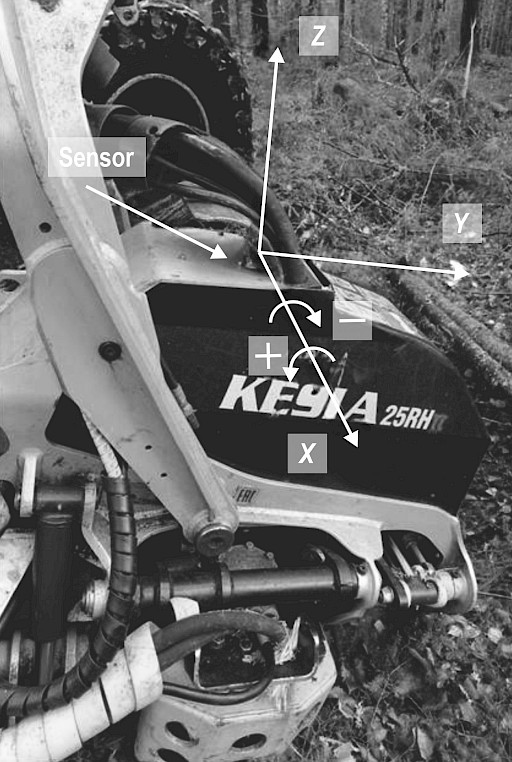
Fig. 1 Installation of the sensor on the harvester head
In parallel with the angle measurements, the process was recorded with a digital camera, which was installed in the harvester cabin. The camera was installed in such a way that the entire working area, where the main logging operations took place, was completely recorded. After collecting the data, the comparison was made between the operations captured by the camera and the inclinometer readings. The start and end of each harvester operation were marked in continuous arrays of recorded angle values. Angle values were grouped according to the type of operation. Next, only the values of the maximum angles were separated from the total array, while intermediate values of the recorded angles were removed. The maximum angles included those values of the recorded angles for which the following condition was satisfied: two adjacent values (before and after the sampled value) on the time scale of the recorded signal must simultaneously take on either larger or smaller values in relation to the sampled value. The resulting samples of maximum angle values for each operation were processed using mathematical statistics.
The following characteristics were determined for each sample: average value of angles; standard deviation; median; interquartile range; and maximum and minimum angle values. Samples were tested for compliance with the normal distribution law using the Pearson criterion. For samples related to the same operations but extracted from different arrays, the hypothesis about their belonging to the same general population was tested. For samples with a normal distribution, ANOVA was used; for samples not following a normal distribution, the Kruskal-Wallis and Mann-Whitney tests were applied. For statistical processing, MS Excel and Stadia 8.0 packages were used.
Time intervals related to the same operations in the array were summed, and the percentage of each operation in the overall harvester cycle was determined. For individual groups of operations, calculations were performed by filtering angle values using MS Excel. In addition, a qualitative analysis of the sequences of angle changes along the time scale was conducted. This analysis aimed to identify signs of auxiliary operations and unproductive episodes in the harvester operation in arrays of angle values.
3. Results
The arrays of values of the harvester head inclination angle around the X axis, recorded during the harvester's work process, are shown in Figs. 2–6.
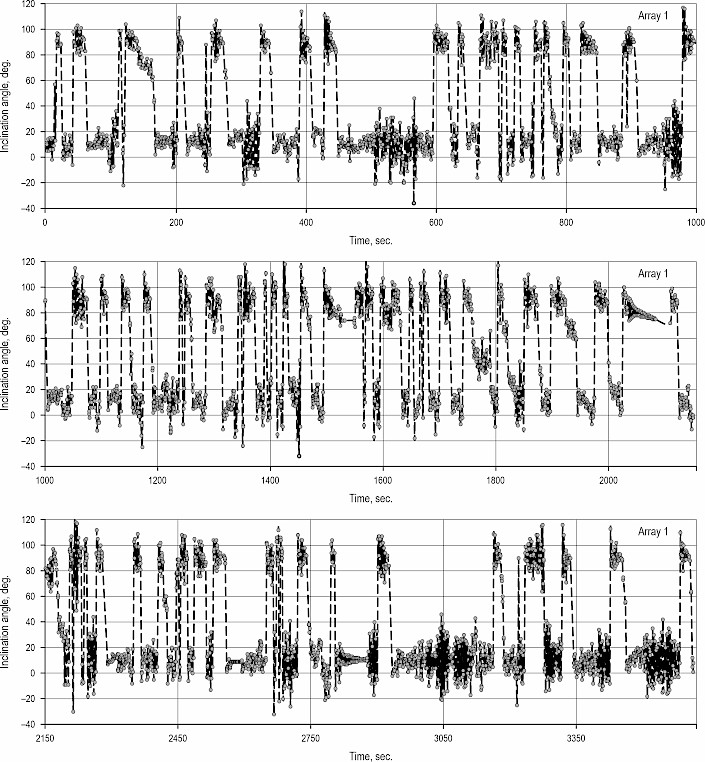
Fig. 2 Array 1 of the inclination angles of the harvester head
Fig. 2 shows the first array, obtained under the working conditions of the first group. The duration of continuous recording of angle values for the first array was 3600 seconds. Figs. 3–6 show, respectively, the second, third, fourth, and fifth arrays, obtained under the working conditions of the second group. The duration of continuous recording for the second array was 2100 seconds, for the third – 2350 seconds, for the fourth – 2280 seconds, for the fifth – 2250 seconds. The continuous recording time was limited by the characteristics of the equipment used. The longer recording time for the first sample is explained by the fact that the harvester began felling trees immediately after the sensor installation. In the remaining arrays, periods of prolonged harvester movement along the cutting area and unproductive operations preceding the main logging operations were excluded from the records. In Fig. 2–6, the values of maximum inclination angles of the head during its swinging in horizontal and vertical positions are shown as dots.
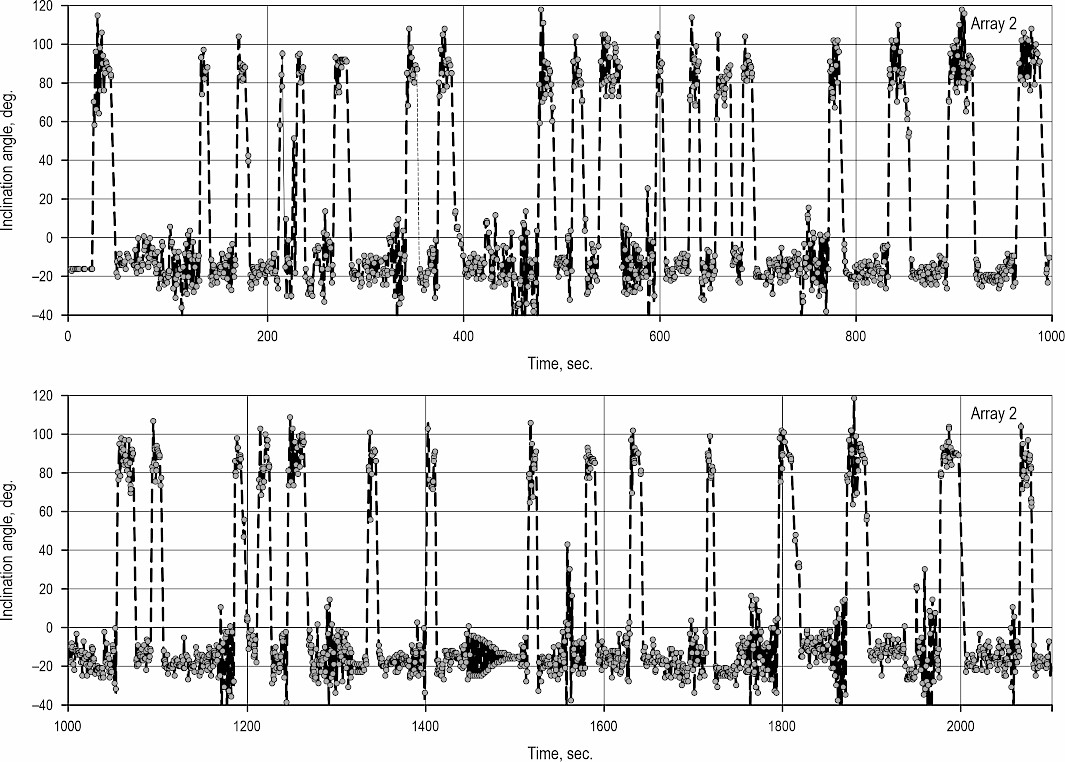
Fig. 3 Array 2 of the inclination angles of the harvester head
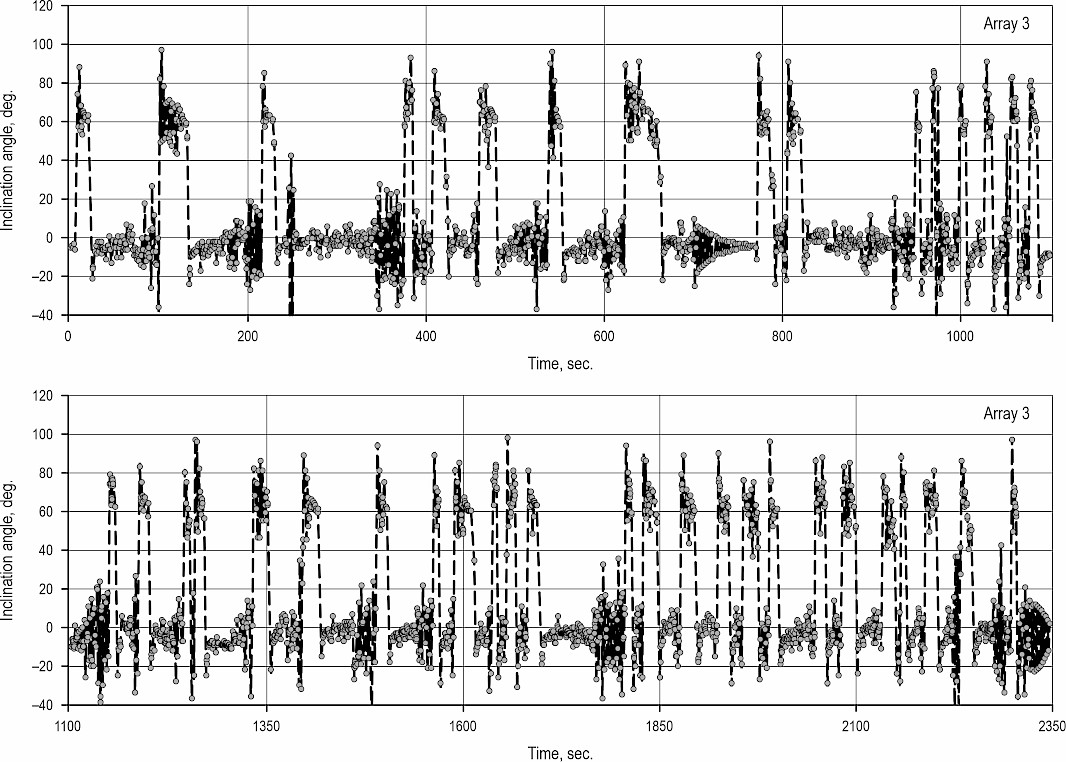
Fig. 4 Array 3 of the inclination angles of the harvester head
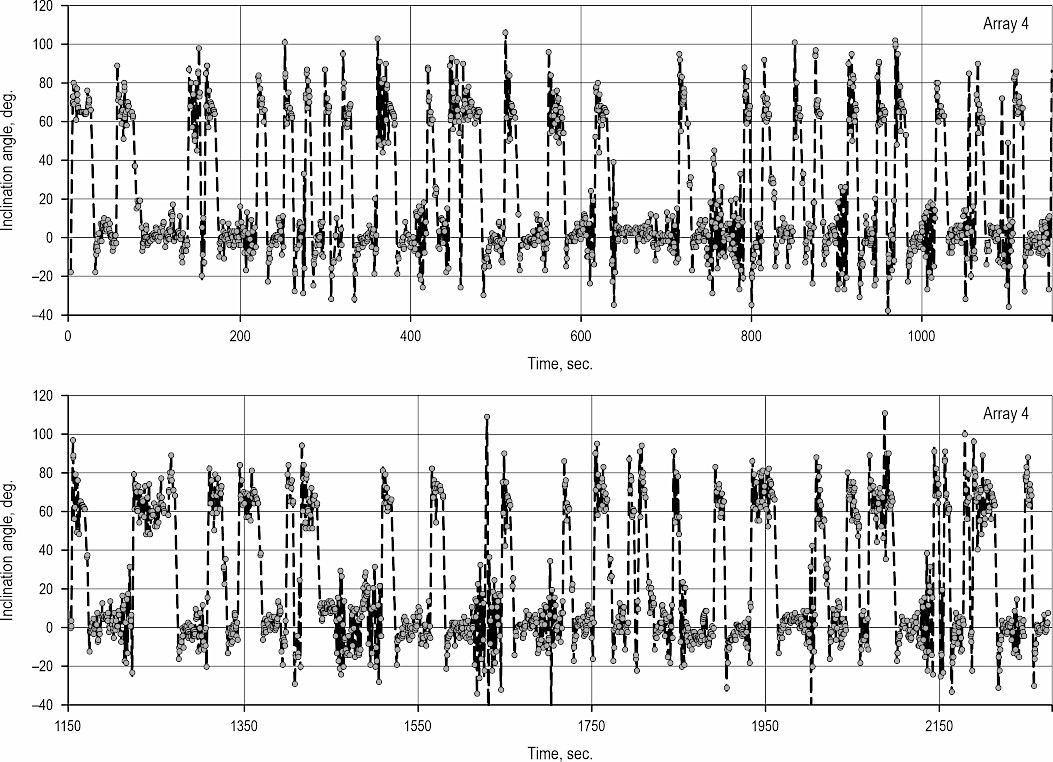
Fig. 5 Array 4 of the inclination angles of the harvester head
Fig. 6 Array 5 of the inclination angles of the harvester head
In the arrays of the head inclination angles recorded during the harvester operation, the repeatability of operations and two operating modes are clearly visible (Fig. 2–6). The first mode is the operating mode of the harvester with the harvester head raised to a vertical position, and the second is the operating mode in which the harvester head is turned to a horizontal position and takes the position with the gripping arms down. The transition from one operating mode to another is carried out through the operations of raising the harvester head to a vertical position and felling the tree when the harvester head moves to a horizontal position.
The results of automatic grouping of angle values related to the operation of the harvester in the first and second modes for five arrays are summarized in Table 1. For each obtained array, Table 1 presents the average duration of one episode when the harvester worked with a vertically or horizontally positioned head, and the share of the harvester operation in the first and second modes.
Table 1 Duration of the harvester operation at different head positions

Analysis of changes in the values of angles of inclination of the head allows us to identify individual operations in the structure of the harvester operation process. The beginning and end of each operation were identified by the values of angles related to the vertical or horizontal positions of the harvester head and the spread (scattering) of the angle values. Fig. 7 shows a fragment of the sequential felling of four trees, taken from the fourth array (fragment between 1100 and 1350 seconds), which demonstrates the nature of the change in the inclination angles of the harvester head in different operations.
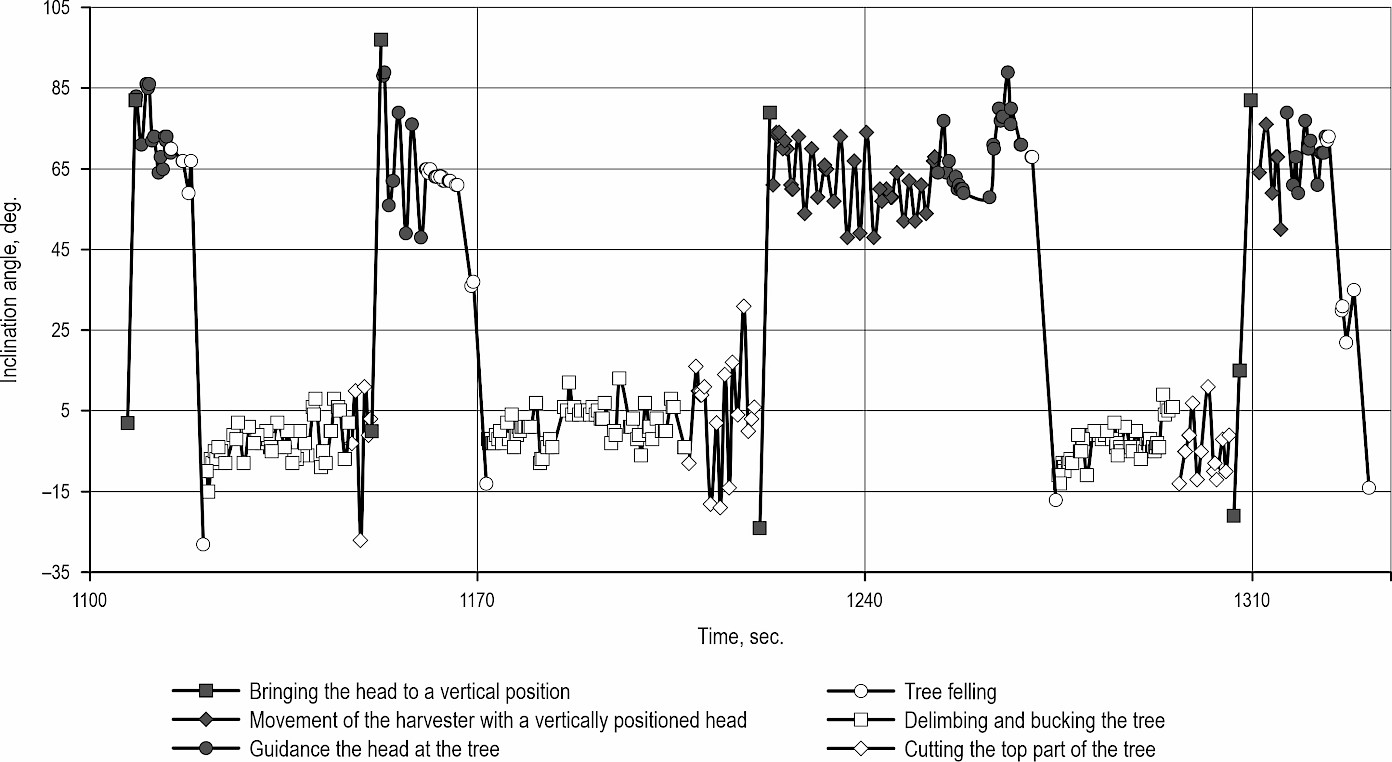
Fig. 7 Examples of changing the angles of inclination of the harvester head according to operations
When analyzing the changing angles, it was noticed that within the wood processing operations, a separate fragment was the operation of cutting the top part of the tree, which was not included in the group of commercial wood assortments. At the end of cutting the last commercial wood assortment, the remains of the tree are crushed and left on the forwarding trail. The inclination angles of the harvester head when cutting the top are different from the inclination angles when cutting wood assortments. Fig. 8 shows a typical example, which clearly shows how the inclination angles of the head increases at the end of the bucking operation, when the top part of the tree begins to be processed.
Another characteristic operation, which is also accompanied by its own process of changing the harvester head inclination angles, is the operation of collecting and hilling branches on the forwarding trail. The angle values in this operation are similar to the angles of the head when cutting the top part. Since the boundaries between these two operations are often blurred, the angles during branch collecting are not considered as a separate sample in this work, but are instead attributed to the operation of cutting the top part of a tree.
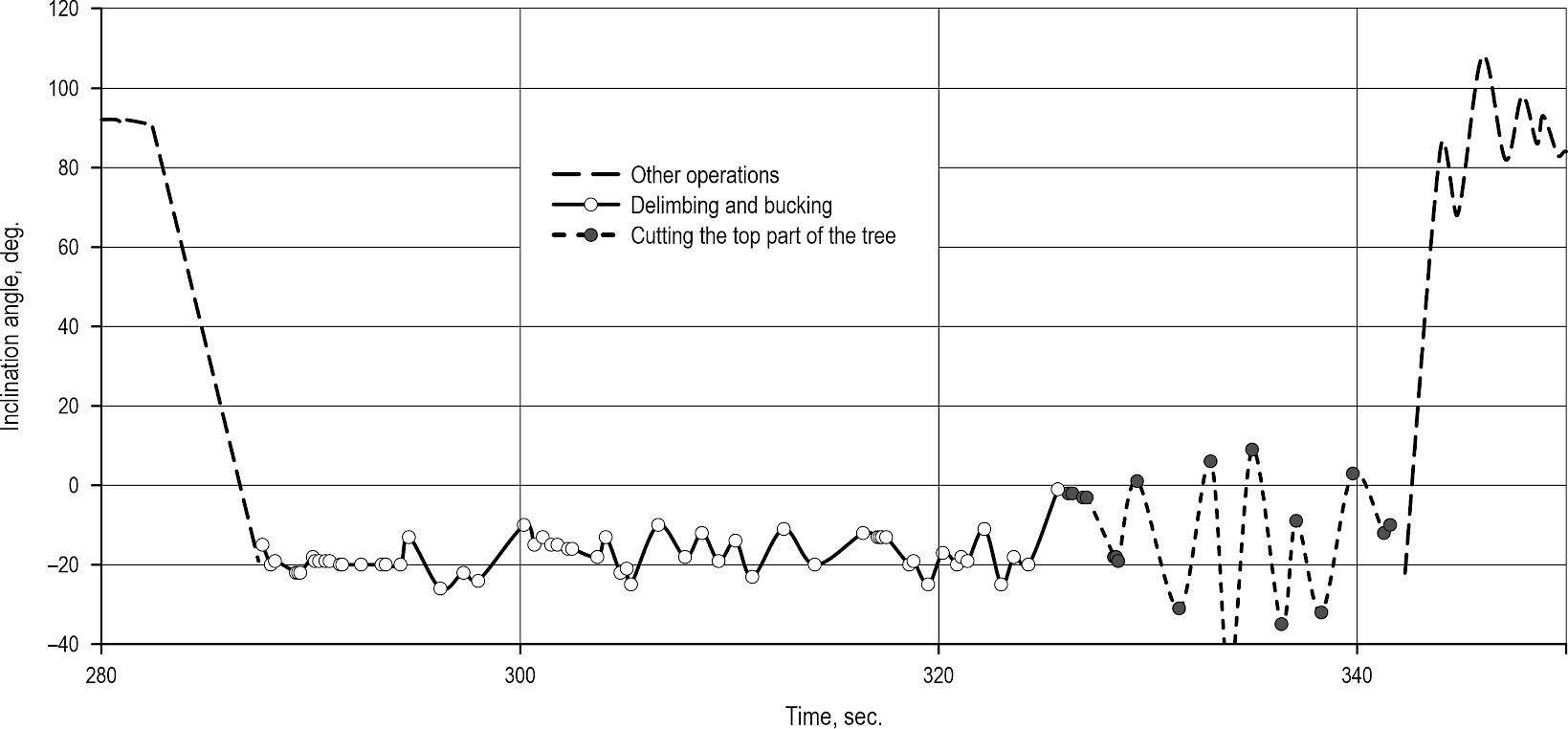
Fig. 8 Example of angle changes of the harvester head during bucking and cutting the top part of the tree
The operation of bringing the head to a vertical position is actually characterized by two values, which are located next to each other in the records of maximum inclination angles. The first value determines the horizontal position of the head, and the immediately following maximum angle value determines the vertical position.
The operation of felling, if it occurs without external interference, is also identified by two angle values indicating the head rotation. However, analysis of the change in angle values allows us to identify episodes in which the felling of a tree is accompanied by external influences on the tree being processed. Fig. 9 shows an example of an episode where one can observe an increase in the time of transition of the head from a vertical to a horizontal position. This increase in time is due to the fact that the tree being processed touched the trees growing nearby during the felling process, and the operator was forced to use additional manipulations to ensure the felling of the tree.
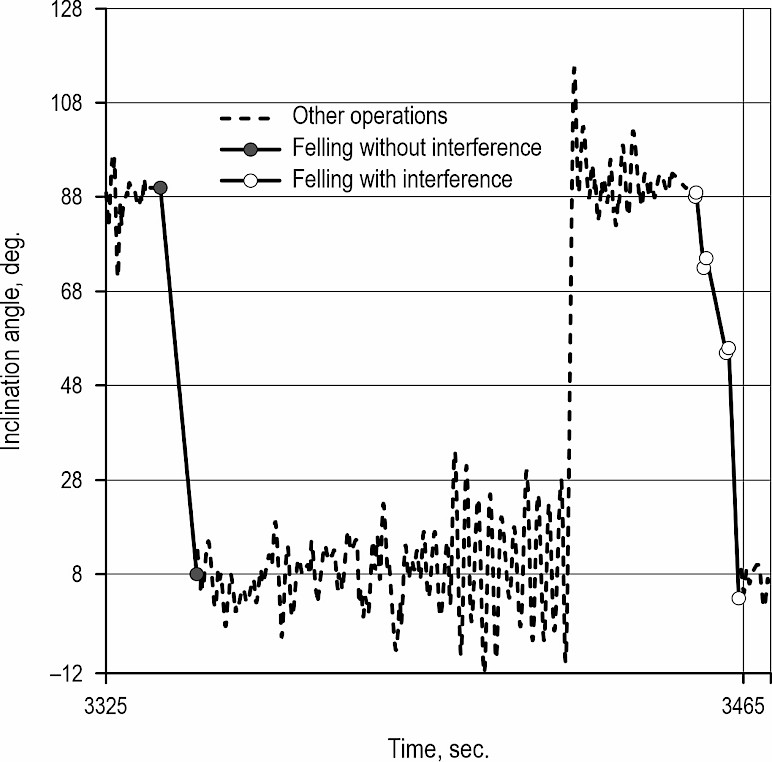
Fig. 9 Examples of angle changes of the harvester head during tree felling with and without interference
Thus, changes in harvester head angles were investigated for the following operations, for which abbreviations were used:
- VPH – bringing the harvester head to a vertical position
- MHV – movement of the harvester with a vertically positioned head from one working position to another (movement along the forwarding trail for a distance of no more than 30 m)
- GH – guidance of the harvester head at the tree and grabbing the tree
- TF – tree felling
- MGT – movement (maneuvers) of the harvester with the grabbed tree during the bucking process
- DBT – delimbing and bucking the tree
- CTP – cutting the top part of the tree and collecting or hilling the branches onto the forwarding trail
- MHH – movement of the harvester from one working position to another with a horizontally positioned head
- WP – pauses in work
- OTH – other operations
- LMH – movement with a horizontally positioned head from one working area to another (long movement of the harvester along the forwarding trail).
The results of statistical processing of the sample data are summarized in Table 2, which shows the average values, standard deviations, ranges, medians and quartiles of angle values for the operations.
Table 2 Descriptive statistics of the inclination angles for the harvester operations
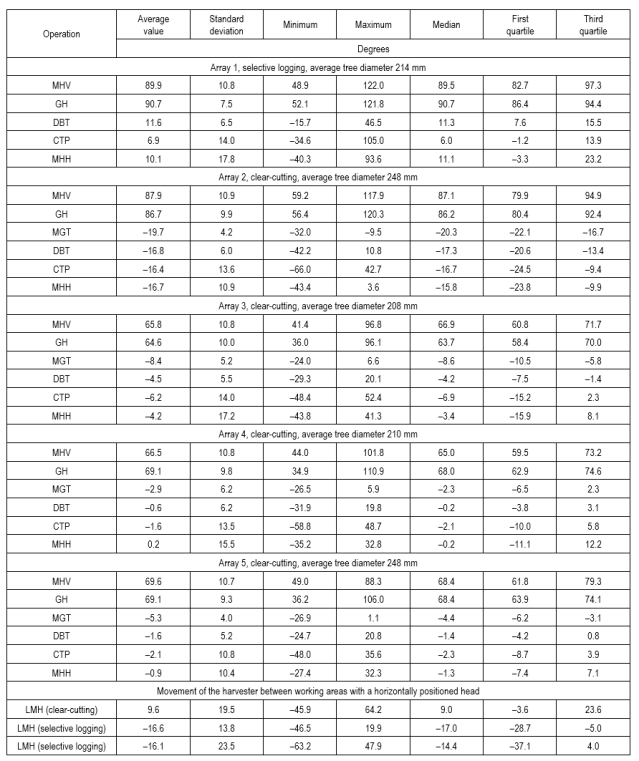
Checking the sample data of angle values for compliance with the normal distribution law using the Pearson criterion has shown that the samples obey the normal distribution law in the operations where there is free swinging of the head in a vertical or horizontal position. A comparison of samples, using ANOVA, consisting of angle values for the same operations in which the harvester moved with free swing of the head, but taken from different arrays, has shown no differences between these samples.
The samples of angle values for the operations in which the harvester head swinging is influenced by operator’s control inputs or the size of the tree do not follow a normal distribution. A comparison of such samples for the same operations but taken from different arrays, using the Kruskal-Wallis test, revealed statistical differences between the samples. Discrepancies between samples are due to factors such as average tree diameter, stand density, operator fatigue, and felling type. Determining the extent of their influence requires further research.
The smallest standard deviation in the values of the harvester head inclination angle is observed for the harvester movement operation with a grabbed tree. For all other operations, the spread of values increases. Thus, in relation to the values of angles during the harvester movement with a grabbed tree in bucking operations, the standard deviation of the values increases on average by 20%, in guidance operations – by 90%, in operations of the movement from one working position to another with a vertically positioned head – 2.2 times, in operations of the movement with a horizontally positioned head – 2.9 times, in operations of cutting the top part – 2.7 times. Moreover, these differences persist in comparable proportions within individual data arrays collected at different times and under different conditions.
In the vertical head harvester mode, the interquartile range of angle values for the guidance operation is on average by 23% smaller than the interquartile range in the operations of movement from one work position to another. However, the range between maximum and minimum inclination angles is on average by 19% greater in guidance operations compared to the operations where the harvester is moved from one work position to another.
In the horizontal head mode, the largest interquartile range for angle values was observed during the harvester movement operations. The interquartile range of angle values during short movements with free head swinging was, on average, 3.8 times greater than during movement operations with a grabbed tree; 2.9 times greater than during bucking operations, and by 33% greater than during the operations of cutting the top part of a tree. A comparison of the spread of angle values for short movements between the harvester working positions and the harvester long movements along the forwarding trails between different work sites showed that both the interquartile range and the range of angles were greater involving long movements of the harvester along the forwarding trail. The interquartile range of angle values was by 53% greater during the harvester long movements along the forwarding trail compared to short movements.
The range of the head inclination angles varies depending on the operation. The average angle range within which the head inclination angles change is 28.4 degrees for the harvester movement with a grabbed tree; 52.4 degrees for bucking; 108.0 degrees for the operations of cutting the top part of a tree and collecting the branches; 78.7 degrees for the harvester short movements between work positions; and 96.0 degrees the harvester long movements along the forwarding trail between work sites.
Obtaining information about the average range of changes of the head inclination angle across different operations does not solve the problem of determining precise operation boundaries within the data array. A time interval of 2–4 seconds helps determine whether the harvester has transitioned to the next operation.
However, some cycle episodes last less than 4 seconds, and atypical episodes within this range may exhibit angle values that do not match the typical inclination angles for a given operation. For example, sudden operator inputs on the control levers or the occurrence of obstacles during certain operations, which require additional equipment manipulations, may be mistakenly interpreted as a transition to the next operation.
The study does not define exact time intervals for unambiguous detection of operation transitions. Further research is needed to collect empirical data on head inclination angles across different operating conditions and to develop or adapt mathematical methods, including machine learning, for pattern recognition in the data.
Recording the values of the head inclination angles in a certain continuous interval of the harvester operation allows us to identify additional auxiliary episodes related to unproductive operations in the work process. Such episodes include (Fig.10):
- single lifting and lowering of the head. Fig. 10A shows an example of such a single action. The number of such episodes in array 1 is 2, in array 2 is 2, in array 3 is 1, in array 4 is 3; in array 5 is 4
- stops or pauses within the working process, not related to equipment maintenance and rest time. Such episodes are characterized by a gradual decrease in angle values to a certain constant value. An example is shown in Fig. 10B. In all arrays, six such episodes have been recorded
- removal of undergrowth that interferes with felling. Since, compared to previous episodes, this type of operation is not always clearly visible on the records of the angles and is easily confused with a productive operation, the number of such episodes can be identified by an expert with experience in analyzing the harvester working process. A sign of such actions is a very short pointing time and a short time for the head to be in a horizontal position after cutting off the undergrowth. As a rule, after cutting the undergrowth, no bucking operations are performed, and the operator immediately moves the head to a vertical position. An example of the head angles when harvesting undergrowth in examples of recorded data is shown in Fig. 10C.
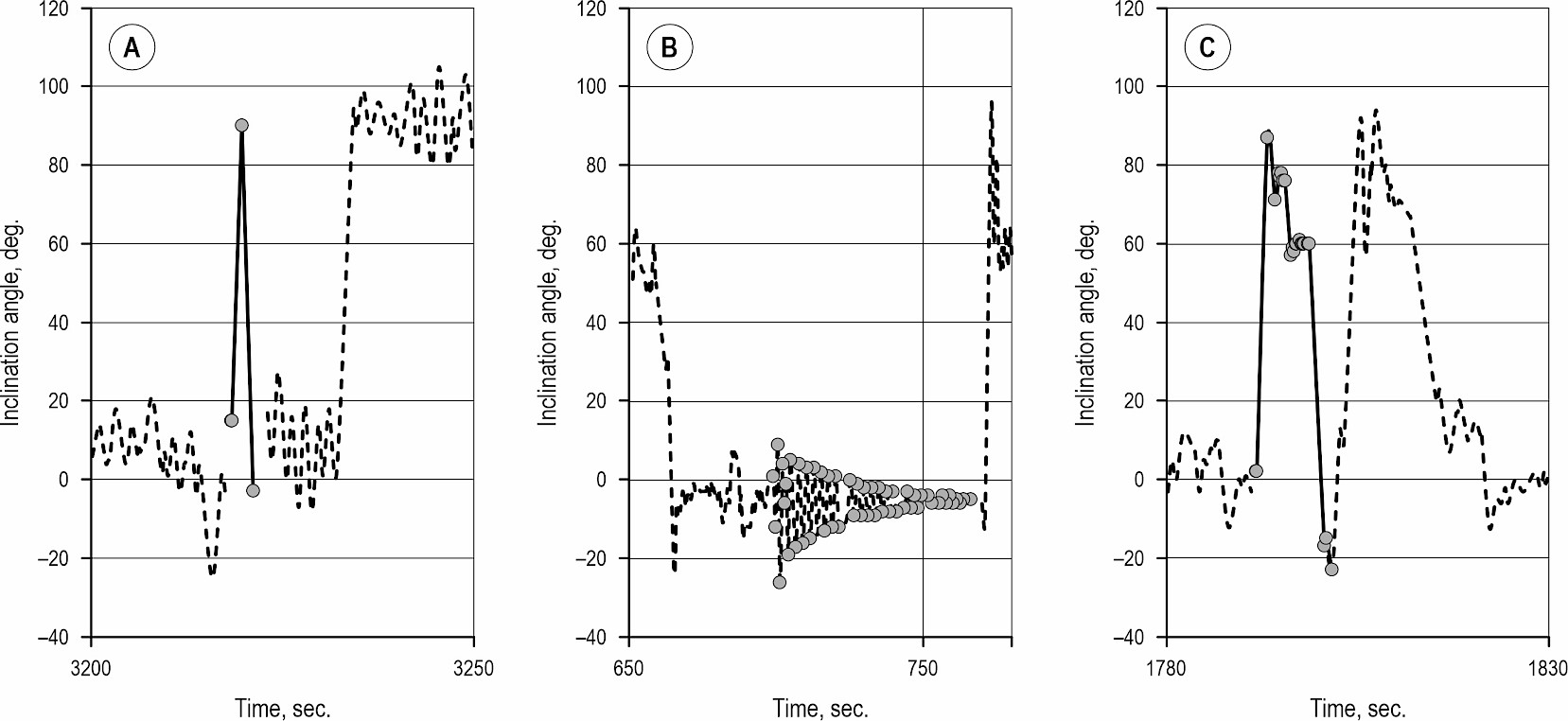
Fig. 10 Auxiliary unproductive actions in the structure of the working process: (A) Single lifting and lowering of the head; (B) Pauses within the working process; (C) Removal of undergrowth that interferes with felling
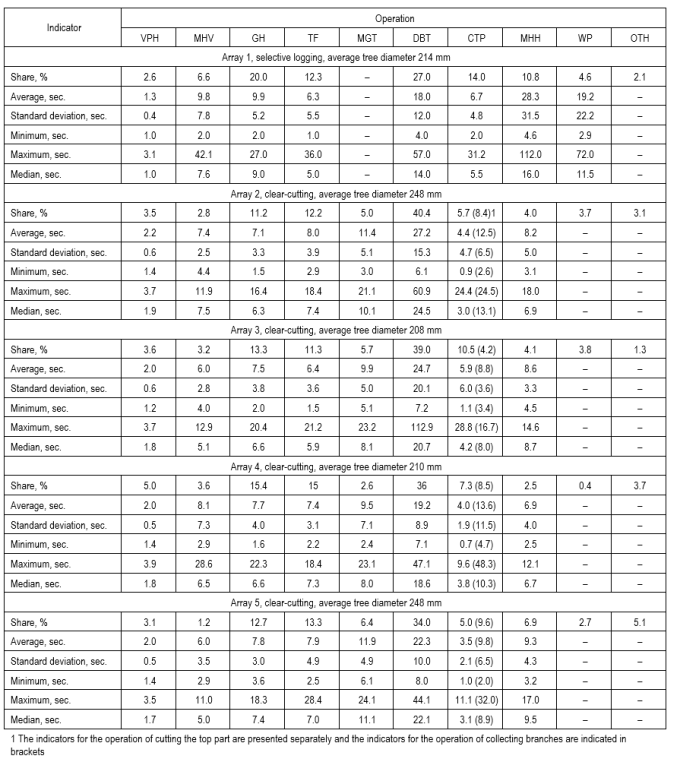
Based on the obtained arrays of inclination angles of the harvester head, time intervals corresponding to different operations of the technological process were identified. Samples were compiled from the values of these intervals for each operation, and their mean values, standard deviations, ranges, and medians were determined. Additionally, the total time spent on each operation and the share of each operation in the structure of the process were calculated. These data are presented in Table 3.
Table 3 shows the share of each operation in the structure of the harvester working process, without taking into account the time when the harvester moved from one working area to another. The table shows the average diameter of harvested trees for each array. This diameter was determined by the measuring system of the harvester head at the moment when the tree was separated from the stump. For selective felling there was no such operation as movement of the machine with a grabbed tree.
The pattern of changes in the inclination angles of the harvester head allows for a detailed specification of the harvester’s technological process structure. Specifically, bringing the head into a vertical position should be considered a separate operation, as this operation delimits the two operating modes of the harvester: the mode with the head in a horizontal position and the mode with the head in a vertical position. In this study, this operation accounts for 2.6 to 5% of the total time, with an average episode duration of 2 seconds (Table 3).
It is recommended to distinguish between the operation of guidance of the harvester head at the tree and the operation of movement of the harvester with a vertically positioned head. In the first case, the harvester head is operator controlled; in the second case, the head is in a free state.
Short movements of the harvester with a vertically positioned head account for 1.2–6.6% of the total time, with an average duration of 8 seconds per movement. The operation of guidance of the head at the tree accounts for 11–20% of the total time, with an average guidance time ranging of 7–10 seconds, depending on the data array.
The tree felling operation should be considered from the moment of tree grabbing (when the head is fixed on the tree for a short period) until the moment when the head assumes a horizontal position after felling. In this study, this operation accounted for 11–15% of the total time, with an average duration of 6–8 seconds. The duration of felling is influenced not only by the size of the trees, but also by interferences from nearby trees. Such episodes are well identified on the time scale by spikes in angle values. In the present study, the proportion of tree felling with interference had the following values: array 1 – 22%; array 2 – 6%; array 3 –7.5%; array 4 – 20%; array 5 – 15%.
The operation of delimbing and bucking the tree accounts for 27–40% of the total time, with an average duration varying across all arrays from 18 to 27 seconds. Meanwhile, the movement of the harvester with the grabbed tree and the cutting the top part of the tree are designated as separate operations. The operation of moving with a grabbed tree takes up 2.6–6.4% of the time, while the operation of cutting the top part of the tree, including the collection of branches onto the forwarding trail, accounts for 14–15.8% of the total harvester cycle time.
The movement of the harvester from one working position to another with a horizontally positioned head takes up 2.5–10.8% of the total time, with an average duration of a single movement ranging from 7 to 28 seconds depending on the data array. Work pauses and other operations account for 4–8% of the total time. In this study, only the total duration was considered for these elements.
Table 3 Structure of the harvester working process
4. Discussion
The use of MEMS inclinometers to measure the inclination angles of technological attachments seems to be a relevant method for collecting information about the working process of logging machines. The array of the inclination angles around the axis parallel to the hinge axis with which the harvester head is attached to the rotating frame, in this study this axis is designated as the X axis (Fig. 1), is considered as the main source of information.
Obtaining arrays of data on the angles of inclination of the harvester head in the working process operations makes it possible to analyze from both sides. On the one hand, recording the angle values over a continuous period of the harvester operation provides quality information about the work process. In particular, an expert, by analyzing the recording of the angles is able to determine the nature of the turnover of individual operations. On the other hand, arrays of the angles make it possible to determine the quantitative characteristics of the working process, such as the duration of individual operations, and the analysis can be carried out in an automated way, isolating values of the angles related to a particular operation from the general array. In both cases, the study of the process can be carried out using recorded data, that is, an expert does not need to be in the places of logging operations all the time.
By analyzing the variation of angles around the X-axis, an expert-observer can quite accurately identify the duration and frequency of basic operations, such as: guidance of the head and grabbing a tree, felling, delimbing and bucking, and moving the harvester. The division of the work process into such operations is consistent with the research carried out in the works (Slugeň et al. 2014, Szewczyk and Sowa 2017).
The proportions in the duration of individual operations obtained in this study (Table 3) are also generally consistent with the results presented in earlier studies. For example, in the article of Pajkoš et al. (2018), the following ratio between the main operations is shown: felling (including guidance, grabbing and cutting the tree) – 34–39% of the total cycle time; delimbing and bucking – 51–57%; movement from one working position to another is 8–10%. According to research (Szewczyk and Sowa 2017), the working process structure includes: guidance – 10–22%; cutting – 5–8%; delimbing and bucking – 50%; the harvester movement – 12–22%. In the work of Slugeň et al. (2014), the structure of the process is presented in the following proportions: movement to a new working site – 6–28%; the head guidance – 10–13%, grabbing and cutting the tree – 8-10%; delimbing and bucking – 45–73%; other operations – 1–8%. In this paper, the authors also make reference to previous studies that examined the harvester working processes. Recalculated proportions between operations, based on the articles by Ovaskainen et al. (2004), Niemistö et al. (2012), are in the following ranges: movement to a new working position – 7–11%; the head guidance – 22–25%; grabbing and cutting a tree – 11–18%; delimbing and bucking – 47–59%.
It is somewhat difficult to separate the operation of cutting a tree based in the angle records which in some cases is considered by researchers as a separate operation. Consideration of the structure of the harvester working process through the angles of inclination of the harvester head determines the cutting operation as a component of the felling operation. An indirect sign for separating the cutting operation from the guidance operation is the condition of no change in the angle of inclination after grabbing the tree for a certain period of time.
Continuous arrays of the angles of inclination of the harvester head allow the observer to detail the structure of the harvester working process. Changes in the angles of inclination make it possible to consider the harvester process as consisting of two modes: work with a vertically positioned head and a horizontally positioned head. In this study, the harvester operated with a vertically positioned head for 28% of the total time and with a horizontally positioned head for 72% of the total time. The values of the angles of inclination confirm that the operations of guidance and grabbing a tree and the operation of moving from one working position to another should be distinguished, although in the angle records the boundaries between these operations are often blurred, since the operator can begin the operation – guiding at a tree – while still moving. The study has shown that the movement of the harvester with the head in a vertical position, which precedes the guidance of the head at the tree, may account for as much as 6% of the total technological cycle time.
Further research focused on comparing the duration of this operation and the head guidance operation under various logging conditions will help determine the key factors influencing the operator’s strategic decisions. The main choice is between moving the harvester more frequently or reducing travel time by guiding the head from a greater distance.
Also, the values of angles, continuously measured during the harvester operation, made it possible to separate from the operation of delimbing and bucking an additional operation associated with cutting the top part of the tree and collecting branches on the forwarding trail. The angles when cutting the top differs from the angles when sawing commercial wood assortment. In the records of angles, spikes in values at the end of the bucking operation are clearly visible (see examples in Fig. 7 and Fig. 8).
The operation of cutting the top part of the tree and collecting the branches onto the forwarding trail may account for as much as 16% of the harvester’s technological cycle time. This operation differs from bucking in the level of operator control over the position of the harvester head. Further research into harvester operating conditions to identify factors that affect the duration of this operation will help determine optimal settings for the crane control system and harvester head for various logging conditions.
Also, the movement (maneuvers) of the harvester with the grabbed tree can be classified as a separate operation. In these studies, the harvester spent an average of 5% of the time performing maneuvers with the grabbed tree. This operation is characterized by the smallest range of inclination angle variation of the harvester head.
The slightly underestimated duration of the bucking operation (27–40% of the total cycle time) in this study, compared to results obtained in other research, is due to the fact that the operations of cutting the top part of the tree and movement of the harvester with the grabbed tree were considered separately. The bucking operation included only the sawing of commercial wood assortments.
Within the technological cycle, operations such as guidance of the head at the tree, harvester movement with the grabbed tree, and movement between working positions without a tree account for 23–37% of the total cycle time. Obtaining information on how the durations of these operations and their combinations vary under different production conditions will enable the development of practical recommendations for operators of harvesters. This will help operators adapt their work style to the specific conditions of the logging site by selecting the most efficient combination of maneuvers.
The temporal representation of the angles allows you to determine the number and frequency of auxiliary and unproductive actions accompanying the process. An expert can identify an increase in felling time due to collisions of processed trees with trees growing nearby; determine the frequency of raising and lowering the head not related to the main operations, the duration and frequency of pauses in the harvester operation. Such episodes have a characteristic change in the angles of inclination of the harvester head on the time scale and can be identified.
As some episodes of the process show, additional maneuvers of the harvester are carried out for more convenient guidance, grabbing of the tree and further felling. If the harvester is positioned correctly relative to the tree being harvested, then the felling of this tree occurs without hindrance. Otherwise, nearby trees will interfere with tree felling. In the continuous angle records episodes of tree felling with hindrances are clearly observed in the form of additional spikes of values (Fig. 9). Thus, the data on changes in the angle of inclination allows to obtain additional information about the working process and calculate the time of increase in felling operations due to possible hindrances.
A comparison of the inclination angles of the harvester head with the operations of the harvester working process shows that the main difference in operations is associated with the spread of values of the angles. Under conditions of reduced operator control over the position of the harvester head, the dispersion of the values of the angles increases noticeably, which in the statistical analysis of the samples of the angles is expressed by a change in the standard deviation and interquartile range. The largest standard deviation is observed when the harvester moves along the forwarding trail for a long time. In this mode, the head is in a free state, there is no control over the head positions on the part of an operator, and the inclination angles are determined to a large extent by the profile of the forwarding trail. During the operations of guidance the harvester head at a tree, a harvester operator controls the head position, attempting to reduce its swinging, which is reflected in a decrease in the interquartile range and standard deviation compared to operations in which the head swings freely.
In operations where a tree holding is involved, the weight and length of a tree limit the head swinging. During the harvester movement operations with a grabbed tree, the held tree, resting on the ground, limits the head position change; as a result, the interquartile range and angle variation are smallest compared to other operations.
The widest range of angle values is typical during the operations of cutting the top part of a tree and collecting branches. In this operation, the harvester head position is influenced by abrupt control lever movements by an operator. This is why there are isolated episodes of the head deviation at large angles, compared even to the free swinging of the head during the harvester movement.
Individual characteristics of the working process can be identified automatically. A fairly simple calculation algorithm, when certain angle ranges typical for each operation are filtered in the array of values and these ranges are grouped, can be performed using MS Excel. In particular, in this way it is convenient to determine the operating time of the harvester in the first or second modes. However, identifying the duration of individual operations requires the use of special algorithms. Testing of such algorithms is considered as one of the directions for further work.
Comparing the results of direct observations of the harvester operation with the records of inclination angles of the harvester head over a continuous period of the harvester operation, it should be noted that the records of angle values show some episodes associated with additional techniques used by an operator when performing operations. These techniques are well identified when an experienced expert analyzes the angle records, but what these techniques are associated with is difficult to determine only by the records. Such techniques include single lifting and lowering of the harvester head, which may be due to the fact that in this way the head is cleared of stuck branches, or rapid cycles of guidance – felling – bucking, which are associated with the processing of small trees when the operator removes undergrowth interfering with the felling of main trees (Fig. 10A and 10C).
Measurements of the angles of inclination are an additional tool for studying the working processes of logging machines. The data on changes in the harvester head inclination angles during logging operations, combined with the data recorded by the harvester on-board computers, provide new information for modelling logging operations.
5. Conclusions
The study presents an analysis of changes in the inclination angles of the harvester head, measured using a MEMS inclinometer mounted on the head. The measurements were taken during harvester operation. The operations were carried out in two modes: with the head in a vertical position and in a horizontal position.
The study revealed that each operation in the harvester’s technological cycle is characterized by specific values of statistical parameters, enabling its identification within the dataset. The mean or median identifies which mode the operation belongs to. Variations between operations within the same mode are defined by dispersion parameters: standard deviation, range, and interquartile range.
For operations in the mode with the head in a horizontal position, the average range of values within which the inclination angles vary is as follows: movement of the harvester with the grabbed tree: 28.4 degrees; delimbing and bucking the tree: 52.4 degrees; cutting the top part of the tree and collecting the branches: 108.0 degrees; short movement of the harvester between working positions with a horizontally positioned head: 78.7 degrees, and long movement with a horizontally positioned head between working areas: 96.0 degrees. For operations in the mode with the head in a vertical position, the average range is as follows: movement of the harvester with a vertically positioned head between working positions: 56.9 degrees, and guidance of the head at the tree: 67.9 degrees. The interquartile range, which is less sensitive to outliers, had average values of 5.5, 6.6, 15.2, 20.4, and 30.7 degrees for operations performed with the head in a horizontal position, and 14.7 and 10.3 degrees for operations with the head in a vertical position, respectively.
The prospects for further research are associated with the development and validation of mathematical methods for processing angle data arrays, including the application of machine learning techniques. These methods should aim to precisely determine operation boundaries, identify non-productive episodes in the data array, and enable comparison of head inclination angle arrays obtained under different production conditions.
6. References
Ahn, C.R., Lee, S., Peña-Mora, F., 2015: Application of low-cost accelerometers for measuring the operational efficiency of a construction equipment fleet. J. Comput. Civil. Eng. 29(2): 1–11. https://doi.org/10.1061/(ASCE)CP.1943-5487.0000337
Becker, R.M., Keefe, R.F., 2022: A novel smartphone-based activity recognition modeling method for tracked equipment in forest operations. PLoS ONE 17(4): e0266568. https://doi.org/10.1371/journal.pone.0266568
Brewer, J., Talbot, B., Belbo, H., Ackerman, P., Ackerman, S., 2018: A comparison of two methods of data collection for modelling productivity of harvesters: manual time study and follow-up study using on-board-computer stem records. Ann. For. Res. 61(1): 109–124. https://doi.org/10.15287/afr.2018.962
Contreras, M., Freitas, R., Ribeiro, L., Stringer, J., Clark, C., 2017: Multi-camera surveillance systems for time and motion studies of timber harvesting equipment. Comput. Electron. Agric. 135: 208–215. https://doi.org/10.1016/j.compag.2017.02.005
Eliasson, L., Kärhä, K., Arlinger, J., 2023: Fuel consumption in logging operations in Sweden. Int. J. Forest Eng. 34(3): 366–372. https://doi.org/10.1080/14942119.2023.2229707
Eriksson, M., Lindroos, O., 2014: Productivity of harvesters and forwarders in CTL operations in northern Sweden based on large follow-up datasets. Int. J. Forest Eng. 25(3): 179–200. https://doi.org/10.1080/14942119.2014.974309
Gallo, R., Visser, R., Mazzetto, F., 2021: Developing an automated monitoring system for cable yarding systems. Croat. J. For. Eng. 42(2): 213–225. https://doi.org/10.5552/crojfe.2021.768
Hiesl, P., Benjamin, J.G., 2015: Estimating processing times of harvesters in thinning operations in Maine. For. Prod. J. 65(3–4): 180–186. https://doi.org/10.13073/FPJ-D-14-00065
Keefe, R.F., Zimbelman, E.G., Wempe, A.M., 2019: Use of smartphone sensors to quantify the productive cycle elements of hand fallers on industrial cable logging operations. Int. J. Forest Eng. 30(2): 132–143. https://doi.org/10.1080/14942119.2019.1572489
Kemmerer, J., Labelle, E.R., 2021: Using harvester data from on-board computers: a review of key findings, opportunities and challenges. Eur. J. For. Res. 140(1): 1–17. https://doi.org/10.1007/s10342-020-01313-4
Liski, E., Jounela, P., Korpunen, H., Sosa, A., Lindroos, O., Jylhä, P., 2020: Modeling the productivity of mechanized CTL harvesting with statistical machine learning methods. Int. J. Forest Eng. 31(3): 253–262. https://doi.org/10.1080/14942119.2020.1820750
Manner, J., Nordfjell, T., Lindroos, O., 2016: Automatic load level follow-up of forwarders' fuel and time consumption. Int. J. Forest Eng. 27(3): 151–160. https://doi.org/10.1080/14942119.2016.1231484
Mathur, N., Aria, S., Adams, T., Ahn, C., Lee, S., 2015: Automated Cycle Time Measurement and Analysis of Excavator’s Loading Operation Using Smart Phone-Embedded IMU Sensors. Proceedings of the International Workshop on Computing in Civil Engineering, Austin, Texas, June 21–23, 215–222. https://doi.org/10.1061/9780784479247.027
Molaei, A., Kolu, A., Lahtinen, K., Geimer, M., 2023: Automatic estimation of excavator actual and relative cycle times in loading operations. Autom. Constr. 156: 1–16. https://doi.org/10.1016/j.autcon.2023.105080
Niemistö, P., Korpunen, H., Laurén, A., Salomäki, M., Uusitalo, J. 2012: Impact and productivity of harvesting while retaining young understorey spruces in final cutting of downy birch (Betula pubescens). Silva Fenn. 46(1): 67. https://doi.org/10.14214/sf.67
Olivera, A., Visser, R., Acuna, M., Morgenroth, J., 2016: Automatic GNSS-enabled harvester data collection as a tool to evaluate factors affecting harvester productivity in a Eucalyptus spp. harvesting operation in Uruguay. Int. J. Forest Eng. 27(1): 15–28. https://doi.org/10.1080/14942119.2015.1099775
Ovaskainen, H., Uusitalo, J., Väätäinen, K., 2004: Characteristics and significance of a harvester operators’ working technique in thinnings. Int. J. Forest Eng. 15(2): 67–77. https://doi.org/10.1080/14942119.2004.10702498
Pan, P., McDonald, T., Smidt, M., Dias, R., 2022: Use of vision and sound to classify feller-buncher operational state. Int. J. Forest Eng. 33(2): 129–138. https://doi.org/10.1080/14942119.2022.2037927
Pajkoš, M., Klvač, R., Neruda, J., Kumar Mishra, P., 2018: Comparative time study of conventional cut-to-length and an integrated harvesting method – a case study. Forests 9(4): 194. https://doi.org/10.3390/f9040194
Prinz, R., Väätäinen, K., Routa, J., 2021: Cutting duration and performance parameters of a harvester’s sawing unit under real working conditions. Eur. J. For. Res. 140(1): 147–157. https://doi.org/10.1007/s10342-020-01320-5
Rossit, D.A., Olivera, A., Céspedes, V.V., Broz, D., 2019: A Big Data approach to forestry harvesting productivity. Comput. Electron. Agric. 161: 29–52. https://doi.org/10.1016/j.compag.2019.02.029
Slugeň, J., Peniaško, P., Messingerová, V., Jankovský, M., 2014: Productivity of a John Deere harvester unit in deciduous stands. Acta Univ. Agric. Silvic. Mendel. Brun. 62(1): 231–238. http://dx.doi.org/10.11118/actaun201462010231
Strandgard, M., Mitchell, R., 2015: Automated time study of forwarders using GPS and a vibration sensor. Croat. J. For. Eng. 36(2): 175–184.
Szewczyk, G., Sowa, J.M., 2017: The accuracy of measurements in a time study of harvester operations. N. Z. J. Forest. Sci. 47(1): 24. https://doi.org/10.1186/s40490-017-0105-3
Zimbelman, E.G, Keefe, R.F, 2021: Development and validation of smartwatch-based activity recognition models for rigging crew workers on cable logging operations. PLoS ONE 16(5): e0250624. https://doi.org/10.1371/journal.pone.0250624
© 2026 by the authors. Submitted for possible open access publication under the
terms and conditions of the Creative Commons Attribution (CC BY) license (http://creativecommons.org/licenses/by/4.0/).
Author’s address:
Assoc. Prof. Maxim Piskunov, PhD
e-mail: piskunov_mp@list.ru
Petrozavodsk State University
Institute of Forestry, Mining and Construction Sciences
Department of Transport and Production Machines and Equipment
Lenin Str. 33
185910, Petrozavodsk
Republic of Karelia
RUSSIA
Received: June 20, 2024
Accepted: May 19, 2026
Original scientific paper