

Skidder Trafficking and Soil Compaction in the Southeastern USA: A Multi-Region and Harvest Method Analysis
doi: https://doi.org/10.5552/crojfe.2027.4470
volume: issue, issue:
pp: 17
- Author(s):
-
- Miller Timothy R.
- Bolding M. Chad
- Munro Holly L.
- Bullock Bronson P.
- Lowe III Roger C.
- Conrad IV Joseph
- Kinane Joseph L.
- Article category:
- Original scientific paper
- Keywords:
- machine traffic, timber harvest, soil strength, logging, forestry, Georgia, Coastal Plain, Piedmont
Abstract
HTML
Soil compaction from heavy machinery during timber harvests may affect future tree growth and lead to broader ecological concerns such as reduced water infiltration, increased runoff, and diminished water quality. Although previous studies have assessed the effect of machine traffic on soils, few studies have examined relative effects of machine traffic and harvest method on differing soil types and conditions. To better understand this, we evaluated skidder traffic and its impact on soil penetration resistance within the Piedmont and Coastal Plain physiographic regions of Georgia, USA. During summer 2023 through spring 2024, we evaluated 12 study sites, representing both clearcuts (6) and first thinnings (6). We used onboard GPS receivers to document skidding machine traffic and relative intensity and used a digital penetrologger to measure penetration resistance to a depth of 50 cm. Measurements were taken across a gradient of disturbances including landings; primary, secondary, and tertiary skid trails; and undisturbed areas. Data analysis examined the relationship between soil moisture, traffic intensity, physiographic region, soil type, and soil strength. Traffic distribution was influenced by the interaction of physiographic region and harvest method. Coastal Plain clearcuts exhibited the highest proportion of medium intensity traffic areas, resulting in significant penetration resistance increases across all depth classes. For example, penetration resistance in these sites increased by 1.19 MPa within the highest traffic areas in the 21–30 cm depth class compared to undisturbed areas. Conversely, thinned stands in the region experienced lower overall traffic intensity and less increase in penetration resistance. Piedmont clearcuts exhibited the highest measured median MPa, but also had the highest baseline for undisturbed areas. Regression analysis and three-way interactions revealed that Coastal Plain clearcuts were significantly more susceptible to increased penetration resistance, particularly in 21–50 cm depths, compared to the Piedmont thinning baseline. These results highlight the complexity and interrelatedness of multiple factors on soil compaction. Results demonstrate the need for region- and site-specific harvest planning and management to mitigate potential negative impacts of machine traffic on soil structure and long-term forest productivity.
Skidder Trafficking and Soil Compaction in the Southeastern USA: A Multi-Region and Harvest Method Analysis
Timothy R. Miller, M. Chad Bolding, Holly L. Munro, Bronson P. Bullock, Roger C. Lowe III, Joseph L. Conrad IV, Stephen M. Kinane
https://doi.org/10.5552/crojfe.2027.4470
Abstract
Soil compaction from heavy machinery during timber harvests may affect future tree growth and lead to broader ecological concerns such as reduced water infiltration, increased runoff, and diminished water quality. Although previous studies have assessed the effect of machine traffic on soils, few studies have examined relative effects of machine traffic and harvest method on differing soil types and conditions. To better understand this, we evaluated skidder traffic and its impact on soil penetration resistance within the Piedmont and Coastal Plain physiographic regions of Georgia, USA. During summer 2023 through spring 2024, we evaluated 12 study sites, representing both clearcuts (6) and first thinnings (6). We used onboard GPS receivers to document skidding machine traffic and relative intensity and used a digital penetrologger to measure penetration resistance to a depth of 50 cm. Measurements were taken across a gradient of disturbances including landings; primary, secondary, and tertiary skid trails; and undisturbed areas. Data analysis examined the relationship between soil moisture, traffic intensity, physiographic region, soil type, and soil strength. Traffic distribution was influenced by the interaction of physiographic region and harvest method. Coastal Plain clearcuts exhibited the highest proportion of medium intensity traffic areas, resulting in significant penetration resistance increases across all depth classes. For example, penetration resistance in these sites increased by 1.19 MPa within the highest traffic areas in the 21–30 cm depth class compared to undisturbed areas. Conversely, thinned stands in the region experienced lower overall traffic intensity and less increase in penetration resistance. Piedmont clearcuts exhibited the highest measured median MPa, but also had the highest baseline for undisturbed areas. Regression analysis and three-way interactions revealed that Coastal Plain clearcuts were significantly more susceptible to increased penetration resistance, particularly in 21–50 cm depths, compared to the Piedmont thinning baseline. These results highlight the complexity and interrelatedness of multiple factors on soil compaction. Results demonstrate the need for region- and site-specific harvest planning and management to mitigate potential negative impacts of machine traffic on soil structure and long-term forest productivity.
Keywords: machine traffic, timber harvest, soil strength, logging, forestry, Georgia, Coastal Plain, Piedmont
1. Introduction
In the southeastern United States (U.S.), the forest sector is a significant contributor of raw materials and finished goods to the global economy, producing 60% of the nation’s timber, and adding over $42 Billion USD to Georgia’s economy alone (Georgia Forestry Commission 2022). Advances in seedling genetics, fertilization, and vegetation control doubled planted pine (Pinus spp.) forest productivity between the 1950s and 2000s (Fox et al. 2007). Timber harvesting operations in the southeastern U.S. experienced rapid mechanization during the 1960s and 1980s (Silversides and Sundberg 1989, Greene 1997, MacDonald and Clow 2010). Timber harvesting technology and machinery advanced rapidly since then, with average logging business production increasing by 160% between the 1980s and 2020s (Conrad et al. 2024). Advances in silvicultural practices and harvesting have occurred in major timber-producing regions globally (Axelsson 1998, Talbert and Marshall 2005, Fox et al. 2007). Bigger, stronger, and faster machines improve timber harvesting efficiency, but this increase in machine size and weight can cause soil compaction and reduce site productivity, effectively reversing gains from advanced silvicultural practices (Ampoorter et al. 2010).
Currently, the most common and productive timber harvesting system in the southeastern U.S. is a fully mechanized whole-tree (full-tree) system (Barrett et al. 2017, Conrad et al. 2024). The southeastern U.S. logging sector has experienced continued declines in labor availability, thus relying on increased machine productivity and efficiency to offset these losses (Conrad and Blinn 2024). However, shifts toward heavier equipment raises concerns about soil compaction. For example, wheeled skidders can increase bulk density and rutting and reduce macroporosity compared to lighter tracked bulldozers (Parkhurst et al. 2018). Although higher payloads may reduce the number of operational cycles, increased machine weights can disturb both surface and subsurface soils (Hakansson and Reeder 1994, Horn et al. 1995). However, machine-induced effects are more strongly related to ground pressure than total weight and can be mitigated through use of wider tires, tracks, and load distribution (Labelle et al. 2022).
Severity of soil compaction depends on site conditions and operational practices, including soil texture, moisture content, organic matter, slope, equipment type and weight, and number of passes (Cambi et al. 2015). Compaction tends to be more pronounced in areas prone to flooding or moist soils (Startsev and McNabb 2000, Eisenbies et al. 2005); in fact, soil compaction remains one of the most significant factors impacting seedling survival (Lockaby and Vidrine 1984, Coder 2020). Compacted soils can hinder root growth (Heilman 1981, Jones 1983, Bathke et al. 1992), which may reduce seedling survival and longterm stand development (Lockaby and Vidrine 1984, Ampoorter et al. 2011, Labelle and Kammermeier 2019). Root growth limitations are commonly observed once soil strength exceeds 2–3 MPa (Sands 1979, Greacen 1980, Parker et al. 2007, Bolding et al. 2009). Furthermore, Lockaby and Vidrine (1984) reported that a 12% increase in bulk density at 0–24 cm depth on skid trails and decks reduced 5-year loblolly pine (Pinus taeda L.) height growth by 39–59% in Louisiana fine loamy soils. Beyond inhibiting root development, soil compaction may also decrease soil aeration and porosity (Cullen et al. 1991, Ezzati et al. 2012, Frund and Averdiek 2016), impacting not only growth rate, but overall tree health and susceptibility to pests and disease (Reid et al. 2015).
Equipment-induced compaction can also disrupt soil drainage (Startsev and McNabb 2000) and water infiltration capacity (Hansson et al. 2018). These changes can increase erosion and sedimentation risk in streams, leading to aquatic ecosystem degradation (Adams and Froehlich 1981, Cambi et al. 2015). For example, Ngo-Cong et al. (2021) reported that, depending on soil type, a 10–20% increase in bulk density in southeastern U.S. soils led to a 55–82% reduction in cumulative infiltration and a 3–49% reduction in water storage capacity. These effects can affect a substantial portion of the harvested area as 25–90% of a site is typically trafficked during harvest (Hatchell et al. 1970, Aust et al. 1998), with 10–20% in access features, and 6–11% in skid trails in clearcuts (Horton et al. 2023, DiGiacomo et al. 2025). Upland sites within the Coastal Plain are particularly vulnerable to compaction (Lincoln et al. 2007), in part because harvesting can occur during wetter periods while lowland areas are inaccessible to conventional machinery (Miller et al. 2004). Bedding, a mechanical site preparation technique used to create raised soil mounds for tree planting in poorly drained soils (Outcalt 1984), serves as an effective treatment to alleviate skidder compaction effects (Neaves et al. 2017). However, many of these upland Coastal Plain sites are not bedded during site preparation and replanting. Furthermore, the physical footprint of compaction is not limited to the area in direct contact with the tires or tracks, as vertical ground pressure is distributed diagonally and horizontally from the point of contact, affecting a broader area of forest soil (Labelle and Jaeger 2011).
Extent of compaction is closely tied to traffic intensity. Rizaldi et al. (2022) observed that six tractor passes increased bulk density by 9% at 5 cm depth and 16% at 15 cm depth. This same study also found that penetration resistance increased by 170% at 5 cm depth and 160% at 15 cm depth, following those passes. A related study demonstrated that penetration resistance generally increased with number of passes, although machine weight affected the rate of compaction in upper soil layers but did not alter the maximum level of compaction (Allman et al. 2022). After 40 machine passes, penetration resistance increased by 0.15–1.04 MPa, which was a 3.9–32.7% increase from the control at zero passes, with the greatest effect occurring within the 0–20 cm depth range (Allman et al. 2022). Compaction effects from wheeled machine harvests have been shown to extend to depths of 50 cm (Jansson and Johansson 1998), with maximum compaction effect occurring at 15 cm. This has been supported by additional studies which identified maximum compaction effects occurring between 20–30 cm (Labelle and Jaeger 2011, Cambi et al. 2015).
Attempts to mitigate the effect of machine traffic on soil disturbance include limiting machine traffic dispersion through use of pre-determined skid trails (Howell et al. 2019) and leaving residue in high traffic areas (Page-Dumroese et al. 2010). Additionally, high-flotation tires or tracks may reduce soil disturbance from machine traffic due to better weight distribution (McDonald et al. 1995, Sakai et al. 2008, Labelle et al. 2022). Reduction of air pressure in tires has also been shown to offset the effects of machinery on soil compaction (Batey 2009). Using logging slash and tops as a mat is also effective at reducing soil disturbance by distributing machine weight (Eliasson and Wasterlund 2007, Labelle and Jaeger 2012, Parkhurst et al. 2018, Labelle et al. 2019, Prats et al. 2021). A recent review by Labelle et al. (2022) determined that severe effects can be minimized by avoiding fine-textured soils, minimizing slope, and planning extraction corridors with machine traffic maps.
Despite widespread use of modern mechanized harvesting systems in the southeastern U.S., there is a noticeable lack of studies examining their effects on soil compaction and implications for productivity, particularly within thinning operations. Furthermore, existing studies have not analyzed how variables such as harvest methods, physiographic region, and soil types influence compaction severity under current operational practices. To ensure long term forest sustainability, it is essential to develop a greater understanding of the effects that modern timber harvesting operations have on forest soils. Therefore, to better understand soil compaction in modern forest harvest operations, we analyzed machine traffic dispersion to evaluate the effects of traffic intensity on soil compaction across both first thinnings and clearcuts in Georgia's Piedmont and Coastal Plain regions. The objectives of this study were to:
- quantify machine traffic dispersion and intensity across first thinnings and clearcuts in Georgia’s Piedmont and Coastal Plain physiographic regions
- evaluate the impact of varying traffic intensities on soil penetration resistance across multiple depth classes,
- determine the extent to which physiographic region and harvest method influence the severity of soil compaction.
2. Materials and Methods
2.1 Study Area
We assessed skidding machine traffic during harvest and its subsequent impact on penetration resistance across 12 sites in Georgia, USA spanning both the Piedmont and Coastal Plain physiographic regions from summer 2023 through spring 2024 (Fig. 1). The Piedmont physiographic region of Georgia is an upland area characterized by rolling hills, well-drained soils and granite bedrock (Wharton 1978).
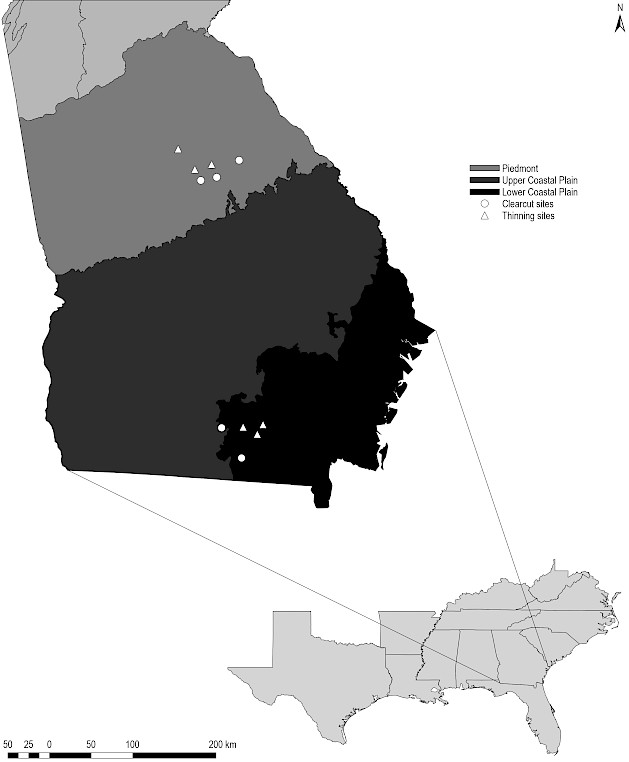
Fig. 1 Study site locations within Georgia’s Piedmont and Coastal Plain
The region’s soils were formed from a mixture of sandy loams and clays and had moderate to high erodibility. The Coastal Plain physiographic region is a lowland area south of Piedmont, featuring relatively flat or gently sloping terrain with mostly sandy soils. This region has varying fertility levels and was typically poorly drained. Furthermore, there are important differences in elevation and seasonal high water table depth between these physiographic regions, with Coastal Plain sites typically exhibiting shallower water tables, increasing their susceptibility to compaction during wet periods. The Piedmont and Coastal Plain physiographic region make up 80% of the Atlantic Coastal states from New Jersey to Georgia and consist of udic soil moisture regimes with primarily thermic soil temperature regimes from Virginia through Georgia (Markewich et al. 1990). Both regions average between 112 and 122 cm of rainfall annually (Markewich et al. 1990). The Piedmont region consists of approximately 4.4 million hectares (Griffith et al. 2001). Soils in the Piedmont are made up of Ultisols weathered from gneiss and granite, containing very thin surface horizons (Payne 1976). Ultisols are categorized under Acrisols and Alisols in the World Reference Base classification system. Elevation in the region ranges from 61–884 m above sea level (Griffith et al. 2001). The Coastal Plain region covers approximately 9.2 million hectares (Griffith et al. 2001). The Coastal Plain region soils primarily consist of Ultisols with additional variation including Spodisols (Markewich et al. 1990). Spodisols are categorized as Podzols in the World Reference Base classification system. Elevation in the region ranges between 0–238 m (Griffith et al. 2001).
Thinning intensity for each stand was typical of the region. The US South predominately utilizes a combination of row and operator-select thinning (Dickens and Moorhead 2015). Generally, either a 4th or 5th row removal is conducted to allow access by the feller-buncher, with the operator being responsible for the selection and removal of trees between the rows (Dickens and Moorhead 2015). Average skidding distances in the region range from approximately 195 m (Lanford and Stokes 1996) to 235 m (Conrad and Dahlen 2019). Study site locations allowed analysis of differences in skidder traffic patterns and subsequent soil effects between these physiographic regions. Soil penetration resistance measurements were conducted within six months of harvest activities over a period of two years. Soil penetration resistance has been utilized as a measure for soil compaction from machine traffic in numerous studies (Mohieddinne et al. 2019, Pousse et al. 2022) and provided us with a direct measure of mechanical resistance to root elongation (Sinnett et al. 2008).
We selected sites that included three first thinnings and three clearcuts in the Piedmont region, and three first thinnings and three clearcuts in the Coastal Plain region. A site was defined as the harvest area served by a single landing. The choice of 12 sites (3 replicates per treatment combination) was dictated by the logistical constraints of real-world operational monitoring and is consistent with similar forest operations studies evaluating machine-soil interactions (Labelle and Jaeger 2011). We worked with landowners and logging contractors to identify sites that met the criteria and obtain access permission. All sites consisted of loblolly pine (Pinus taeda L.), planted in rows at a density typical of the region. Typical southern pine planting densities range from 1122 to 1683 seedlings ha-1, with 2.5 m between rows (Amateis and Burkhart 2012). Landowners typically chose lower planting densities in areas with limited pulpwood markets where it was better to maximize chip-n-saw and sawtimber production (VanderSchaaf 2023). Chip-n-saw refers to a mid-sized log (~20–28 cm large-end diameter) used for both small dimensional lumber and wood chips (Misztal et al. 2024). First thinning typically occurred between the age of 11–15 years (Weng et al. 2020). We omitted one Coastal Plain clearcut site from analyses because a significant portion of pulpwood and hardwood was left in piles throughout the site following harvest. This caused the site to experience non-typical traffic intensity. All harvest operations were conducted by traditional whole-tree logging crews, typical of the region. Each crew only utilized one skidder for transporting felled timber to the landing.
2.2 Soil Type and Texture
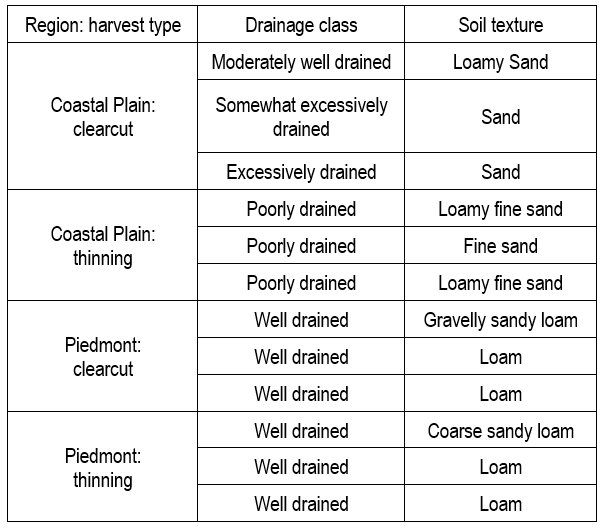
We utilized U.S. Department of Agriculture Natural Resources Conservation Service Soil Survey to identify each site’s soil type and physical characteristics (NRCS 2024). For each soil series and site, we utilized the representative values for particle-size distribution (percent sand, silt, and clay) within the upper 30.5 cm of the soil profile (Table 1). This information was used to categorize soil textural class and utilized within the data analysis. The Piedmont sites were classified as well-drained; however, Coastal Plain sites varied in drainage classification, ranging from poorly drained to excessively drained (Table 1).
Table 1 Soil texture and drainage class for each site (NRCS 2024)
2.3 GPS Data
Each site was harvested using whole-tree mechanized logging equipment including rubber-tired feller-bunchers, rubber-tired grapple skidders, and trailer-mounted knuckleboom loaders. Prior to harvest, we installed a GPS receiver on each skidder to record traffic location at 30-second intervals while the skidder was in motion, providing data on both the frequency and spatial distribution of traffic. We used a TRAK-4 GPS device that determines the skidder’s position using both GPS satellite signals and cell tower trilateration (TRAK-4 2024). Live data were reported to a device management website via cellular network where it could be viewed and downloaded. When cellular connection was not possible, the data was stored on the device and transferred once the connection was restored. We analyzed these data to identify primary, secondary, and tertiary skid trails for subsequent soil measurements.
2.4 Spatial Analysis
We manually delineated harvest site boundaries using ArcGIS Pro software (Esri 2024). We further refined boundaries using skidder traffic data and Esri World Imagery (Esri 2022). Harvest boundary shapefiles were used to clip machine traffic GPS points to the areas of interest, ensuring that only traffic within the harvest boundary was included in analyses. According to TRAK-4 representatives, maximum device error is approximately 3.1 m. Using ArcGIS Pro, we created a 10×10-m fishnet grid across each harvest boundary to allow for GPS error while ensuring sufficient spatial resolution for analysis. We subsequently clipped each fishnet grid layer by the boundary shapefile to prevent grid cells from extending beyond defined operational areas and allow for an area based assessment. We then spatially joined the skidder traffic point data and fishnet grid to determine the density of GPS location recordings within each grid cell. This process allowed us to determine the intensity of skidder traffic in a 10×10-m area based on the number of traffic points that were recorded within that cell. To enable comparison among sites, we normalized traffic counts within each cell by dividing by the total number of traffic points on that site, resulting in a standardized traffic intensity metric and controlling for varying levels of total traffic. Resulting data represented traffic intensity as a proportion of total skidding machine activity per site. These values were classified into quartiles, with each representing a range of traffic intensity: undisturbed (no traffic), low (Q1), moderate (Q2), high (Q3), and very high (Q4) (Fig. 2). These quartiles allow us to divide the range of traffic intensity into equally sized groups. This process was repeated for each harvest site.
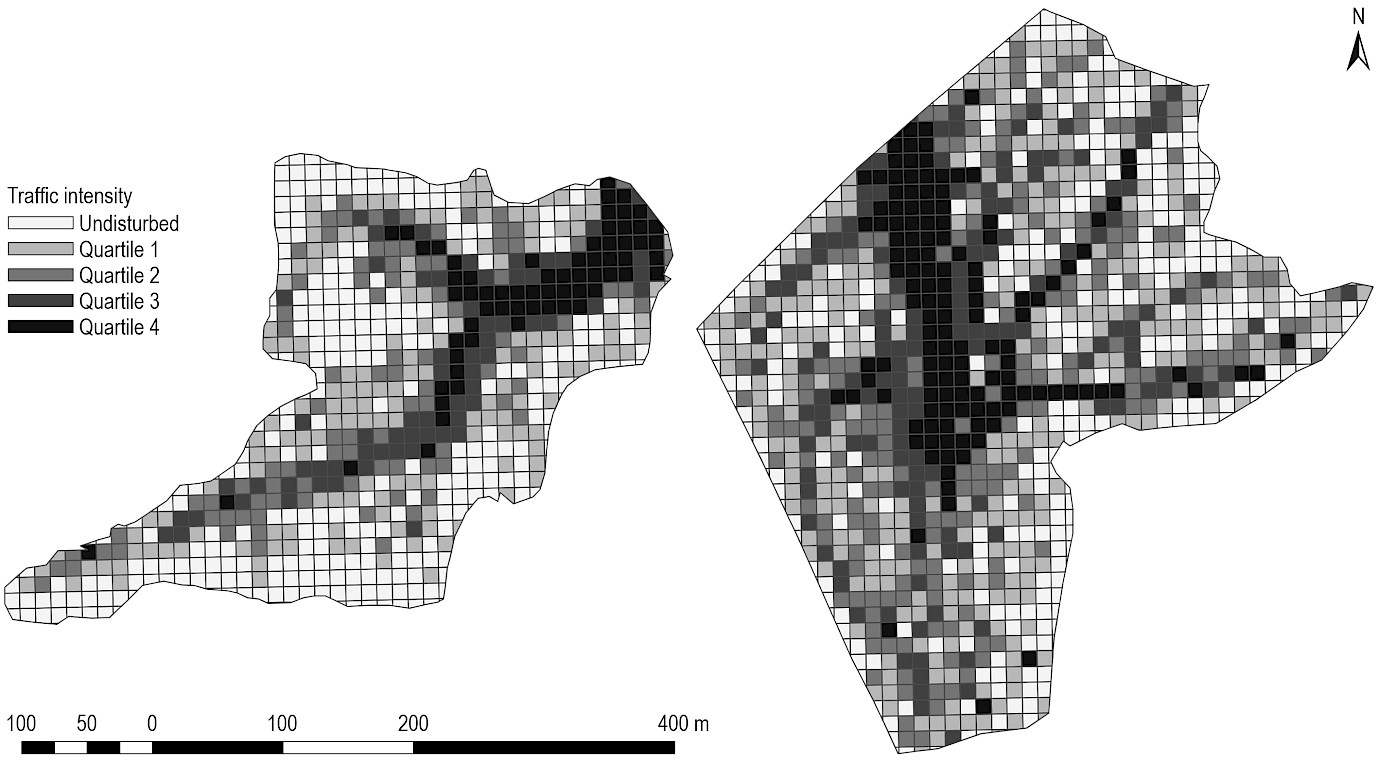
Fig. 2 Heat map of traffic intensity distribution for a Piedmont first thinning site (left) and Piedmont clearcut site (right)
2.5 Traffic Distribution Analysis
To compare average traffic distribution between harvest methods, we utilized independent samples t-tests to evaluate the mean proportion of site area within each intensity quartile. We also implemented a two-way ANOVA analysis to identify differences in traffic distribution based upon combinations of harvest method and physiographic region by traffic intensity quartile. Furthermore, to understand how differences in physiographic region and harvest method, influence the traffic distribution, we used a Generalized Linear Model (GLM) with a binomial family and logit link function. The binomial family allowed for modeling of the binary outcome of whether a cell fell into a specific traffic intensity quartile (success) or not (failure). The logit link function modeled the log-odds of success relative to failure. Independent variables included harvest method (first thinning or clearcut), physiographic region (Piedmont or Coastal Plain), and the interaction between these two variables. We structured the GLM as follows (1):

Within this model, »proportion« refers to the proportion of cells in each quartile. »region« refers to the categorical variable representing the Coastal Plain or Piedmont. »harvest method« is a categorical variable representing first thinning or clearcut treatments. »region×harvest method« is an interaction term to understand how the harvest effect varies by region. We ran the model separately for each quartile to assess how region and harvest method influence traffic intensity. Statistical significance was determined at α=0.1, as suggested for operational data (Di Stefano 2001).
2.6 Soil Measurements
We collected soil penetration resistance data using an Eijkelkamp recording soil penetrologger (Royal Eijkelkamp 2024), equipped with an 80 cm probe and a 1.0 cm2 60° cone. We recorded soil moisture with the same system via a connected sensor at each measurement point. The soil penetrometer operates by inserting the probe through a reference plate at a consistent speed of 2 cm s-1 to a depth of up to 80 cm. We recorded penetration resistance in megapascal (MPa) per unit area every 1 cm along with triangulated GPS coordinates for each penetration. Sampling began on the harvest landing, where we collected 20–30 measurements across a representative area of the landing, allowing a minimum of 8 m of separation between points. Following the landing samples, we spaced skid trail measurements 5–9 m apart in a zig-zag pattern to the end of the trail. Spacing for these samples was determined in the field using measured paces. This methodology ensures that representative data is captured across the width of the skid trail footprint while ensuring enough spacing to avoid spatial autocorrelation. We subsequently measured secondary and tertiary skid trails, based on observation of skidder traffic maps and on-the-ground conditions. Finally, we conducted off-trail »undisturbed« measurements in thinnings approximately 37.5 m from the main skid trail following a parallel transect identifying sampling locations with residual vegetation and/or no indication of machine traffic. Undisturbed areas within clearcuts sites were identified using a dual-verification process. First, we identified zones of zero recorded machine traffic based on the gps data. These locations were visually verified in the field during sampling. Undisturbed locations were specifically selected in areas containing undisturbed standing vegetation or trees within the harvest area or in areas near the harvest perimeter that was representative of the harvested stand. All undisturbed sites were visually assessed to ensure there was no evidence of soil displacement, ruts, or litter layer disturbance. We collected approximately 200 penetrometer measurements at each site, totaling approximately 2,300 penetrations measurements utilized in the data analysis. Our objective was to collect approximately 40 observations per traffic intensity area on each site.
2.7 Soil Penetration Resistance Analysis
We stratified soil strength penetration points using traffic intensity maps to correlate skidder traffic with changes in soil strength. Statistical analysis determined the average penetration resistance at multiple soil depths and moisture levels across high, medium, and low traffic areas on skid trails. We organized data by physiographic region and harvest treatment, developing four groups: Piedmont thinning, Piedmont clearcut, Coastal Plain thinning, and Coastal Plain clearcut. For each penetration point, we averaged soil penetration resistance data into five depth classes: <10 cm, 11–20 cm, 21–30 cm, 31–40 cm, and 41–50 cm.
We assessed normality using the Shapiro-Wilk test and the Spearman’s Rho test evaluated correlations, using R software (R Core Team 2024). We evaluated the relationship between compaction increases relative to traffic intensity increases by analyzing the median impact at each depth class for different traffic intensities. We selected the median value due to both the non-parametric findings from the Shapiro-Wilk test and the inherent potential for skewed data in collecting penetration resistance data. The median provides a more robust measure of the central tendency for skewed soil penetration resistance data, as it is less sensitive to outliers such as localized roots or rocks, compared to the arithmetic mean. The undisturbed traffic intensity measurements served as the baseline for each group and depth class. We conducted this process for all depth classes and plotted the findings. This allowed us to understand which region and harvest method combinations resulted in the greatest increase from the baseline values as traffic levels increased.
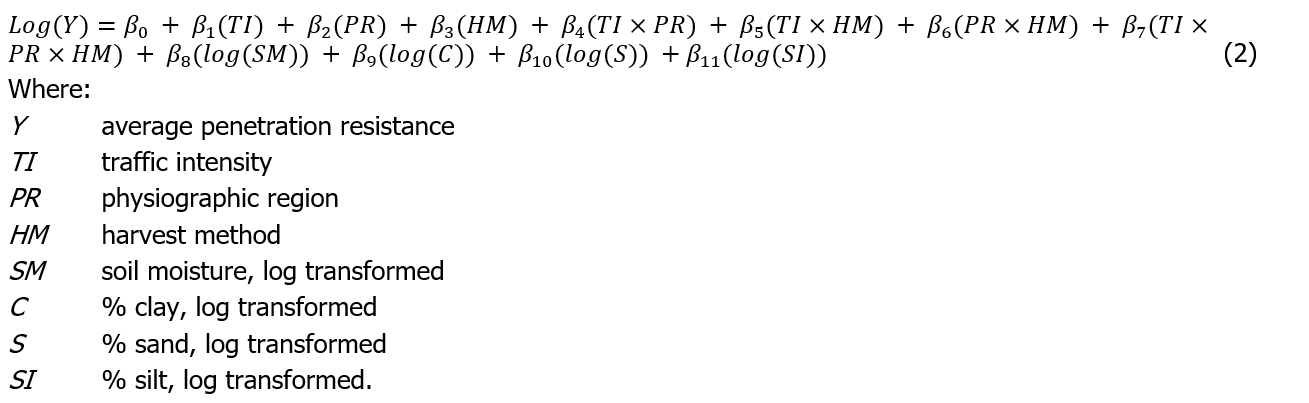
Our second analysis explored the relationship between compaction and traffic intensity by developing a linear model to evaluate effects of traffic intensity, harvest method, soil moisture, and soil texture (sand, silt, and clay) on average penetration resistance. Due to the non-parametric data set, we performed logarithmic transformations on the dependent variable and soil moisture, % Clay, % Sand, and % Silt factors. We included interaction effects between traffic intensity, harvest method, and physiographic region to capture combined effects, using the following Eq. (2):
3. Results
3.1 Traffic Distribution
Traffic was very similarly distributed in the Q1 and Q4 traffic intensities between both harvest methods. Overall, results of the one-way ANOVA showed no statistically significant differences in skidder traffic distribution based on harvest method alone across any of the individual traffic intensity quartiles (Fig. 3).
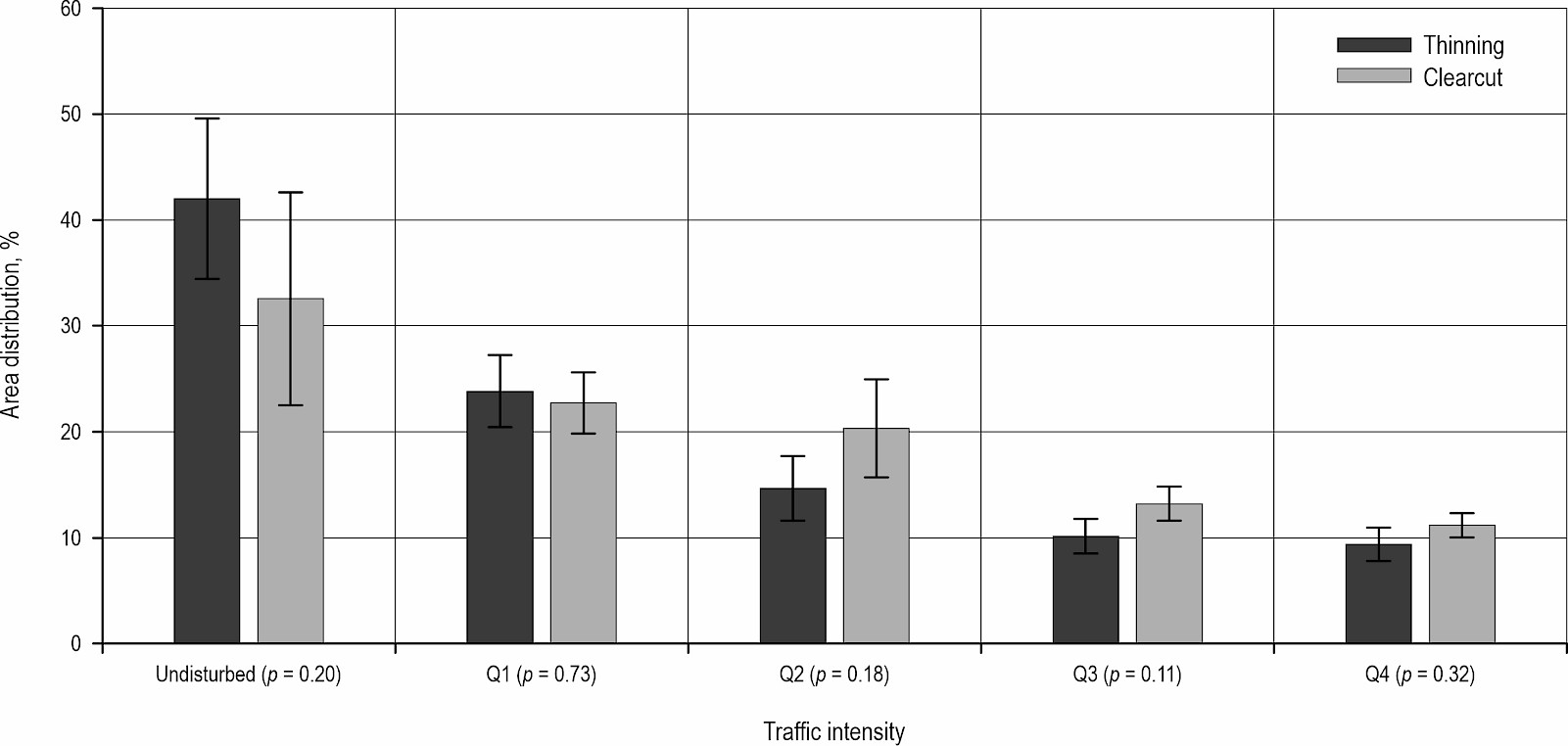
Fig. 3 Average percent of site area within each traffic intensity quartile across all sites. Error bars indicate one standard deviation. p-values represent significance results from one-way ANOVA. Data represents averages across all sites, so values may not add up to 100%
Additionally, none of the physiographic region and harvest method combinations differed significantly in the low intensity (Q1) traffic. However, significant differences did occur in the undisturbed quartiles and traffic quartiles 2–4 (Fig. 4). Coastal Plain clearcut sites averaged the greatest proportion of the site within medium traffic intensities (Q2 & Q3), and the lowest proportion of undisturbed area. Post-hoc pairwise comparisons using the Tukey HSD test identified significant differences between Coastal Plain Thinnings and Coastal Plain clearcuts for Q2 (p=0.021), Q3 (p=0.018), and Q4 (p=0.076). Proportionally, Coastal Plain clearcut sites average 13.4% more of the site area within Q2, 6.6% in Q3, and 4.8% in Q4, compared to Coastal Plain thinnings (Fig. 4). Pairwise comparisons did not identify significant differences between Coastal Plain clearcuts and Piedmont clearcuts. Coastal Plain thinnings were significantly different compared to Piedmont clearcuts at the Q3 (p=0.069) and Q4 (p=0.072) traffic intensities. Finally, Piedmont thinnings had 4.9% more average traffic in Q3 (p=0.046) and 5.5% more average traffic in Q4 (p=0.025). Interestingly, proportional traffic distribution for Piedmont sites was similar, regardless of harvest method. These findings, combined with the lack of statistical significance due to harvest method alone, indicate that Coastal Plain clearcut sites differed the most out of all harvest and region combinations and physiographic region influences traffic distribution (Fig. 4). Coastal Plain thinnings were the only combination of harvest method and physiographic region not to exceed 10% of the harvest area within the high traffic intensity levels (Q3 & Q4).
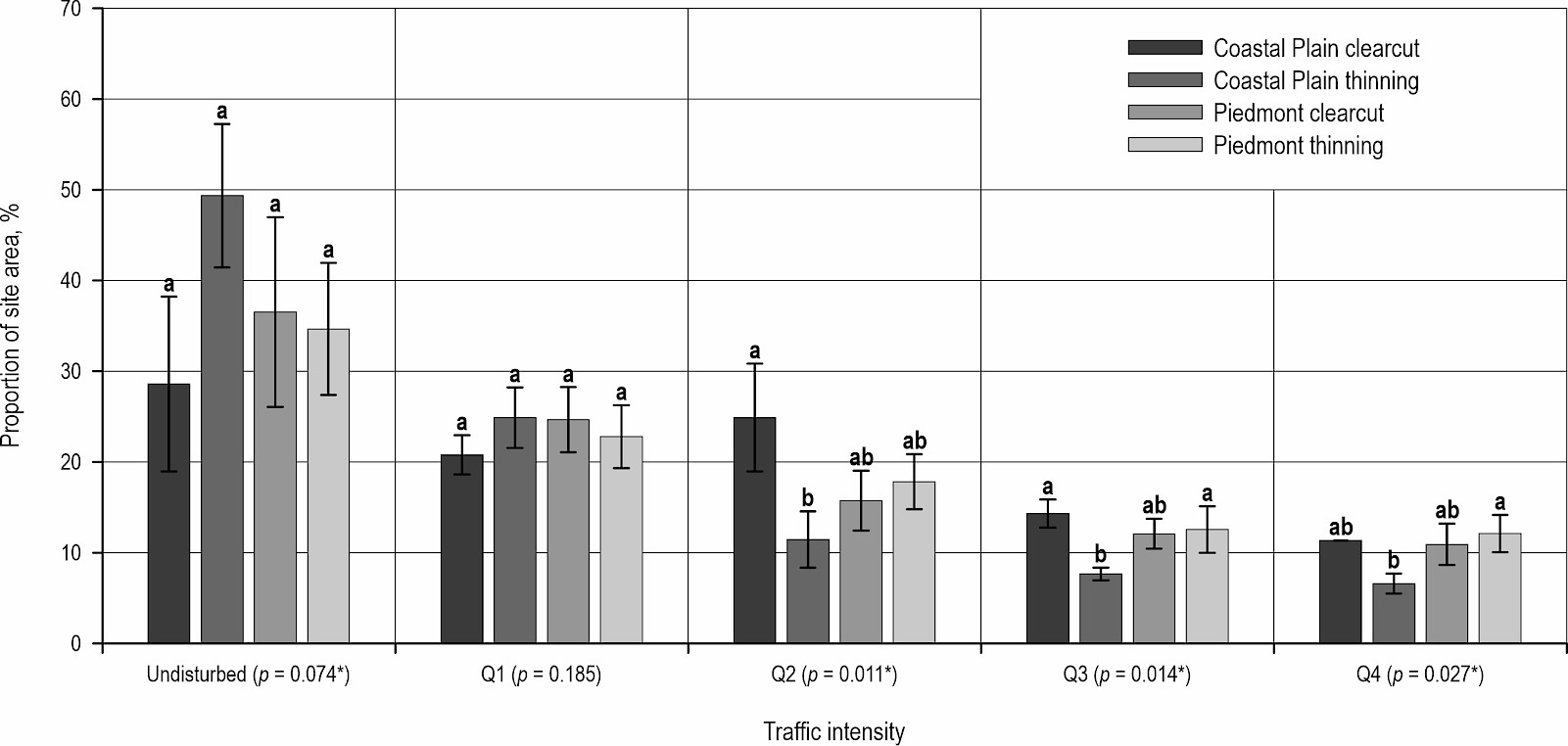
Fig. 4 Average percent area within each traffic intensity quartile, categorized by physiographic region and harvest method. Error bars indicate one standard deviation, p-values represent significance results from two-way ANOVA. Data represents averages across all sites, so values may not add up to 100%. * indicate significant difference at α-level of 0.1. Lettering indicates significance from Tukey HSD post-hoc tests
The binomial generalized linear model identified significant effects of physiographic region and harvest method on the probability of cells falling into a given traffic intensity quartile. In the baseline physiographic region (Coastal Plain), first thinning consistently reduced the odds of cells being classified into higher intensity traffic quartiles, resulting in reductions of 60% (p≤0.01), 50% (p≤0.01), and 44% (p≤0.01) in Q2, Q3, and Q4, respectively (Fig. 5). Notably, first thinning increased the odds of cells being found in the undisturbed quartile by 120% (p≤0.01) and Q1 by 26% (p≤0.01). Physiographic region analysis revealed that the Piedmont region, when compared to the Coastal Plain region and in the absence of first thinning, reduced the likelihood of cells falling within medium (Q2) and high (Q3) traffic intensity quartiles. Piedmont sites had 45% (p≤0.01) and 19% (p≤0.01) lower odds of cells experiencing Q2 and Q3 traffic intensity levels, respectively. Conversely, cells in the Piedmont were much more likely to be in the undisturbed category (47% increase, p≤0.01) (Fig. 5).
Significant effects were present within the interaction terms across all models (p≤0.01). This indicates that the impact of first thinning on cell proportion is modulated by region. Based on these interaction effects, we found that first thinning in the Piedmont region resulted in a 16% decrease in the probability of cell placement within Q1, a 28% increase in Q2, a 5.7% increase in Q3, and a 12% increase in Q4, compared to clearcuts in the Piedmont. First thinning within the Piedmont region reduced the odds of cells being within the undisturbed category by 8.8% compared to clearcuts in the Piedmont.
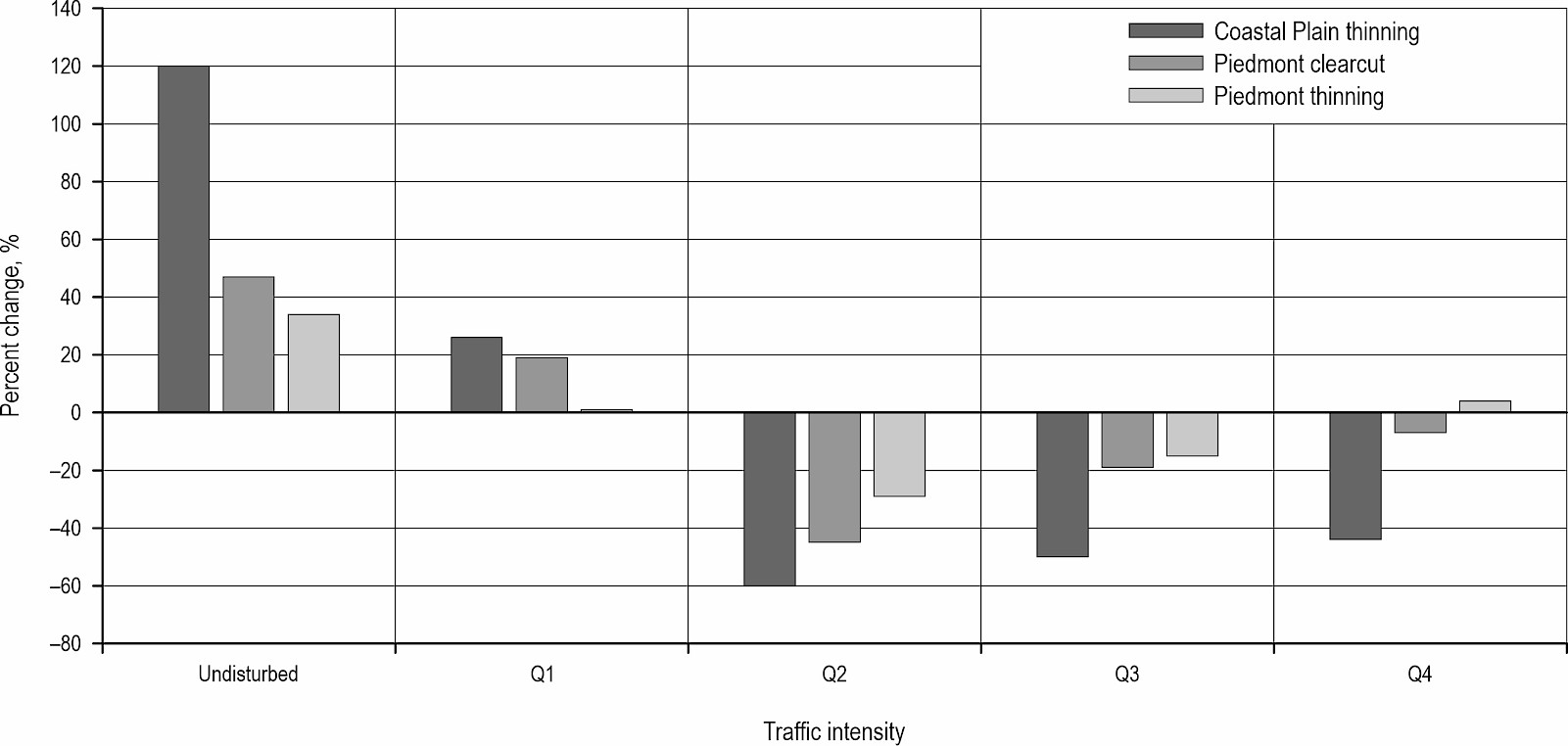
Fig. 5 Percent change in the probability of cell placement within traffic intensity quartiles relative to Coastal Plain Clearcut baseline. Percentages are derived from odds ratios calculated using binomial generalized linear models
3.2 Soil Penetration Resistance
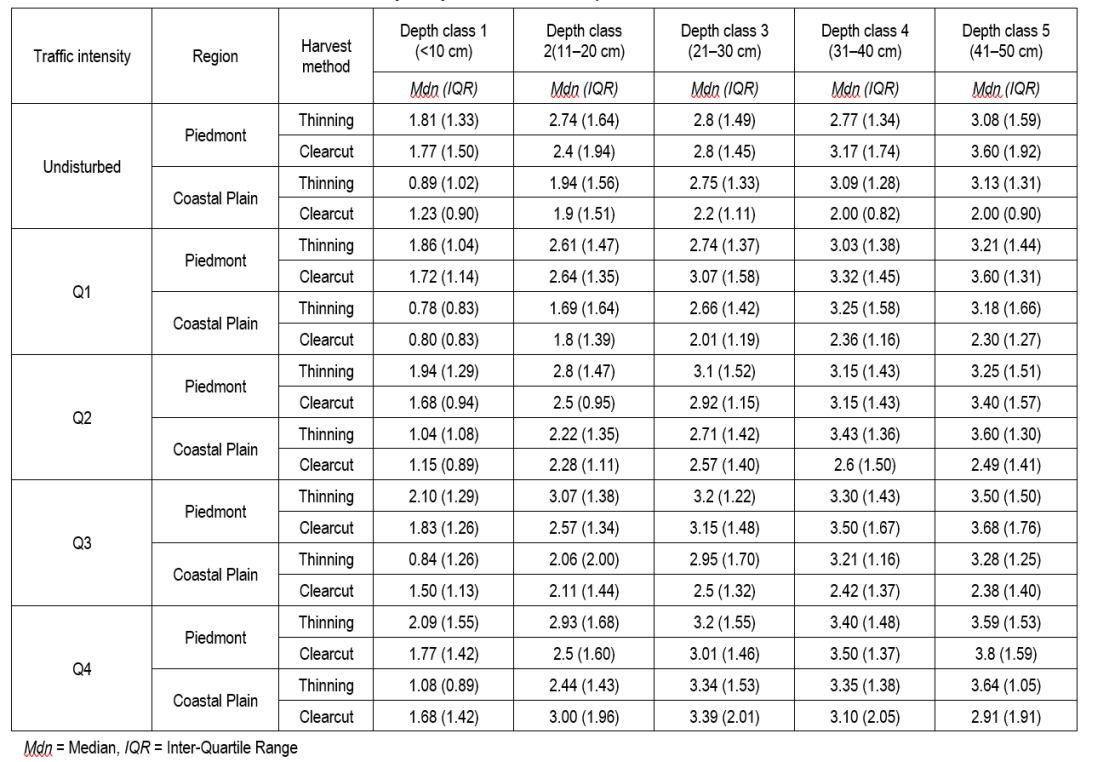
Both Piedmont and Coastal Plain sites reached critical penetration resistance levels (2–3 MPa) in the undisturbed traffic intensity at depth ranges of 31–40 cm and 41–50 cm. As found in previous studies (Labelle and Jaeger 2011, Keibl et al. 2014, Cambi et al. 2015), most soil strength changes occurred between 10 and 50 cm depths. Both Piedmont and Coastal Plain sites approached or breached critical soil strength thresholds at depth range of 11–20 cm within the highest traffic intensity areas (Table 2). All physiographic region and harvest method combinations exceeded critical soil strength levels in the highest traffic intensities at depths from 21–50 cm (Table 2). This result is notable as Coastal Plain sites exhibited a significantly lower soil strength in undisturbed areas (Table 2).
Table 2 Penetration resistance values (MPa) at different depths and traffic intensities
Coastal Plain clearcuts exhibited the greatest change in penetration resistance compared to undisturbed values as traffic intensity increased (Fig. 6). This combination of harvest type and physiographic region exhibited a trend of increasing penetration resistance for each traffic intensity level at all depth classes. Soil penetration resistance on Coastal Plain clearcuts increased by 0.45 MPa at <10 cm, 1.10 MPa at 11–20 cm, 1.19 MPa at 21–30 cm, 1.10 MPa at 31–40 cm, and 0.91 MPa at 41–50 cm, compared to the undisturbed values (Fig. 6). Most increases occurred between 11–40 cm. Coastal Plain sites exhibited a lower initial penetration resistance at depth class 1 before increasing penetration resistance in the higher traffic areas across all depth classes (Fig. 6).
As expected, higher levels of traffic intensity (Q2–Q4) generally increased average penetration resistance compared to undisturbed areas across several depth classes. Specifically, traffic intensity Q2 increased penetration resistance by 13.5% at 31–40 cm (p=0.04), compared to undisturbed areas. Average penetration resistance in Q3 traffic areas increased by 31.5% at depth <10 cm (p=0.01), 15.3% at 21–30 cm (p=0.03), 16.0% at 31–40 cm (p=0.01) and 12.25% at 41–50 cm (p=0.04), compared to undisturbed areas. Areas with traffic intensity level Q4 displayed increases in average penetration resistance of 16.6% at 21–30 cm (p≤0.01), 16.6% at 31–40 cm (p≤0.01), and 16.5% at 41–50 cm (p≤0.01). Increased sand content significantly decreased penetration resistance at all depths (p≤0.01) compared to the baseline sand content. Coastal Plain thinnings were associated with a 52.8% increase in penetration resistance at the 31–40 cm depth (p=0.02) and a 73.3% increase at the 41–50 cm depth class (p≤0.01). Soil moisture, recorded at time of penetration, had a –5.7% effect on penetration resistance at <10 cm depth and a –4.0% effect at 31–40 cm depth.
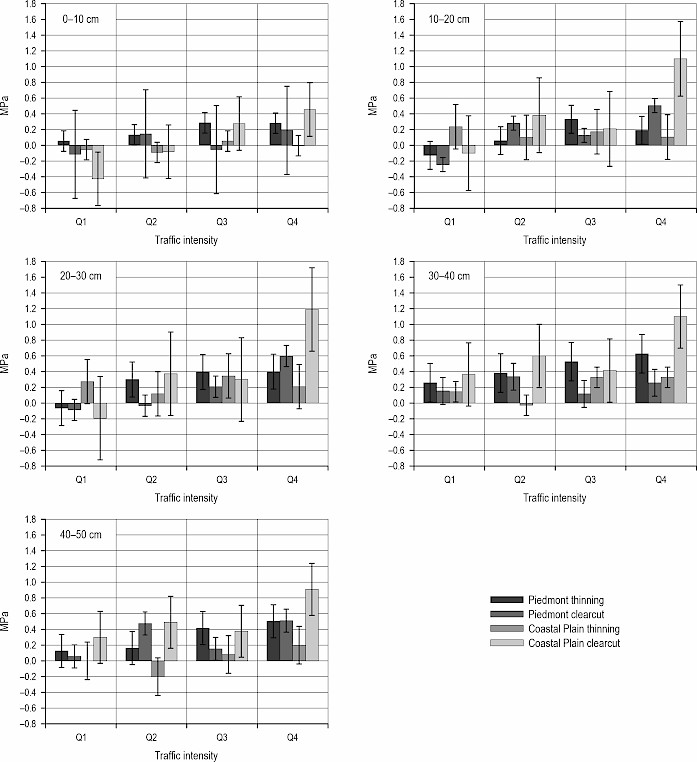
Fig. 6 Median change in penetration resistance from undisturbed conditions for each combination of harvest method, physiographic region, traffic intensity, and depth class. Error bars indicate one standard deviation
We observed several significant interaction effects between traffic intensity, physiographic region, and harvest method across multiple depths (Fig. 7). Within the <10 cm depth class, Coastal Plain clearcuts exhibited a 59% increase in average penetration resistance at traffic intensity Q3 (p=0.04) and a 62% increase at traffic intensity Q4 (p=0.02). Within the 21–30 cm depth class, Coastal Plain clearcuts experienced a 39% increase in penetration resistance at traffic intensity Q2 (p=0.02), a 30% increase at traffic intensity Q3 (p=0.07), and a 48% increase at traffic intensity Q4 (p≤0.01). Further penetration resistance increases were identified in the 31–40 cm depth class. Specifically, the model identified a 39% increase at intensity Q1 (p=0.02), a 52% increase at intensity Q2 (p≤0.01), a 28% increase at intensity Q3 (p=0.07), and a 58% increase at intensity Q4 (p≤0.01). Finally, Coastal Plain clearcuts exhibited significant increases in penetration resistance at all traffic intensities in the 41–50 cm depth. Penetration resistance was increased by 42% at traffic intensity Q1 (p=0.01), 41% at traffic intensity Q2 (p=0.01), 25% at traffic intensity Q3 (p=0.08), and 64% at traffic intensity Q4 (p≤0.01).
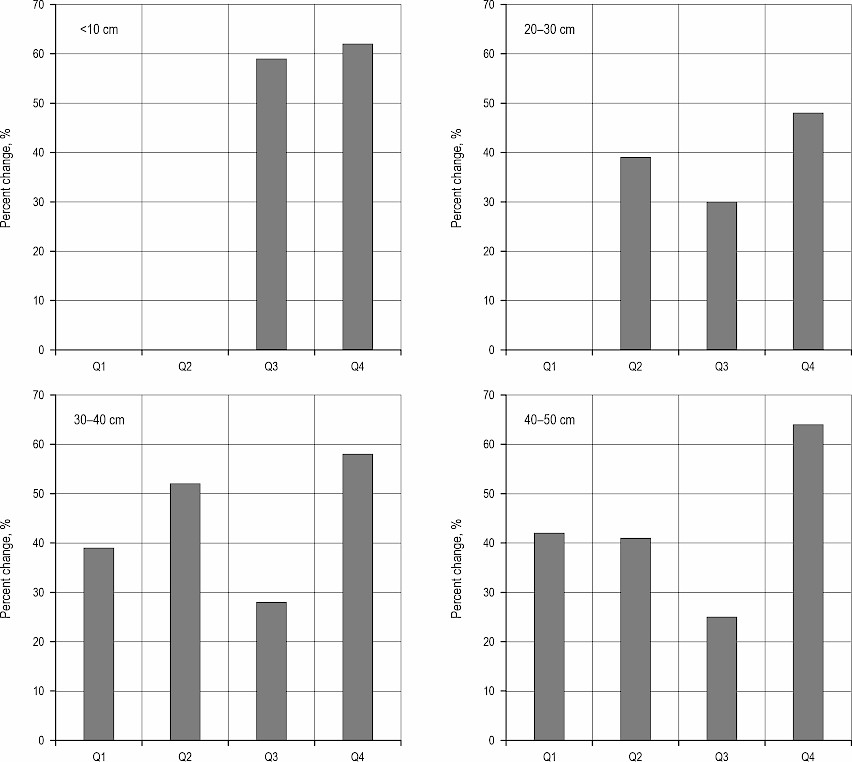
Fig. 7 Percent change in penetration resistance for significant interaction effects for Coastal Plain clearcuts relative to model baseline across four depth classes. Data represents increases derived from generalized linear models using an alpha level of 0.10
4. Discussion
This analysis provides important insight into the relationship between physiographic regions, harvest method, and their impact on skidder traffic distribution and penetration resistance in harvesting operations. While harvest type alone did not provide significant differences in skidder traffic distribution, when grouped across physiographic region, differences in traffic distribution were identified in the undisturbed, medium, and higher intensity traffic quartiles. These findings were more pronounced in the Coastal Plain region, with clearcuts exhibiting increased area in the medium to high traffic intensity quartiles compared to thinnings. This difference was not mirrored in the Piedmont region, indicating a greater concentration of traffic to fewer skid trails, likely due to topography. The greater proportion of Coastal Plain clearcut traffic distribution in the medium to high intensity traffic areas is a concerning trend, as recent studies indicate that temperate forests, such as the southeastern U.S., were more susceptible to compaction compared to arid and cold zones (Nazari et al. 2023).
Our findings on compaction effects from skidding operations primarily occurring within the 11–50 cm depth agrees with existing literature (Labelle and Jaeger 2011, Cambi et al. 2015). The Coastal Plain region’s effect on penetration resistance at depth classes 4 and 5 indicate that Coastal Plain soils may be more susceptible to compaction at greater depths. These findings may be explained by the Coastal Plain’s coarse, sandy topsoil layer coupled with a silt/clay horizon and high water table common throughout the region. In contrast, the primarily clay soils of the Piedmont may help limit compaction effects to the upper depth classes. The trend of increasing penetration resistance with greater traffic intensity and maximum compaction occurring in the higher traffic intensity quartile aligns with recent findings (Nazari et al. 2023). The positive estimates for Coastal Plain clearcuts at higher traffic intensities suggest that current traffic patterns in Coastal Plain clearcuts may lead to a higher susceptibility to compaction compared to first thinning.
These findings may have important implications for sustainable forest management practices in the southeastern United States. The greater susceptibility to compaction in Coastal Plain soils identified in this study underscores the importance of strategic harvest planning and management. However, the authors acknowledge the limited number of sites analyzed in this research. Furthermore, a limitation inherent to operational research is the potential for certain soil characteristics such as texture and drainage class to co-occur with specific regions and harvest methods. Our model incorporated continuous measures for soil moisture, % sand, % silt, and % clay to account for some of these differences. There may still be some confounding or unidentified factors influencing the results. Additional long-term research across multiple rotations and varying site conditions is needed to explore the long-term effects of machine traffic on forest regeneration and productivity. Greater understanding of the interactions among soil moisture, soil type, and harvest method will provide a more comprehensive framework for managing compaction risks across different forest ecosystems. Developing a harvest decision support system based on the variables identified in this study would likely benefit forest managers and help implement site specific management.
Several practices, such as reducing machine traffic intensity, limiting traffic dispersion and harvesting during high soil moisture conditions, and implementing post-harvest soil restoration measures (e.g., mechanical site preparation) can help alleviate some of the compaction effects (Neaves et al. 2017, Picchio et al. 2020). Given the greatest change in penetration resistance observed in this study occurred in areas experiencing the highest traffic intensity levels, consolidating skidder traffic may reduce effects. This may help alleviate issues within the Coastal Plain; however, in the Piedmont, further improvement may not be possible due to topographic limitations which have already concentrated traffic (Fig. 5). These results highlight distinct patterns in traffic intensity distributions due to both physiographic region and harvest method. In summary, the results of this linear model highlight the influence that traffic intensity, physiographic region, harvest method, and soil texture have on penetration resistance across multiple depth classes. The significance in several of the three-way interactions between traffic intensity, physiographic region, and harvest method emphasize the complexity and interrelatedness of these compaction factors. These findings highlight the importance of forest managers implementing region and site-specific management strategies.
5. Conclusions
This work reinforces findings from earlier studies documenting the nuanced relationship between harvest method, physiographic region, traffic intensity, and penetration resistance. These results highlight the effect of harvesting equipment traffic distribution and intensity on penetration resistance, with the Coastal Plain exhibiting greater susceptibility to increased penetration resistance at higher traffic intensities. Overall, these findings demonstrate the importance of equipment selection and harvest planning to reduce the impact of machine traffic on forest soils and future tree growth. Future research should focus on physiographic comparisons of traffic effects, to better understand what practices mitigate penetration resistance in mechanized forest operations. Several studies have been conducted in Sweden to evaluate the use of GIS-based decision support systems for planning harvesting machine routing (e.g., Mohtashami et al. 2012, Hoffmann et al. 2022, Mohtashami 2022). However, there has been little research on this topic in the US, and currently, no regionwide models for the southeastern U.S. exist to help predict the effects of skidder traffic on a given soil type, soil moisture level, or harvest method. Expansion of this work could significantly improve our ability to develop decision support systems in the southeastern U.S. to better mitigate the effects of harvesting machine traffic.
Key Findings and Recommendations:
- Coastal Plain clearcuts experienced the greatest proportion of traffic distribution in traffic quartiles Q2–Q4, particularly in Q2
- Piedmont thinning and clearcut traffic distribution was not significantly different
- Coastal Plain clearcuts had significantly more traffic in the Q2–Q4 quartiles compared to thinnings
- Coastal Plain thinnings were associated with a 52.8% increase in penetration resistance at the 31–40 cm depth class and a 73.3% increase at the 41–50 cm depth class compared to Piedmont thinnings
- Coastal Plain clearcuts exhibited the greatest change in penetration resistance compared to undisturbed values
- Piedmont clearcuts exhibited the greatest absolute penetration resistance
- the greatest change in penetration resistance due to traffic occurred between 11–40 cm
- consolidation of skidder traffic in the Coastal Plain region may help address compaction effects in susceptible soils
- forest managers should prioritize harvest planning that accounts for soil and moisture conditions in the susceptible Coastal Plain.
Acknowledgments
The authors gratefully acknowledge the National Council for Air and Stream Improvement, Inc. and the Society of American Foresters Kurt Gottschalk Science Fund for funding this project. The authors thank the landowners and logging contractors who participated in this study. The authors acknowledge Dr. Richard Chandler and Dr. Bruno Da Silva at the University of Georgia for the assistance they provided in developing the regression models and Dr. Cristian Montes for his involvement in both the conception and funding acquisition of this project. Finally, the authors acknowledge former research coordinator Sarah Kinz and interns Lainey Paulus and Julia Luyk for their roles in data collection.
Conflicts of Interest
The authors declare no conflict of interest. One of the funding sponsors, the National Council for Air and Stream Improvement (NCASI) reviewed study design prior to implementation and suggested edits to the draft manuscript.
6. References
Adams, P., Froehlich, H., 1981: Compaction of Forest Soils. PNW 217. A Pacific Northwest Extension Publication. Oregon, Washington, Idaho, USA, 16 p.
Allman, M., Dudáková, Z., Jankovský, M., Vlčková, M., Juško, V., Tomčík, D., 2022: Soil Compaction after Increasing the Number of Wheeled Tractors Passes on Forest Soils in West Carpathians. Forests 13(1): 109. https://doi.org/10.3390/f13010109
Amateis, R.L., Burkhart, H.E., 2012: Rotation-Age Results from a Loblolly Pine Spacing Trial. South. J. Appl. For. 36(1): 11–18. https://doi.org/10.5849/sjaf.10-038
Ampoorter, E., Van Nevel, L., De Vos, B., Hermy, M., Verheyen, K., 2010: Assessing the effects of initial soil characteristics, machine mass and traffic intensity on forest soil compaction. For. Ecol. Manage. 260(10): 1664–1676. https://doi.org/10.1016/j.foreco.2010.08.002
Ampoorter, E., De Frenne, P., Hermy, M., Verheyen, K., 2011: Effects of soil compaction on growth and survival of tree saplings: A meta-analysis. Basic Appl. Ecol. 12(5): 394–402. https://doi.org/10.1016/j.baae.2011.06.003
Aust, W.M., Burger, J.A., Scheerer, G.A., Tippett, M.D., McKee Jr., W.H., 1998: Amelioration of compacted and rutted skid trails on wet pine flats: fourth-year results. General Technical Report Southern Research Station 20, USDA Forest Service, Asheville, NC, 386–391.
Axelsson, S.Ă., 1998: The Mechanization of Logging Operations in Sweden and its Effect on Occupational Safety and Health. J. For. Eng. 9(2): 25–31. https://doi.org/10.1080/0843-5243.1998.10702715
Barrett, S.M., Bolding, M.C., Munsell, J., 2017: Characteristics of Logging Businesses across Virginia’s Diverse Physiographic Regions. Forests 8(12): 468. https://doi.org/10.3390/f8120468
Bathke, G.R., Cassel, D.K., Hargrove, W.L., Porter, P.M., 1992: Modification of soil physical properties and root growth response. Soil Sci. 154(4): 316–329. https://doi.org/10.1097/00010694-199210000-00008
Batey, T., 2009: Soil compaction and soil management – a review. Soil Use Manag. 25(4): 335–345. https://doi.org/10.1111/j.1475-2743.2009.00236.x
Bolding, M.C., Kellogg, L.D., Davis, C.T., 2009: Soil compaction and visual disturbance following an integrated mechanical forest fuel reduction operation in southwest Oregon. Int. J. Forest Eng. 20(2): 47–56. https://doi.org/10.1080/14942119.2009.10702582
Cambi, M., Certini, G., Neri, F., Marchi, E., 2015: The impact of heavy traffic on forest soils: A review. For. Ecol. Manage. 338: 124–138. https://doi.org/10.1016/j.foreco.2014.11.022
Coder, D.K., 2020: Soil compaction stress and trees: a workbook of symptoms, measures and treatments. Warnell School of Forestry & Natural Resources Publication WSFNR-20-48-48C, University of Georgia, USA. Available online: https://bugwoodcloud.org/resource/files/18712.pdf (Accessed 14 June 2025)
Conrad, J.L. IV, Blinn, C.R., 2024: Logging business challenges in the US South and Lake States. J. For. 122(5–6): 493–504. https://doi.org/10.1093/jofore/fvae016
Conrad, J.L. IV, Dahlen, J., 2019: Productivity and Cost of Processors in Whole-Tree Harvesting Systems in Southern Pine Stands. For. Sci. 65(6): 767–775. https://doi.org/10.1093/forsci/fxz036
Conrad, J.L. IV, Greene, W.D., Hiesel, P., 2024: Georgia and Florida Logging Businesses Persevere Through Pandemic, Rising Costs, and Uncertainty. For. Sci. 70(1): 47–56. https://doi.org/-10.1093/forsci/fxad050
Cullen, S.J., Montagne, C., Ferguson, H., 1991: Timber Harvest Trafficking and Soil Compaction in Western Montana. Soil Sci. Soc. Am. J. 55(5): 1416–1421. https://doi.org/10.2136/sssaj1991.03615-995005500050036x
Dickens, E.D., Moorhead D.J., 2015: A guide to thinning pine plantations. Georgia Forest Productivity Publication Series, Publication No. 0010. Athens (GA): University of Georgia, 17 p.
DiGiacomo, P.M., Bolding, M.C., Conrad, J.L. IV, Munro, H.L., Woosnam, K.M., 2025: Assessing the Post-Harvest Characteristics of Pellet Feedstock and Conventional Harvest Sites in the Southeastern US. For. Sci. 71(4): 445–466. https://doi.org/10.1007/s44391-025-00024-w
Di Stefano, J., 2001: Power analysis and sustainable forest management. For. Ecol. Manage. 154(1–2): 141–153. https://doi.org/10.1016/S0378-1127(00)00627-7
Eisenbies, M.H., Burger, J.A., Aust, W.M., Patterson, S.C., 2005: Soil Physical Disturbance and Logging Residue Effects on Changes in Soil Productivity in Five-Year-Old Pine Plantations. Soil Sci. Soc. Am. J. 69(6): 1833–1843. https://doi.org/10.2136/sssaj2004.0334
Eliasson, L., Wasterlund, I., 2007: Effects of slash reinforcement of strip roads on rutting and soil compaction on a moist fine-grained soil. For. Ecol. Manage. 252(1–3): 118–125. https://doi.org/10.1016/-j.foreco.2007.06.037
Esri, 2024: ArcGIS Pro (Version 3.3.0) [Software]. Environmental Systems Research Institute.
Esri, 2022: World Imagery [basemap]. Web; (Accessed 13 May 2024). https://www.arcgis.com/home/item.html?id-=50c23e4987a44de4ab163e1baeab4a46
Ezzati, S., Najafi, A., Rab, M.A., Zenner, E.K., 2012: Recovery of Soil Bulk Density, Porosity and Rutting From Ground Skidding Over a 20-Year Period after Timber Harvesting in Iran. Silva Fenn. 46(4): 521–538. https://doi.org/10.14214/sf.908
Fox, T.R., Jokela, E.J., Allen, H.L., 2007: The Development of Pine Plantation Silviculture in the Southern United States. J. For. 105(7): 337–347. https://doi.org/10.1093/jof/105.7.337
Fründ, H.C., Averdiek, A., 2016: Soil aeration and soil water tension in skidding trails during three years after trafficking. For. Ecol. Manage. 380: 224–231. https://doi.org/10.1016/j.foreco.2016.09.008
Georgia Forestry Commission, 2022: Economic benefits of the forest industry in Georgia: 2022. Prepared by Georgia Institute of Technology, Enterprise Innovation Institute. Available online: https://gatrees.org/wp-content/uploads/2023/12/2022-Forestry-Impact-Report-12.6.23.pdfURL (accessed 9 March 2024)
Greacen, E.L., 1980: Compaction of forest soils. A review. Aust. J. Soil Res. 18(2): 163–189. https://doi.org/10.1071/SR9800163
Greene, W.D., 1997: Southern pulpwood production and harvesting trends. In: Abt RC, Abt KL, editors. Proceedings of the 1997 Southern Forest Economics Workshop. Biloxi, MS: Southern Forest Economics Workers, 127–133.
Griffith, G.E., Omernik J.M., Comstock J.A., Lawrence S., Martin G., Goddard A., Hulcher V.J., Foster T., 2001: Ecoregions of Alabama and Georgia. US Department of the Interior, US Geological Survey, Reston, Virginia, USA.
Hakansson, I., Reeder, R.C., 1994: Subsoil compaction by vehicles with high axle load–extent, persistence and crop response. Soil Tillage Res. 29(2–3): 277–304. https://doi.org/10.1016/0167-1987(94)90065-5
Hansson, L.J., Koestel, J., Ring, E., Gärdenäs, A.I., 2018: Impacts of off-road traffic on soil physical properties of forest clear-cuts: X-ray and laboratory analysis. Scand. J. For. Res. 33(2): 166–177. https://doi.org/10.1080/02827581.2017.1339121
Hatchell, G.E., Ralston, C.W., Foil, R.R., 1970: Soil disturbance in logging: Effects on soil characteristics and growth of Loblolly pine in the Atlantic Coastal Plain. J. For. 68(12): 772–775. https://doi.org/10.1093/jof/68.12.772
Heilman, P., 1981: Root Penetration of Douglas-fir Seedlings into Compacted Soil. For. Sci. 27(4): 660–666. https://doi.org/10.1093/forestscience/27.4.660
Hoffmann, S., Schonauer, M., Heppelmann, J., Asikainen, A., Cacot, E., Eberhard, B., Hasenauer, H., Ivanovs, J., Jaeger, D., Lazdins, A., Mohtashami, S., Moskalik, T., Nordfjell, T., Sterenczak, K., Talbot, B., Uusitalo, J., Vuillermoz, M., Astrup, R., 2022: Trafficability prediction using depth-to-water maps: The status and application in northern and central European forestry. Curr. For. Rep. 8(1): 55–71. https://doi.org/10.1007/s40725-021-00153-8
Horn, R., Domżżał, H., Słowińska-Jurkiewicz, A., van Ouwerkerk, C., 1995: Soil compaction processes and their effects on the structure of arable soils and the environment. Soil Tillage Res. 35(1–2): 23–36. https://doi.org/10.1016/0167-1987(95)00479-C
Horton, C.N., Barrett, S.M., Hawks, B.S., Aust, W.M., Bolding, M.C., 2023: Access feature areas within clearcut harvests by region across the southeastern U.S. Int. J. Forest Eng. 34(2): 168–175. https://doi.org/10.1080/14942119.2022.2148440
Howell, R., Aust, W.M., Bolding, M.C., 2019: Forestry best management practices and modeled erosion on planned and logger-selected bladed skid trails in the Ridge and Valley region, Virginia, USA. Int. J. For. Eng. 30(2):68–75. https://www.doi.org/10.1080/14942119.2018.1517998
Jansson, K.J., Johansson, J., 1998: Soil changes after traffic with a tracked and a wheeled forest machine: a case study on a silt loam in Sweden. Forestry 71(1):57–66. https://doi.org/10.1093/forestry/71.1.57
Jones, C.A., 1983: Effect of soil texture on critical bulk densities for root growth. Soil Sci. Soc. Am. J. 47(6): 1208–1211. https://doi.org/10.2136/sssaj1983.03615995004700060029x
Keibl, M., Klvac, R., Lombardini, C., Pohoraly, J., Spinelli, R., 2014: Soil Compaction and Recovery after Mechanized Final Felling of Italian Coastal Pine Plantations. Croat. j. for. eng. 35(1):63–71.
Labelle, E.R., Jaeger, D., 2011: Soil Compaction Caused by Cut-to-Length Forest Operations and Possible Short-Term Natural Rehabilitation of Soil Density. Soil Sci. Soc. Am. J. 75(6): 2314–2329. https://doi.org/10.2136/sssaj2011.0109
Labelle, E.R., Jaeger, D., 2012: Quantifying the use of brush mats in reducing forest machinery peak loads and surface contact pressures. Croat. j. for. eng. 33(2): 249–274.
Labelle, E.R., Kammermeier, M., 2019: Above- and belowground growth response of Picea abies seedlings exposed to varying levels of soil relative bulk density. Eur. J. For. Res. 138(4): 705–722. https://doi.org/10.1007/s10342-019-01201-6
Labelle, E.R., Poltorak, B.J., Jaeger, D., 2019: The role of brush mats in mitigating machine-induced soil disturbances: an assessment using absolute and relative soil bulk density and penetration resistance. Can. J. For. Res. 49(2): 164–178. https://doi.org/10.1139/cjfr-2018-0324
Labelle, E.R., Hansson, L., Högbom, L., Jourgholami, M., Laschi, A., 2022: Strategies to mitigate the effects of soil physical disturbances caused by forest machinery: A comprehensive review. Curr. For. Rep. 8(1): 20–37. https://doi.org/10.1007/s40725-021-00155-6
Lanford, B., Stokes, B.J., 1996: Comparison of two thinning systems. Part 2. Productivity and costs. For. Prod. J. 46(11–12): 47–53.
Lincoln, M.C., Will, R.E., Morris, L.A., Carter, E.A., Markewitz, D., Britt, J.R., Cazell, B., Ford, V., 2007: Soil change and loblolly pine (Pinus taeda) seedling growth following site preparation tillage in the Upper Coastal Plain of the southeastern United States. For. Ecol. Manage. 242(2–3): 558–568. https://doi.org/10.1016/j.foreco.2007.01.069.
Lockaby, B.G., Vidrine, C.G., 1984: Effect of Logging Equipment Traffic On Soil Density and Growth and Survival of Young Loblolly Pine. South. J. Appl. For. 8(2): 109–112. https://doi.org/10.1093/sjaf/8.2.109
MacDonald, P., Clow, M., 2010: »Things Was Different in the South«: The industrialization of pulpwood harvesting systems in the Southeastern United States 1945–1995. Technol. Soc. 32(2): 145–160. https://www.doi.org/10.1016/j.techsoc.2010.03.001
Markewich, H.W., Pavich, M.J., Buell, G.R., 1990: Contrasting soils and landscapes of the Piedmont and Coastal Plain, eastern United States. Geomorphology 3(3–4): 417–447. https://doi.org/10.1016/0169-555X(90)90015-I
McDonald, T.P., Stokes, B.J., Aust, W.M., 1995: Soil Physical Property Changes After Skidder Traffic With Varying Tire Widths. J. For. Eng. 6(2): 41–50. https://doi.org/10.1080/08435243.1995.10702671
Miller, R.E., Colbert, S.R., Morris, L.A., 2004: Effects of heavy equipment on physical properties of soils and on long-term productivity: A review of literature and current research. Technical Bulletin No. 887. National Council for Air and Stream Improvement, Inc. Cary, NC, USA.
Mohieddinne, H., Brasseur, B., Spicher, F., Gallet-Moron, E., Buridant, J., Kobaissi, A., Horen, H., 2019: Physical recovery of forest soil after compaction by heavy machines, revealed by penetration resistance over multiple decades. For. Ecol. Manage. 449: 117472. https://doi.org/10.1016/j.foreco.2019.117472
Mohtashami, S., Bergkvist, I., Lofgren, B., Berg, S., 2012: A GIS approach to analyzing off-road transportation: A case study in Sweden. Croat. j. for. eng. 33(2): 275–284.
Mohtashami, S., 2022: GIS-based decision support systems to minimise soil impacts in logging operations. Dissertation, Acta Universitatis Agriculturae Sueciae, Swedish University of Agricultural Sciences, Umea, Sweden, 1–67 p.
Misztal, M.D., Siry, J.P., Mei, B., Harris, T., Bowker, J.M., 2024: Relation of pine chip-n-saw to sawtimber and pulpwood prices in the Southeastern United States: direction of influence. J. For. Bus. Res. 3(2): 67–85. https://doi.org/10.62320/jfbr.v3i2.58
SLU publication database: Available online: https://publications.slu.se/?file=publ/show&id=119617 (accessed 9 March 2025)
Nazari, M., Arthur, E., Lamandé, M., Keller, T., Bilyera, N., Bickel, S., 2023: A Meta-analysis of Soil Susceptibility to Machinery-Induced Compaction in Forest Ecosystems Across Global Climatic Zones. Curr. For. Rep. 9(5): 370–381. https://doi.org/10.1007/s40725-023-00197-y
Neaves III, C.M., Aust, W.M., Bolding, M.C., Barrett, S.M., Trettin, C.C., Vance, E., 2017: Soil properties in site prepared loblolly pine (Pinus taeda L.) stands 25 years after wet weather harvesting in the lower Atlantic coastal plain. For. Ecol. Manage. 404: 344–353. https://doi.org/10.1016/j.foreco.2017.08.015
Ngo-Cong, D., Antille, D.L., van Genuchten, M.Th., Nguyen, H.Q., Tekeste, M.Z., Baillie, C.P., Godwin, R.J., 2021: A modeling framework to quantify the effects of compaction on soil water retention and infiltration. Soil Sci. Soc. Am. J. 85(6): 1931–1945. https://doi.org/10.1002/saj2.20328
Outcalt, K.W., 1984: Influence of Bed Height on the Growth of Slash and Loblolly Pine on a Leon Fine Sand in Northeast Florida. South. J. Appl. For. 8(1): 29–31. https://doi.org/10.1093/sjaf/8.1.29
Page-Dumroese, D.S., Jurgensen, M., Terry, T., 2010: Maintaining soil productivity during forest or biomass-to-energy thinning harvests in the western United States. West. J. Appl. For. 25(1): 5–11. https://doi.org/10.1093/wjaf/25.1.5
Parker, R.T., Maguire, D.A., Marshall, D.D., Cochran, P., 2007: Ponderosa pine growth response to soil strength in the volcanic ash soils of central Oregon. West. J. Appl. For. 22(2): 134–141. https://doi.org/10.1093/wjaf/22.2.134
Parkhurst, B.M., Aust, W.M., Bolding, M.C., Barrett, S.M., Carter, E.A., 2018: Soil response to skidder trafficking and slash application. Int. J. Forest Eng. 29(1): 31–40. https://doi.org/10.1080/14942119.2018.1413844
Payne, H.H., 1976: Soil survey of Baldwin, Jones and Putnam counties, Georgia. U.S. Dep. Agric. Soil Conserv. Serv., Washington D.C., 1–73.
Picchio, R., Mederski, P.S., Tavankar, F., 2020: How and how much, do harvesting activities affect forest soil, regeneration and stands? Curr. For. Rep. 6(2): 115–128. https://doi.org/10.1007/s40725-020-00113-8
Pousse, N., Bonnaud, P., Legout, A., Darboux, F., Ranger, J., 2022: Forest soil penetration resistance following heavy traffic: A 10‐year field study. Soil Use Manage. 38(1): 815–835. https://doi.org/10.1111/sum.12730
Prats, S.A., Malvar, M.C., Wagenbrenner, J.W., 2021: Compaction and cover effects on runoff and erosion in post-fire salvage logged areas in the Valley Fire, California. Hydrol. Process. 35(1): e13997. https://doi.org/10.1002/hyp.13997
R Core Team, 2024: R: A language and environment for statistical computing (Version 4.3.2) [Software]. R Foundation for Statistical Computing.
Reid, A.M., Chapman, W.K., Kranabetter, J.M., Prescott, C.E., 2015: Response of lodgepole pine health to soil disturbance treatments in British Columbia, Canada. Can. J. For. Res. 45(8): 1045–1055. https://doi.org/10.1139/cjfr-2015-0029
Rizaldi, T., Putri, F.N.E., Rifai, M., 2022: Effect of soil compaction due to organic matter and 4-wheel tractor traffic on sugarcane growth. Indian J. Agric. Res. 57(3): 352–356. https://www.doi.org/10.18805/ijare.af-738
Royal Eijkelkamp, 2024: Penetrologger with GPS (Standard Set) [Apparatus]. Royal Eijkelkamp.
Sakai, H., Nordfjell, T., Suadicani, K., Talbot, B., Ebbe, B., 2008: Soil compaction on forest soils from different kinds of tires and tracks and possibility of accurate estimate. Croat. j. for. eng. 29(1): 15–27.
Sands, R., 1979: Compaction of sandy soils in Radiata pine forests. I. A penetrometer study. Aust. J. Soil Res. 17(1): 101–113. https://doi.org/10.1071/SR9790101
Silversides, C.R., Sundberg, B., 1989: Operational efficiency in forestry: Vol. 2: Practice. Springer Science & Business Media. Retrieved from https://link.springer.com/book/10.1007/978-94-017-0506-6
Sinnett, D., Morgan, G., Williams, M., Hutchings, T.R., 2008: Soil penetration resistance and tree root development. Soil Use Manage. 24(3): 273–280. https://doi.org/10.1111/j.1475-2743.2008.00164.x
Startsev, A.D., McNabb, D.H., 2000: Effects of Skidding on Forest Soil Infiltration in West-Central Alberta. Can. J. Soil Sci. 80(4): 617–624. https://doi.org/10.4141/S99-092
Talbert, C., Marshall, D., 2005: Plantation productivity in the Douglas-fir region under intensive silvicultural practices: Results from research and operations. J. For. 103(2): 65–70. https://doi.org-/10.1093/jof/103.2.65
TRAK-4, 2024: TRAK-4 GPS device [Device]. Available online: https://trak-4.com/ (Accessed 15 June 2025)
U.S. Department of Agriculture, Natural Resources Conservation Service, 2024: Web Soil Survey [Data set]. U.S. Department of Agriculture, Natural Resources Conservation Service.
VanderSchaaf, C.L., 2023: Loblolly pine planting densities for landowners in areas with poor pulpwood markets: some considerations. J. For. 121(4): 383–390. https://doi.org/10.1093/jofore/fvad018
Weng, Y.H., Grogan, J., Coble, D.W., 2020: Modeling early responses of loblolly pine growth to thinning in the western Gulf Coastal Plain region. For. Sci. 66(5): 623–633. https://doi.org/10.-1093/forsci/fxaa009
Wharton, C.H., 1978: The natural environments of Georgia. Geologic and Water Resources Division and Resource Planning Section, Office of Planning and Research Georgia Department of Natural Resources, Bulletin, 1–114.
© 2026 by the authors. Submitted for possible open access publication under the
terms and conditions of the Creative Commons Attribution (CC BY) license (http://creativecommons.org/licenses/by/4.0/).
Authors’ addresses:
Timothy R. Miller, MSc *
e-mail: timothy.miller@uga.edu
Prof. M. Chad Bolding, PhD
e-mail: bolding@uga.edu
Prof. Bronson P. Bullock, PhD
e-mail: bronsonbullock@uga.edu
Roger C. Lowe III, PhD
e-mail: lowe@uga.edu
Assoc. prof. Joseph L. Conrad IV, PhD
e-mail: jlconrad@uga.edu
Assist. prof. Stephen M. Kinane, PhD
e-mail: smkinane@uga.edu
University of Georgia
Warnell School of Forestry and Natural Resources
180 E. Green St.
30606, Athens
Georgia
USA
Holly L. Munro, PhD
e-mail: hmunro@ncasi.org
National Council for Air and Stream Improvement, Inc. (NCASI)
180 E. Green St.
30606, Athens
Georgia
USA
* Corresponding author
Received: July 01, 2025
Accepted: July 07, 2026
Original scientific paper